

Balinese food in 10 dishes worth ordering
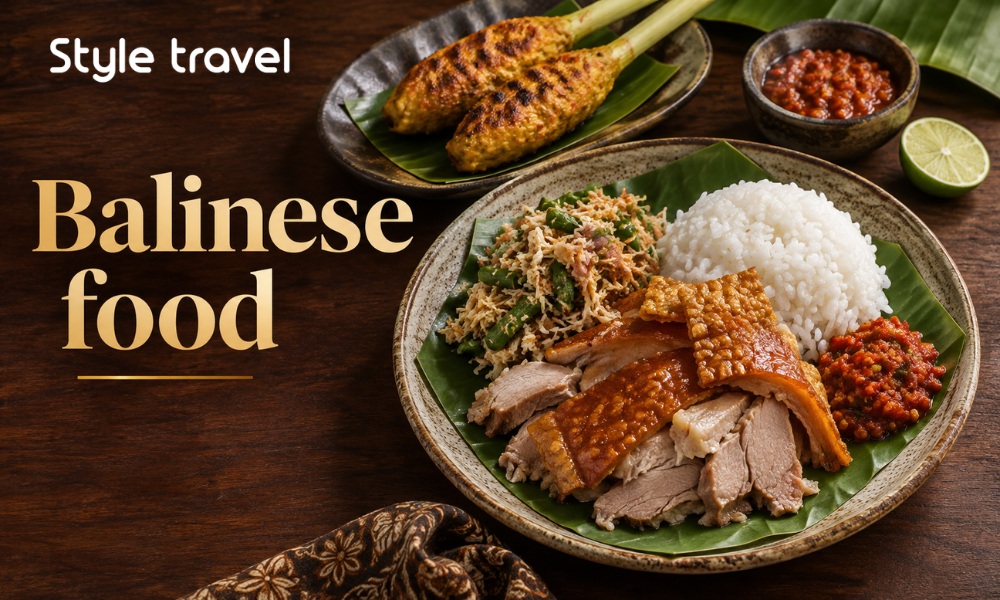
Balinese food is the cooking of Bali, the Hindu island in the middle of Indonesia. Meals are built on rice, sambal and a fragrant spice paste called basa genep, and the island’s best known dishes are roast pork, slow-cooked duck and grilled minced satay. These 10 dishes cover the signature plates and the everyday ones.
Basa genep, the spice paste behind most dishes
Most of Balinese cuisine starts with basa genep, which roughly means “complete spice.” Cooks pound shallots, garlic, chili, turmeric, galangal, ginger, lemongrass and candlenuts into one paste, then rub it on meat, stir it into vegetables or stuff it inside a whole pig or duck. Sambal goes on the side, shrimp paste (terasi) adds depth, and kecap manis, a thick sweet soy sauce, shows up in the fried dishes.
Pork is the other big difference. Most of Indonesia is Muslim, but most Balinese are Hindu, so pork is common here. Several dishes are first made for ceremonies at home and at the temples in Bali, then shared among family and neighbors.
1. Babi guling, the spit-roasted pig of ceremonies
Babi guling is a whole pig stuffed with basa genep, rubbed with turmeric and turned on a spit over a fire until the skin is crisp. Families roast one for ceremonies and celebrations. For visitors, warungs that specialize in it serve a plate of rice with slices of meat, a shard of crackling, spicy lawar and a little sambal. If you only try one of these Bali dishes, make it this one.
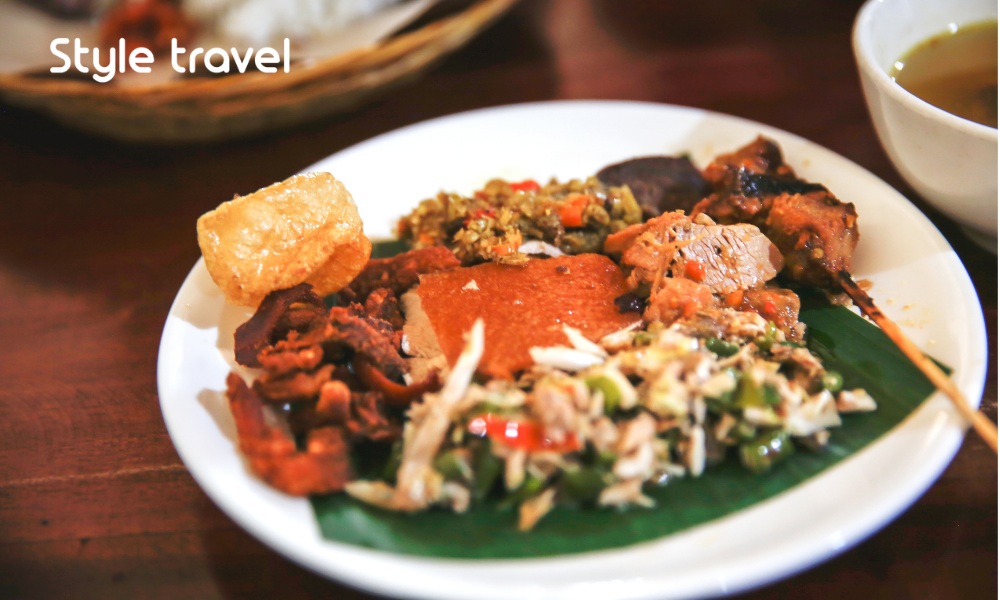
2. Bebek betutu, duck slow-cooked in banana leaf
For bebek betutu, a whole duck is filled and coated with spice paste, wrapped in banana leaves and cooked slowly for hours, until the meat falls off the bone and soaks up the spices. Ayam betutu, made with chicken, is cooked the same way and is easier to find. Both are spicy, so order rice and a cold drink with them.

3. Sate lilit, minced fish or pork on lemongrass sticks
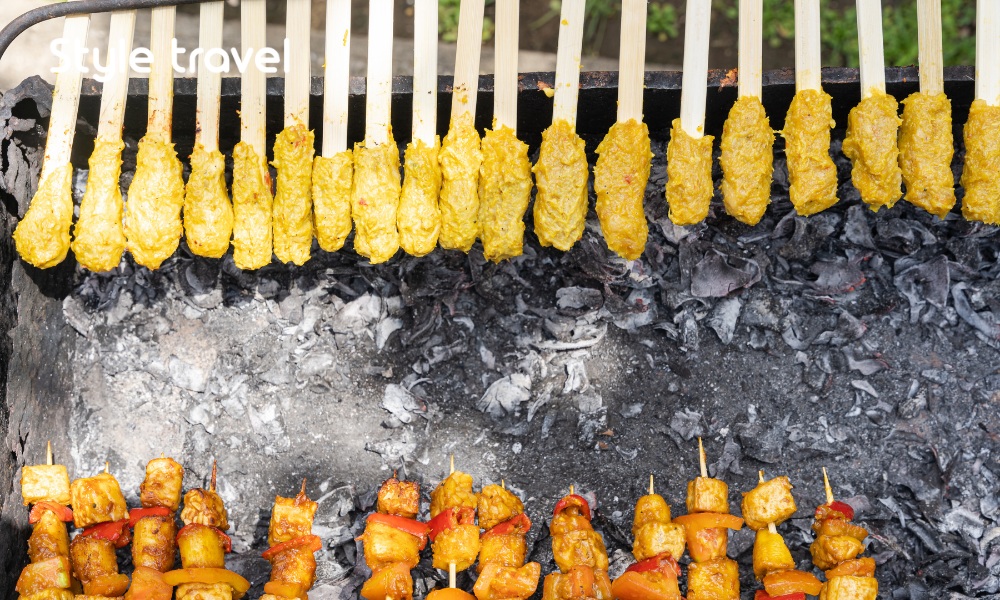
Lilit means “to wrap.” Instead of cubes of meat on a skewer, sate lilit is minced fish, pork or chicken mixed with grated coconut and basa genep, then pressed around a lemongrass stalk or a flat bamboo stick and grilled. The lemongrass flavors the meat as it cooks. You will find it as a snack on its own and as one of the sides on a plate of nasi campur.
4. Nasi campur, rice with a little of everything
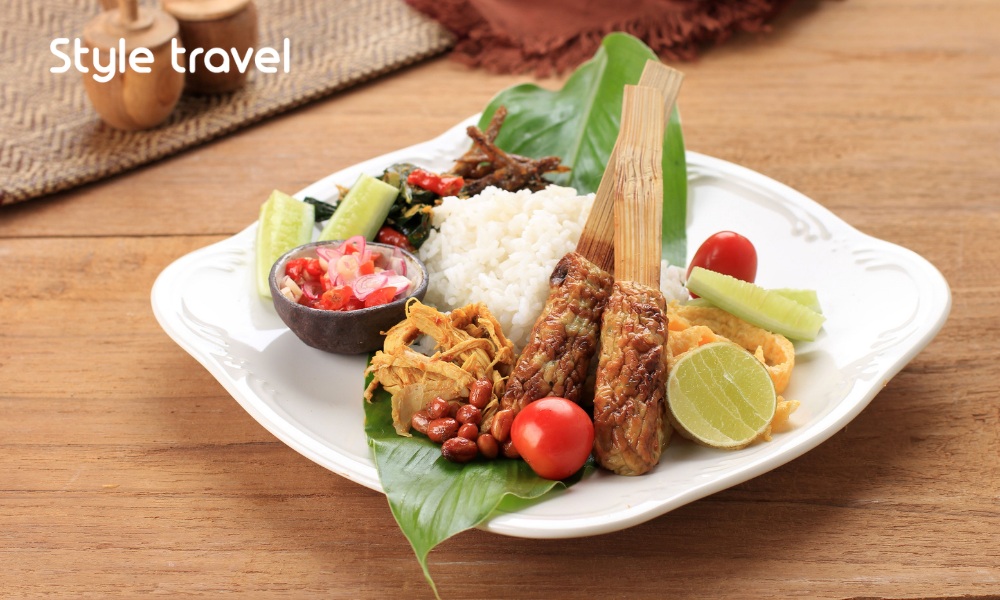
In Bali, nasi campur is often called nasi Bali, and the sides are Balinese. Expect shredded chicken or pork, a stick of sate lilit, lawar (chopped vegetables and coconut mixed with minced meat and spices), sayur urap (vegetables tossed in spiced grated coconut) and sambal matah, a raw relish of shallots, lemongrass and chili. Each warung makes its own version.
5. Nasi goreng, the fried rice you’ll eat at least once
Nasi goreng is the best known dish in all of Indonesian food, and in Bali it is on almost every menu, from beach cafes to hotel breakfasts. Warungs often top it with a fried egg and add a skewer of sate or a few prawn crackers on the side.

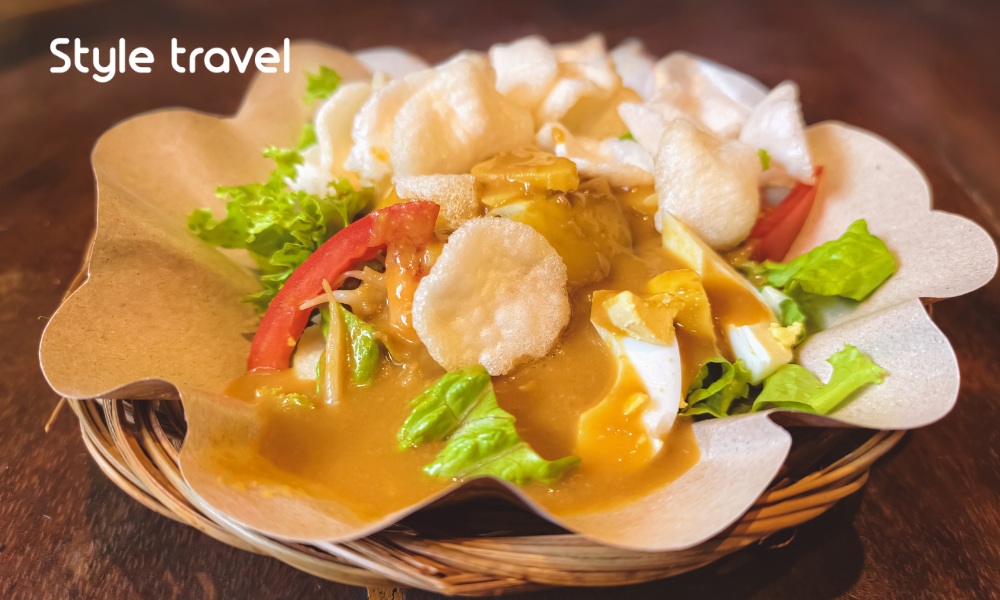
6. Gado gado, the easy pick for vegetarians
Gado gado is a plate of blanched vegetables, tofu, tempeh and boiled egg under peanut sauce. If you don’t eat meat, it is the safest order in a Balinese warung, where a lot of dishes contain pork or shrimp paste. Tempeh, the firm cake of fermented soybeans, is also worth ordering fried on its own.
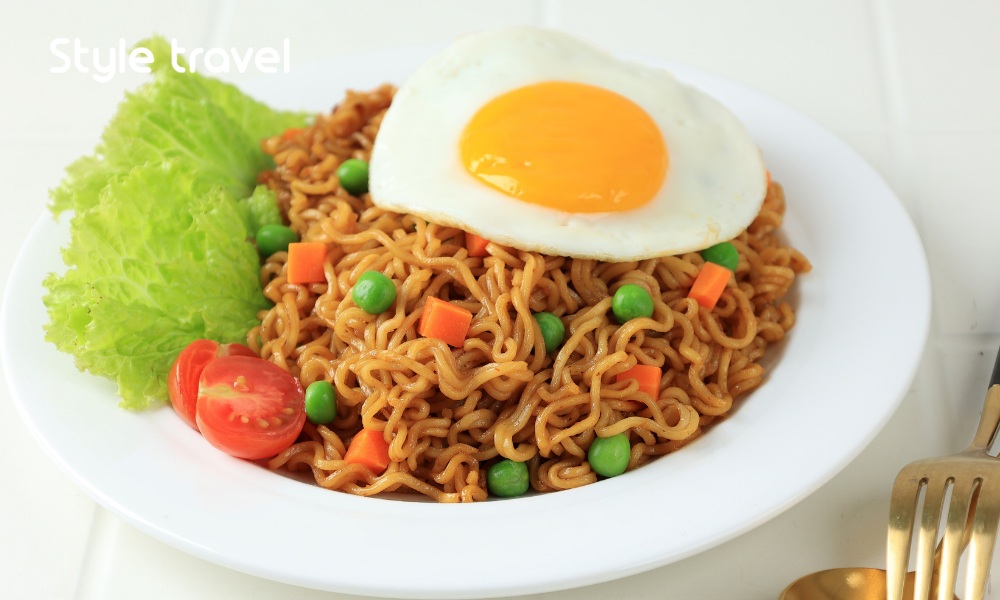
7. Mie goreng, fried noodles at every warung
Mie goreng is fried noodles with vegetables, egg and usually chicken or shrimp, sweetened with kecap manis. It sits next to nasi goreng on nearly every menu in Bali. If you want it hot, ask for it pedas, the Indonesian word for spicy.
8. Soto ayam, the turmeric chicken soup
Soto ayam is a yellow chicken soup flavored with turmeric and served with rice or noodles. It makes a light lunch. On the island you may also see soto babi, a Balinese version made with pork.

9. Bakso, meatball soup from street carts
Bakso is meatballs, usually beef, in clear broth with noodles, fried shallots and sometimes a boiled egg. In Bali it is sold from push carts and motorbike carts, so you can often eat it right on the street.

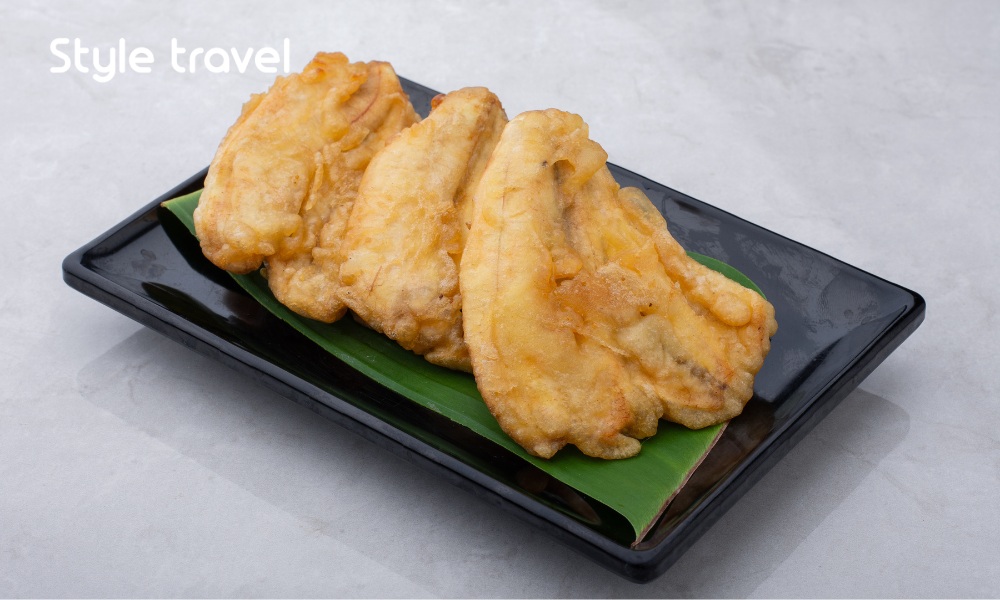
10. Pisang goreng, fried banana to finish
Pisang goreng is banana fried in batter, sold warm as an afternoon snack with coffee or tea. If you want something sweeter, there is a whole range of Indonesian desserts to try at markets and carts.
Eat your way around Bali with Style Travel
A lot of the best food in Bali comes from small warungs with only a few tables. If you want to see how basa genep is made, a morning at a local market or a cooking class in Ubud are good things to do in Bali.
If you are still choosing a route, start with our Bali Indonesia tours.
Tell Style Travel which dishes you want to try, and we will plan the stops around them.


Balinese food in 10 dishes worth ordering

The best Indonesian food to try, dish by dish

The 15 best Indonesian desserts to try at markets and carts

The Maluku islands, home of nutmeg and cloves

Toraja, reefs and tarsiers on Sulawesi

Two weeks in Indonesia with Bali, the Gilis and Yogyakarta

10 days in Indonesia with Bali and Yogyakarta

Bali and the small islands around it

Volcanoes, Temples and Old Kingdoms on Java Island