

Toraja, reefs and tarsiers on Sulawesi
Sulawesi in Indonesia is the world’s eleventh largest island, and it looks a bit like a starfish that lost an arm. It sits between Borneo and the Maluku islands, far enough from Bali that most travelers never get here. Those who do find highland villages with boat shaped roofs, coral walls that drop into deep blue water, and tiny primates that wake up at dusk.
A K-shaped island you see one arm at a time
Sulawesi island in Indonesia is made of four long peninsulas joined at a mountainous center. On a map the distances look short, but roads wind over ridges and around bays, and a drive that looks like an afternoon can take a full day. That is why most trips focus on one or two regions instead of the whole island.

Two cities work as gateways. Makassar, in the south, is the starting point for the Toraja highlands. Manado, at the tip of the northern arm, is the base for Bunaken, Lembeh and Tangkoko. Sulawesi is one of the largest islands of Indonesia, and the route you choose depends on which of those two cities you fly into.
Come for Toraja’s highland culture
Rantepao and the tongkonan houses
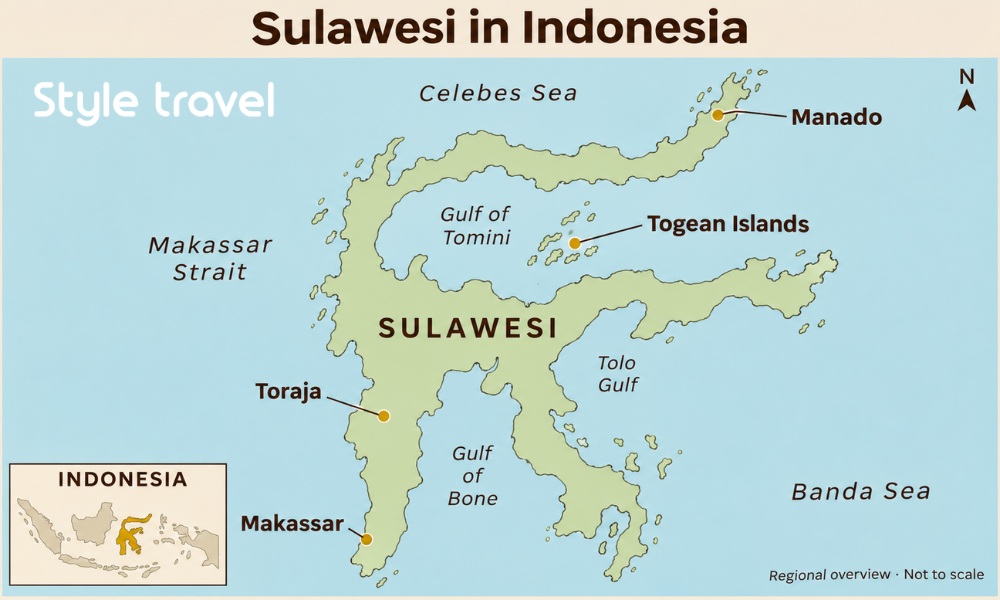
About eight to ten hours by road north of Makassar, the land rises into green valleys with rice terraces and bamboo. This is Tana Toraja, home of the Toraja people. Their ancestral houses, called tongkonan, have huge curved roofs that sweep up at both ends like the bow of a ship. Rows of buffalo horns are stacked on the front post, one for each animal a family has offered. The market town of Rantepao is the usual base, with small hotels and guides who know the villages around it.
Funerals, cliff graves and tau tau
In Toraja, a funeral called Rambu Solo can last several days, and it is the biggest event in a family’s life. Buffalo and pigs are offered, guests arrive in procession, and the whole village takes part. Families often save for years, so the dead may stay at home for a long time before the ceremony. Visitors can sometimes attend if they come with a local guide. Wear dark, modest clothes and bring a small gift for the host family, such as a carton of cigarettes or a bag of sugar, which your guide will help you hand over.
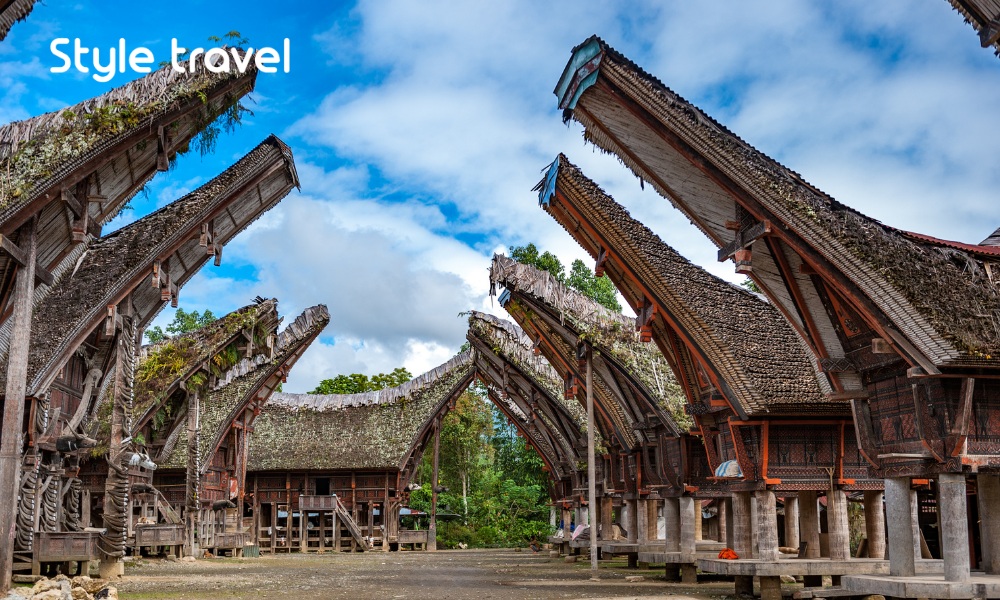
After the ceremony, the dead are placed in graves cut into the cliffs. At Lemo and Londa you see wooden effigies called tau tau standing on balconies in the rock face, looking out over the rice fields. Londa also has burial caves that you enter by lantern. Toraja is one of the best places to visit in Indonesia if you want to see a living culture that has not been reshaped for visitors.
Toraja coffee and the walk to Mamasa
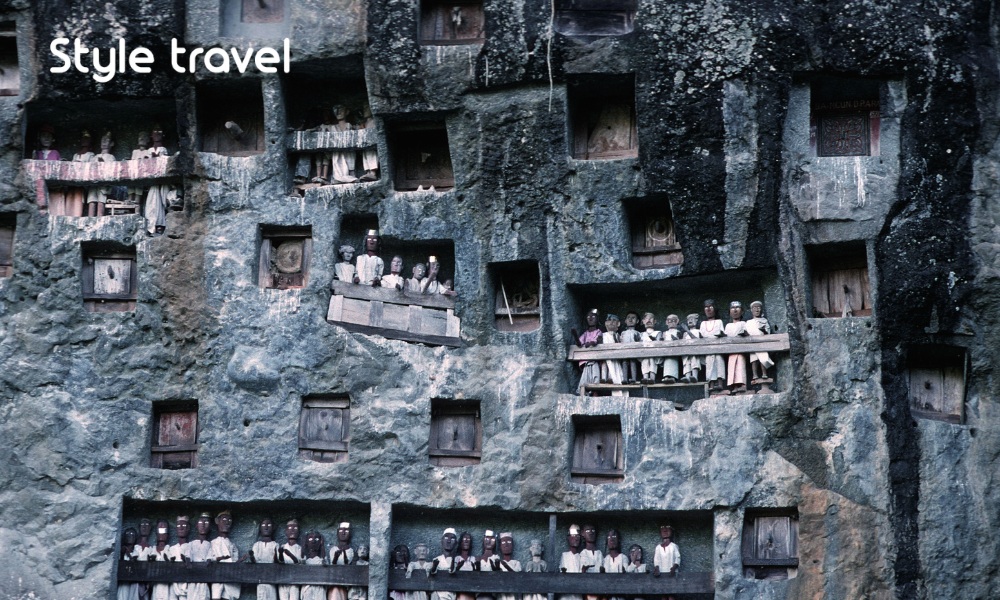
The highlands grow Toraja coffee, an arabica with a deep, earthy taste that you can buy straight from farmers in the markets. If you like to walk, a trail of several days links Toraja with the Mamasa valley to the west. It passes through villages where few outsiders stay, and you sleep in family homes along the way. Go with a local guide, as the paths are not marked.
Come for the reefs
Bunaken
A short boat ride from Manado takes you to Bunaken National Park, known for coral walls that drop straight down just off the beach. You can float over the edge with only a mask and snorkel and look down into deep blue water, with turtles, reef sharks and schools of fish along the wall. Divers come for the same walls at depth. Foreign visitors pay a park fee of about IDR 150,000 and receive a plastic tag to keep with them.

Lembeh Strait
On the other side of the northern arm, the Lembeh Strait looks dull from the surface. Below, on dark volcanic sand, divers find frogfish, mimic octopus, pygmy seahorses and other odd creatures. Divers call this muck diving, and many of them come with a camera. It suits certified divers who are happy to move slowly and look closely.
Wakatobi
Off the far southeast arm, the islands of Wakatobi are hard to reach and take extra flights, but their reefs are among the most intact in the country. They suit divers with time to spare.
Come for islands with almost no one on them
Togean Islands
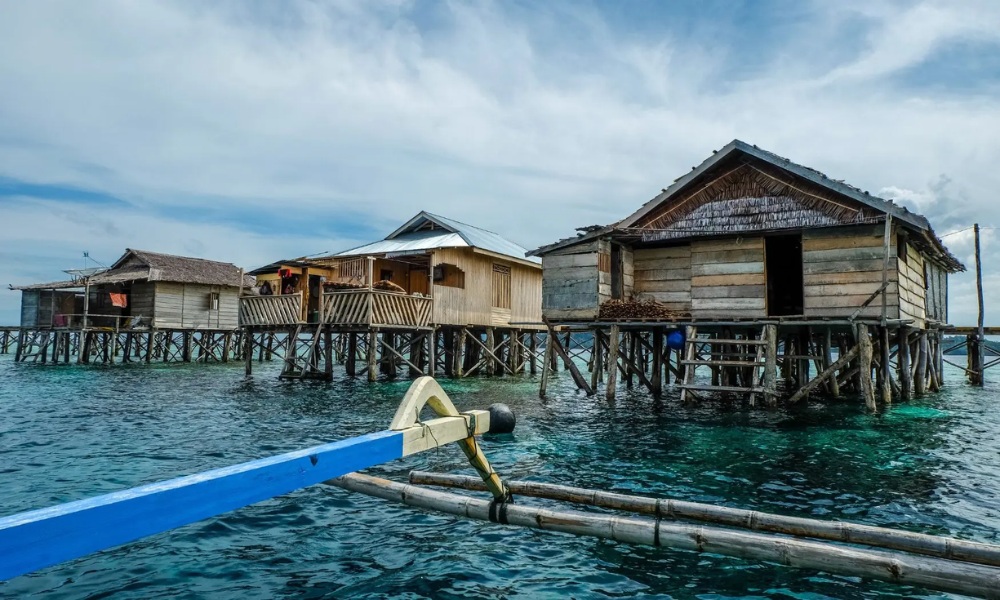
In the Gulf of Tomini, in the middle of the island, the Togean Islands are a scatter of jungle covered islands with white sand and wooden bungalows over the water. To get here you reach the port of Ampana by road, then take a public speedboat of about two hours to Wakai. There is little phone signal and no nightlife, just snorkeling, hammocks and long dinners with the other guests. On Mariona Lake you can swim among jellyfish that have lost their sting, and Bajau families, who have lived on the sea for generations, still build their houses on stilts above the water.
Come for wildlife you won’t see elsewhere
Tarsiers at Tangkoko
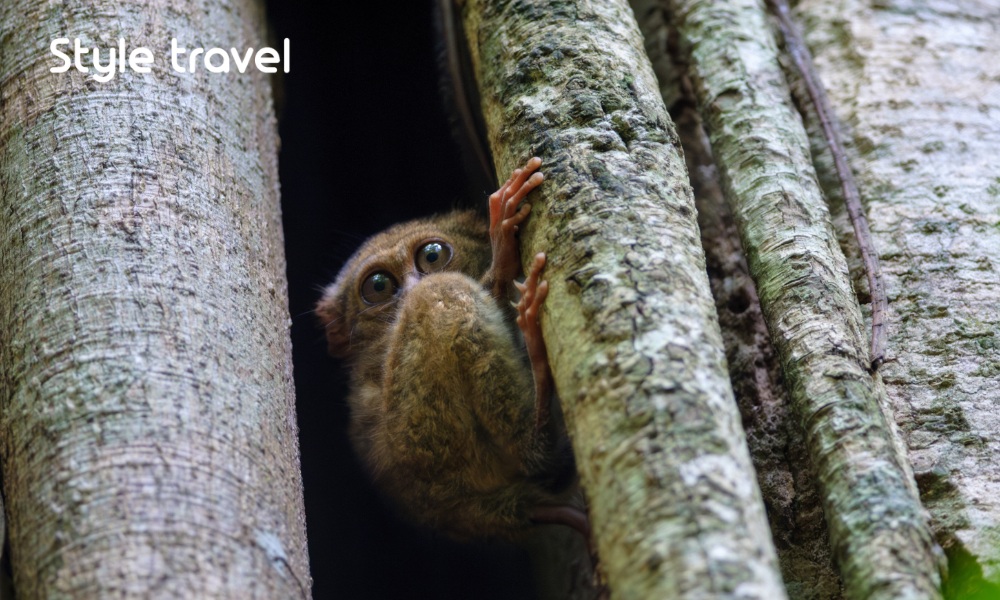
About an hour’s drive from Manado, the Tangkoko Nature Reserve protects lowland forest on the slopes of an old volcano. Late in the afternoon, a ranger walks you to a hollow fig tree where a family of spectral tarsiers sleeps. As the light fades, tiny faces with huge eyes appear in the gaps, and then they leap off to hunt insects. Tarsiers are among the smallest primates in the world and very sensitive to light, so keep flash and torches off.
During the day the same forest holds troops of black crested macaques, which walk on the ground in groups, and hornbills flying over the canopy. Sulawesi sits east of the Wallace Line, the boundary between the animals of Asia and Australia, and many species here are found nowhere else.
Makassar before you head north
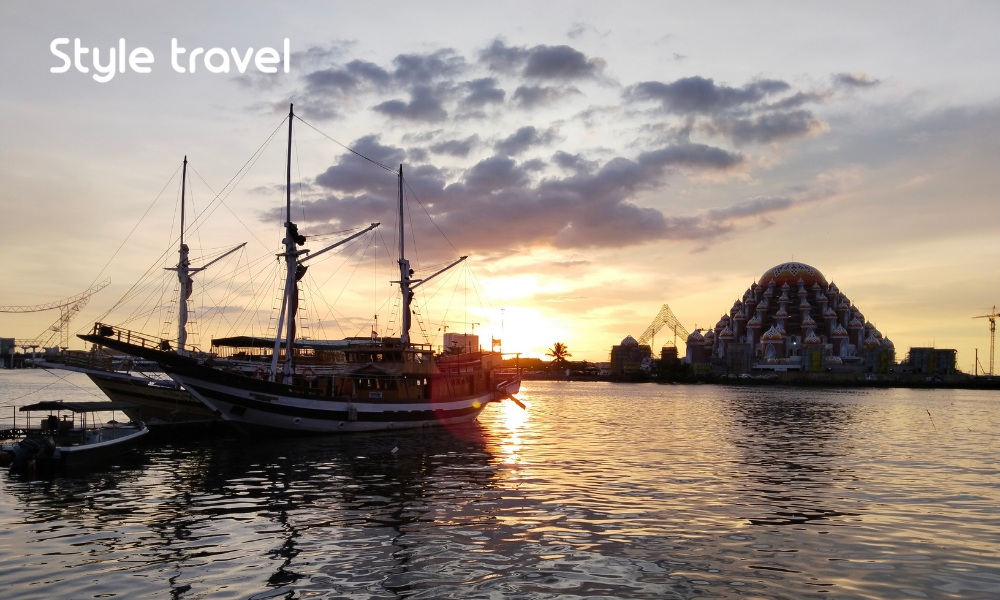
Most trips to the south begin in Makassar, a busy port city. Walk through Fort Rotterdam, built by the Dutch in the 17th century on the site of a Gowa fort, then join the crowds on Losari Beach promenade at sunset. Try a bowl of coto Makassar, a beef soup with rich spices, and look out for the wooden phinisi schooners in the old harbor, the same kind of boat the Bugis have built for centuries.
Flights, roads and how many days
- Daily direct flights link Bali with Makassar in about 1.5 hours. Manado has flights from Jakarta and Makassar.
- From Makassar to Toraja you can take an overnight bus of eight to ten hours, or fly to Toraja’s small airport.
- Plan four or five days for Makassar and Toraja, and four days for Manado, Bunaken and Tangkoko. With two weeks you can add the Togean Islands.
- The dry season runs from about May to October in most of the island. In the south it is driest from June to October, while the north around Manado gets rain for more of the year.
- A private driver and guide save a lot of time on these long roads, and our Indonesia tours can be built around the regions you choose.
- East of Sulawesi lie the Maluku islands, the old Spice Islands, if you want to go even further.
See Sulawesi with Style Travel
Sulawesi also fits well at the end of a longer Indonesia trip. Pick one theme, such as Toraja’s ceremonies, a week of diving or a few quiet days on the Togean Islands, and give it enough days.
Tell Style Travel what you want to see and how many days you have, and our team will help you work out the route, the flights and the pace.


Toraja, reefs and tarsiers on Sulawesi

Two weeks in Indonesia with Bali, the Gilis and Yogyakarta

10 days in Indonesia with Bali and Yogyakarta

Bali and the small islands around it

Volcanoes, Temples and Old Kingdoms on Java Island

16 Best things to do in Indonesia in 2026

13 Best Places to visit in Indonesia

Pink Beach Komodo on Komodo Island

A Peaceful Escape on Gili Meno