

Volcanoes, Temples and Old Kingdoms on Java Island
A Buddhist monument from the 800s stands among the rice fields of Java island Indonesia, and in nearby Yogyakarta a sultan still lives in his palace. Volcanoes smoke along the island’s spine. Java lies between Sumatra and Bali, and about 157 million people live on it, more than half of Indonesia’s population.
An island built by volcanoes and kingdoms
Java is about 1,000 km long and runs west to east between the Java Sea and the Indian Ocean. Around 30 of its volcanoes are still active, and the ash they have dropped over centuries made the soil rich enough for terraced rice, tea and the coffee that gave “java” its other meaning. Buddhist and Hindu kingdoms ruled the center of the island more than a thousand years ago and left Borobudur and Prambanan behind. The capital, Jakarta, is here too, and the old Javanese courts still keep their gamelan music and batik. Among the islands of Indonesia, Java is the one where 1,200 year old temples and active volcanoes are a train ride apart.
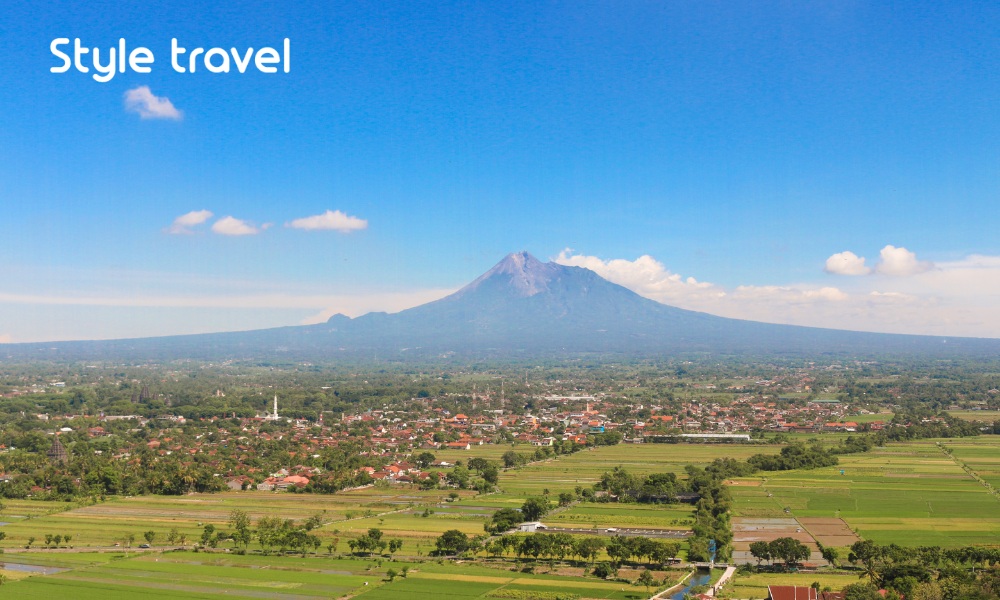
Central Java, the cultural heart
Yogyakarta, the sultan’s city
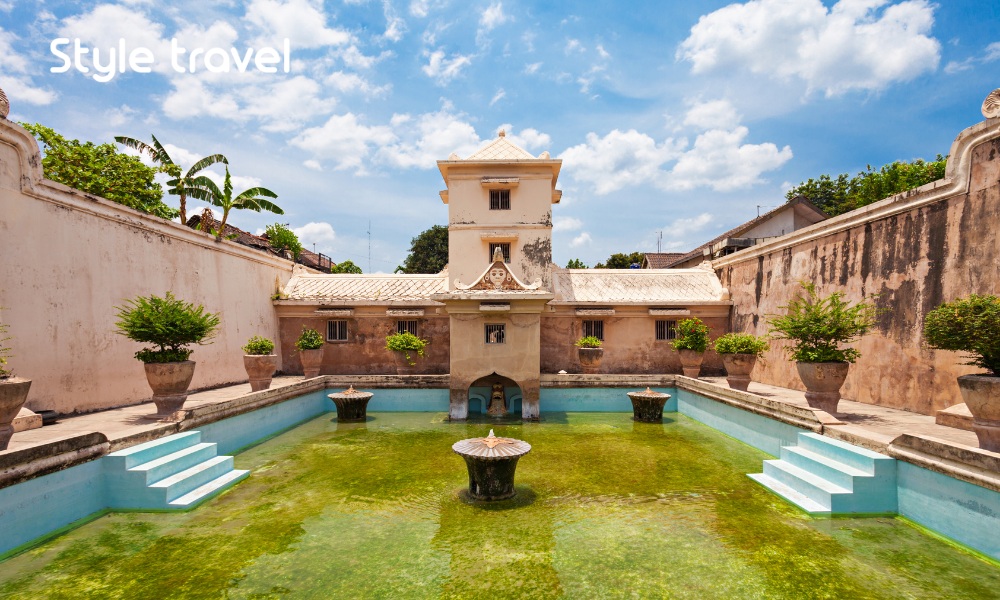
Yogyakarta, or Jogja, is the city most visitors use as their base. In the morning you can sit in a pavilion of the Kraton, the sultan’s palace, and listen to a gamelan orchestra play for court dancers. A short walk away, the old royal bathing pools of Taman Sari still hold water, and narrow lanes lead past an underground mosque. In the evening, Malioboro Street fills with food stalls and becak drivers. Order gudeg, young jackfruit slow cooked in palm sugar and coconut milk, the dish locals tie most closely to the city. Silver workshops in nearby Kotagede let you watch filigree being made by hand.
Borobudur, terrace by terrace
About an hour northwest of the city, Borobudur rises from the Kedu Plain as nine stacked platforms. Pilgrims walk it clockwise, terrace by terrace, past carved panels that tell the life of the Buddha, until the galleries open onto round terraces of bell shaped stupas. Climbing the monument now runs on timed sessions with a daily cap, so book your slot ahead and wear the woven upanat sandals handed out at the gate. The carvings repay a slow walk, which is why Borobudur sits on our list of the best places to visit in Indonesia.
Prambanan and the Ramayana ballet
Prambanan, east of Yogyakarta, is a 9th century Hindu complex whose tallest shrine, for Shiva, points sharply at the sky. Walk the grounds in the late afternoon when the stone turns gold, then stay for the Ramayana ballet. From about May to October it is danced on an open air stage with the floodlit temple behind the performers, usually on Tuesday, Thursday and Saturday evenings. In the rainy months, or if it rains before the show, it moves to an indoor theater nearby.
Jomblang Cave
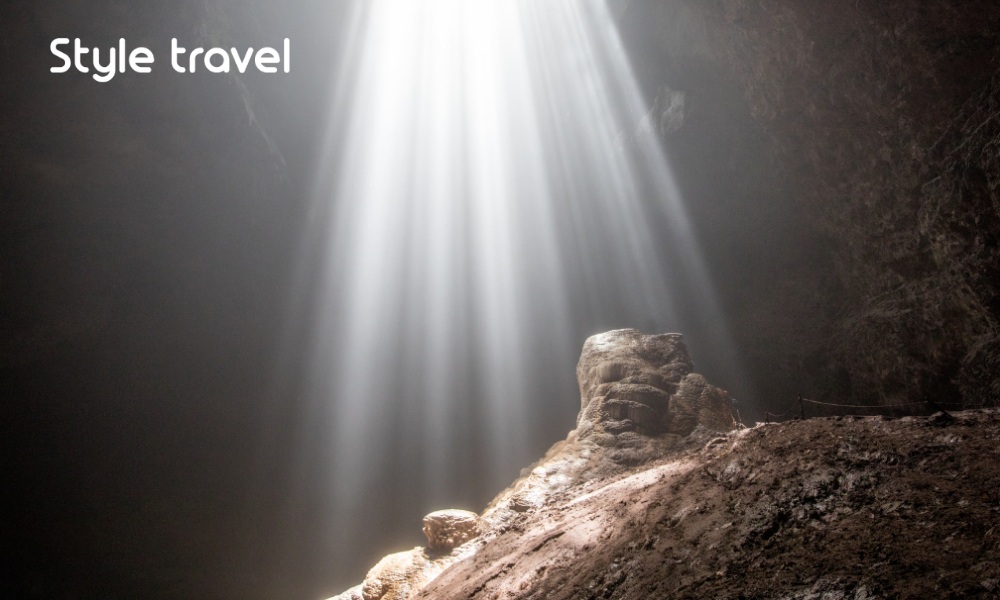
In the limestone hills of Gunungkidul, about two hours from Yogyakarta, you are lowered on a rope about 60 meters into a collapsed sinkhole. At the bottom an old forest grows in the half light. A muddy passage leads to a second chamber, and around midday a shaft of sunlight falls through the roof onto the cave floor, the moment locals call the light from heaven. Visitor numbers are limited each day, so start early and go with a licensed operator.
Dieng Plateau
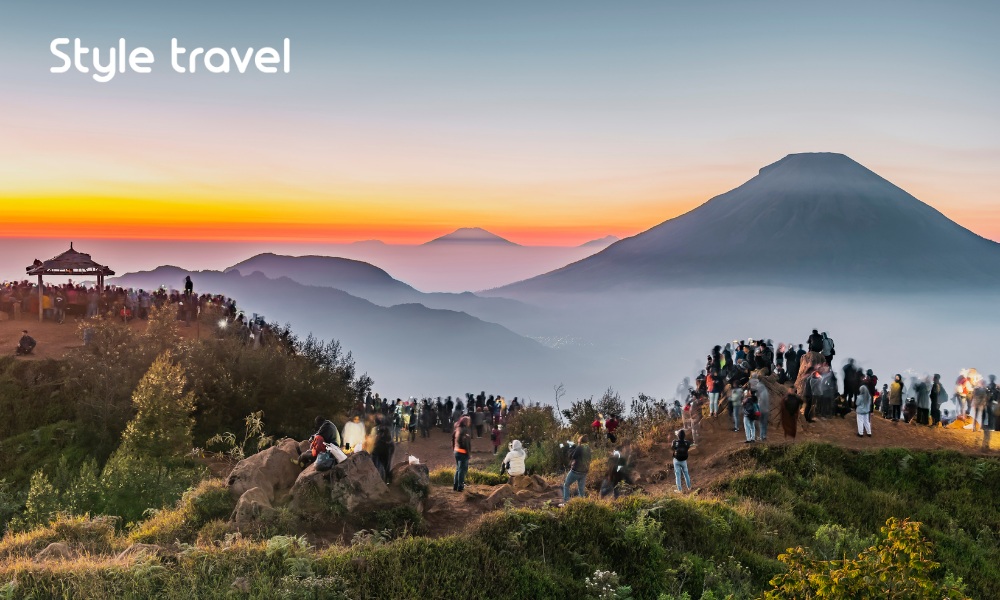
Dieng sits about 2,000 meters up in the mountains of Central Java, and mornings are cold enough for a jacket. Walk up Sikunir Hill in the dark, about 20 to 30 minutes from the trailhead, to watch the sun come up behind the volcanoes Sindoro and Sumbing. Later, the ground at Sikidang crater bubbles with gray mud and sulfur steam, and the lake of Telaga Warna shifts between green and turquoise as the light and the sulfur change. Potato and cabbage fields climb the slopes around the villages.
Karimunjawa islands
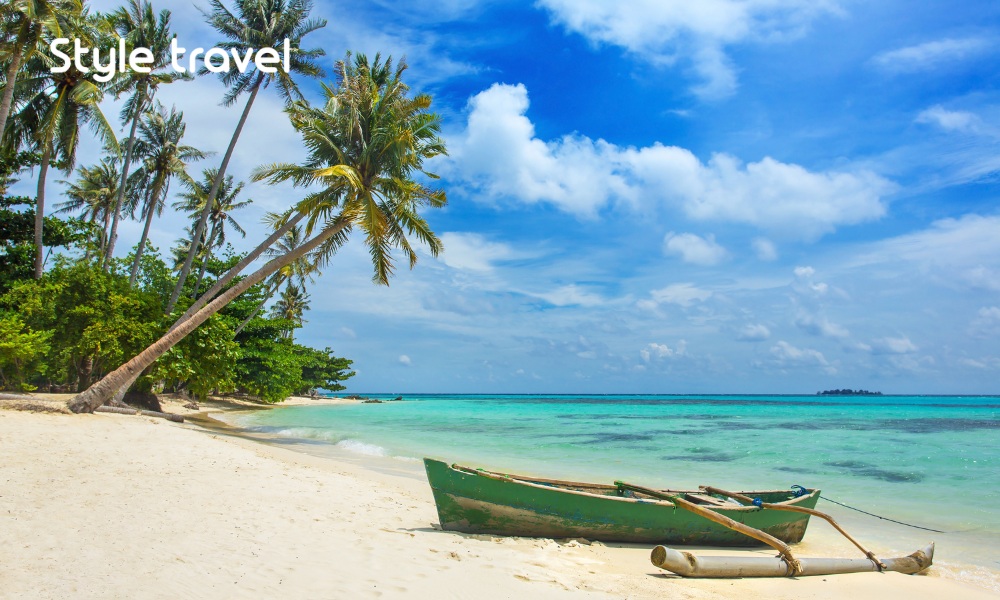
Java has a sea side too. The Karimunjawa islands lie off the north coast and form a marine national park of white sand and coral reefs. Express boats from Jepara take about two hours and do not sail every day, so plan the crossing first. Once there, you spend the days hopping between small islands by boat to snorkel, and the evenings over grilled fish on the beach.
East Java, where the ground still smokes
Mount Bromo and the sea of sand
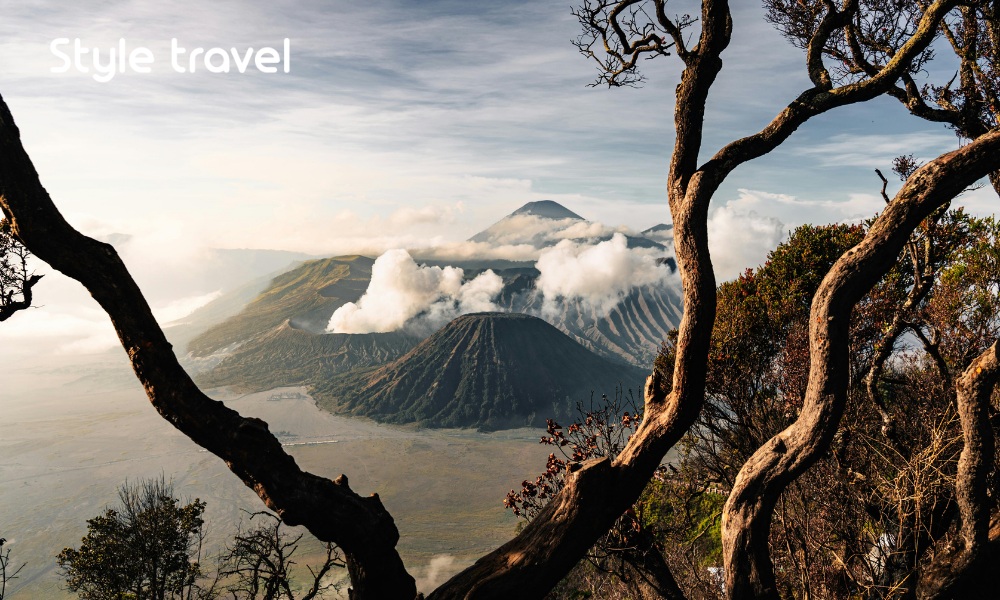
Bromo is the volcano most people picture when they think of Java. You leave in a jeep in the early hours, wait in the cold at a viewpoint while the caldera fills with light, then drive down onto the Sea of Sand, the wide plain of gray volcanic sand around the crater. Tengger horsemen in wrapped sarongs offer rides across it. The Tengger people still hold Yadnya Kasada here once a year, climbing to the rim to throw offerings of vegetables, livestock and money into the crater. The date follows their calendar, and in 2026 the park closed to visitors from May 30 to June 2 for the ceremony.
Ijen, blue fire and sulfur miners
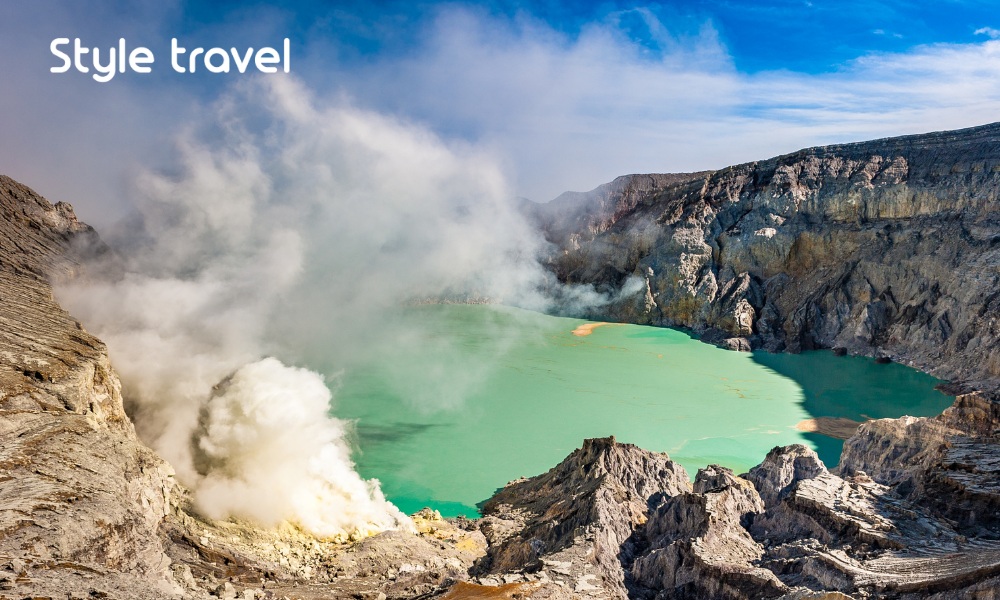
At Ijen, near the eastern tip of the island, hikers start around 2 a.m. to see blue flames from burning sulfur gas inside the crater. On the path you share the way with miners carrying baskets of yellow sulfur on their shoulders. At first light the acid lake turns bright turquoise. Wear the gas mask your guide gives you, since the fumes can be strong. The park closes on the first Friday of each month for cleaning and can close at short notice for weather or fires, so check before you go.
Tumpak Sewu waterfall
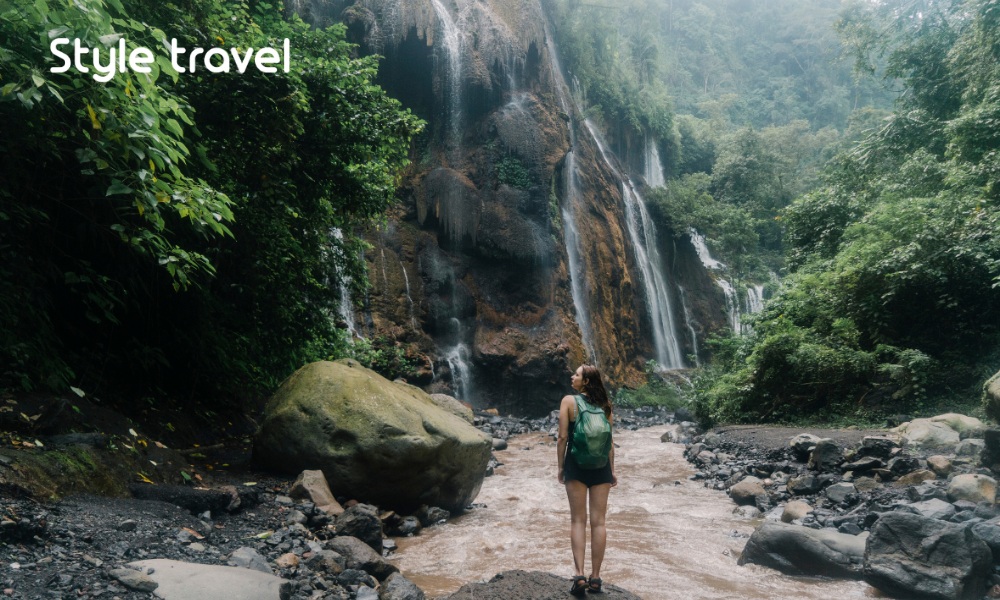
On the border of Lumajang and Malang, Tumpak Sewu drops about 120 meters in a wide curtain of streams around a green amphitheater, with Mount Semeru behind it on clear days. You can look down from the rim, or take the steep path and ladders to the bottom and wade through the river to stand in the spray. The way down is slippery, so wear shoes with good grip and keep your phone in a dry bag.
West Java, the capital and the highlands
Jakarta’s old town
Most international flights land in Jakarta. Half a day is enough for the old town, Kota Tua, where Fatahillah Square is lined with Dutch colonial buildings, and the National Monument, Monas, with views over the city from the top.
Bandung’s tea hills and Kawah Putih
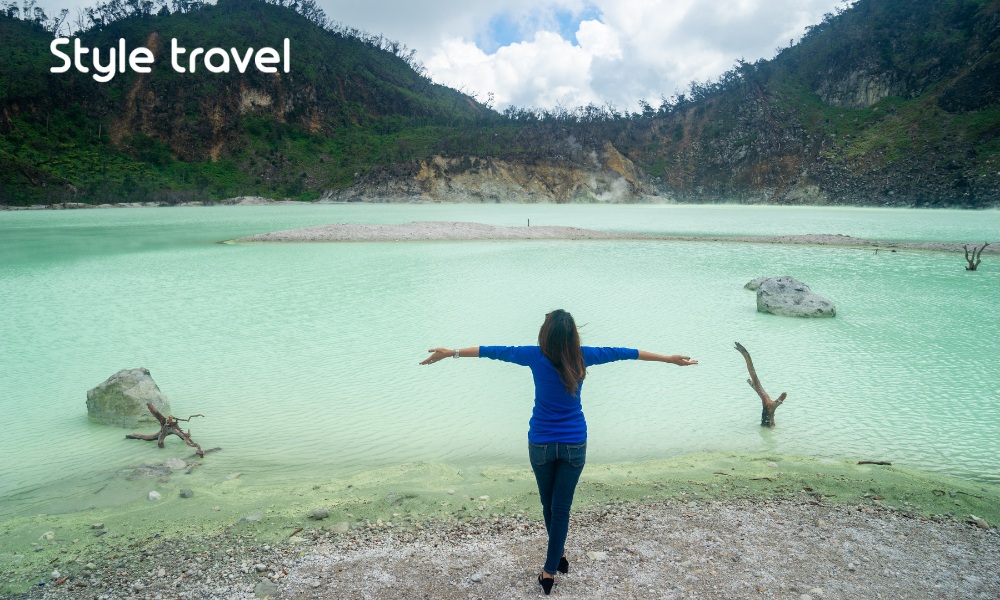
The Whoosh high speed train covers Jakarta to Bandung in about 45 minutes. Bandung sits in a cool basin ringed by volcanoes and tea estates, where rows of green bushes cover the hills south of the city. About two hours’ drive away near Ciwidey, Kawah Putih is a crater lake about 2,400 meters up whose milky water turns from pale green to almost white depending on the weather.
Small things that make a trip to Java
- Riding the train between cities, with rice fields and volcanoes sliding past the window.
- A cup of kopi tubruk, thick coffee with the grounds left in the glass, or coffee grown on the Ijen plateau.
- An evening of wayang kulit, the shadow puppet plays, or gamelan music.
- Food worth looking for, such as gudeg in Yogyakarta, rawon (a black beef soup made with keluak nuts) in East Java, and sate everywhere.
- Batik from Pasar Beringharjo in Yogyakarta or Pasar Klewer in Solo.
Getting around and the best months
- International flights land in Jakarta and Surabaya, and Yogyakarta has its own airport. From Bali, the flight to Yogyakarta takes about an hour and a half.
- Trains run by KAI link Jakarta, Bandung, Yogyakarta, Solo, Malang, Surabaya and Banyuwangi. Executive class is comfortable, and tickets can be booked up to 90 days ahead with your passport name.
- At the eastern tip, ferries from Banyuwangi cross to Bali day and night, and the islands keep going east from there, so you could follow a Java trip with things to do in Lombok.
- Four days covers Yogyakarta, Borobudur and Prambanan. Seven to ten days adds Bromo and Ijen. With two weeks you can cross the island from west to east.
- The dry season runs roughly from April to October, with July and August the busiest. Avoid traveling around Lebaran, the holiday at the end of Ramadan, when trains and roads fill up.
- If you prefer a private driver and guide, our Indonesia tours can be built around the places above.
Travel Java with a private Style Travel guide
Java pairs well with other islands. You could follow a few days in Yogyakarta and East Java with slower beach days on the Gili Islands.
Tell us how many days you have and what you want to see, and Style Travel will plan a private route across Java with a local guide and driver.


Bali and the small islands around it

Volcanoes, Temples and Old Kingdoms on Java Island

16 Best things to do in Indonesia in 2026

13 Best Places to visit in Indonesia

Pink Beach Komodo on Komodo Island

A Peaceful Escape on Gili Meno

Best things to do on Gili Trawangan Island

Slow Days on Gili Air Island

Gili Islands Guide to Gili Air, Meno and Trawangan