

The Maluku islands, home of nutmeg and cloves
The Maluku islands are a scatter of more than 1,000 islands in eastern Indonesia, between Sulawesi and Papua. They are the original Spice Islands, the only place on earth where nutmeg and cloves once grew. Today they draw few visitors, which means clear water, quiet beaches and old forts you may have almost to yourself.
Where the spice trade began
Maluku, Indonesia is split into two provinces. Maluku covers Ambon, Seram, Banda and the Kei Islands in the south, and North Maluku covers Ternate, Tidore, Halmahera and Morotai. Halmahera is the largest island of the group, while Banda’s islands are so small you can walk across some of them in an hour.
In the 1500s, cloves grew only on a handful of volcanic islands in the north, and nutmeg only in Banda. Portuguese, Spanish, Dutch and English ships sailed halfway around the world to buy them, and the Dutch fought hardest. In 1667 they kept the tiny Banda island of Run and left Manhattan to England. Compared with better known islands of Indonesia such as Bali and Java, Maluku still sees only a small share of foreign visitors.
Ambon’s beaches make an easy first day
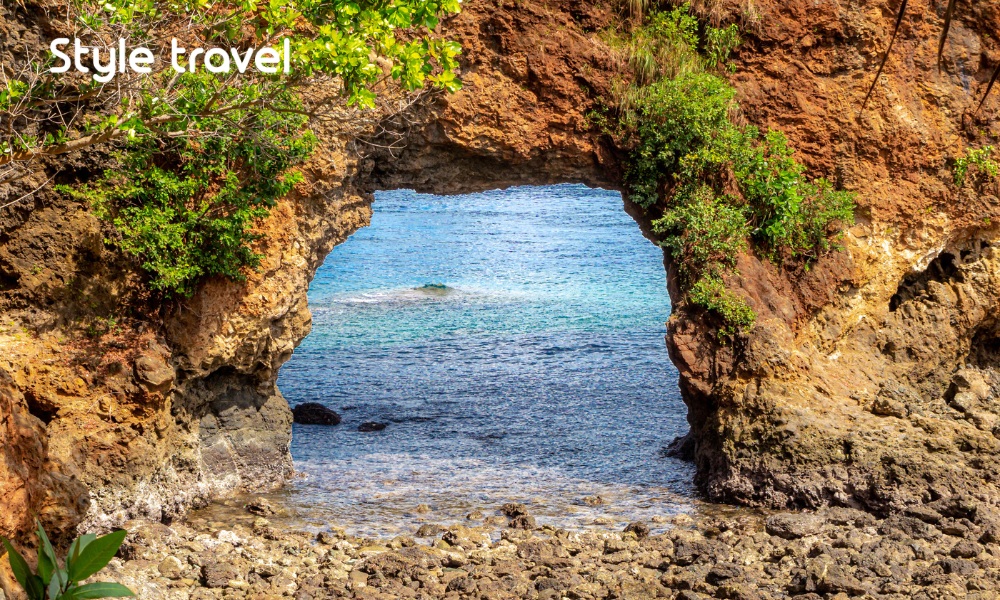
Nearly every trip starts in Ambon, where Pattimura Airport has flights from Jakarta and Makassar. The city sits on a long bay, and the beaches are a short drive away. Liang Beach on the north coast has white sand and calm, clear water. Natsepa Beach is where local families go on weekends, and stalls along the sand sell rujak, a spicy fruit salad with palm sugar and peanut sauce. At Pintu Kota, the sea has cut an arch through a rock headland, and you can climb up for a view down the coast. For snorkeling, the rocky cove at Lubang Buaya near Morella village has coral close to shore.
Seram, from Ora Beach to the Manusela highlands
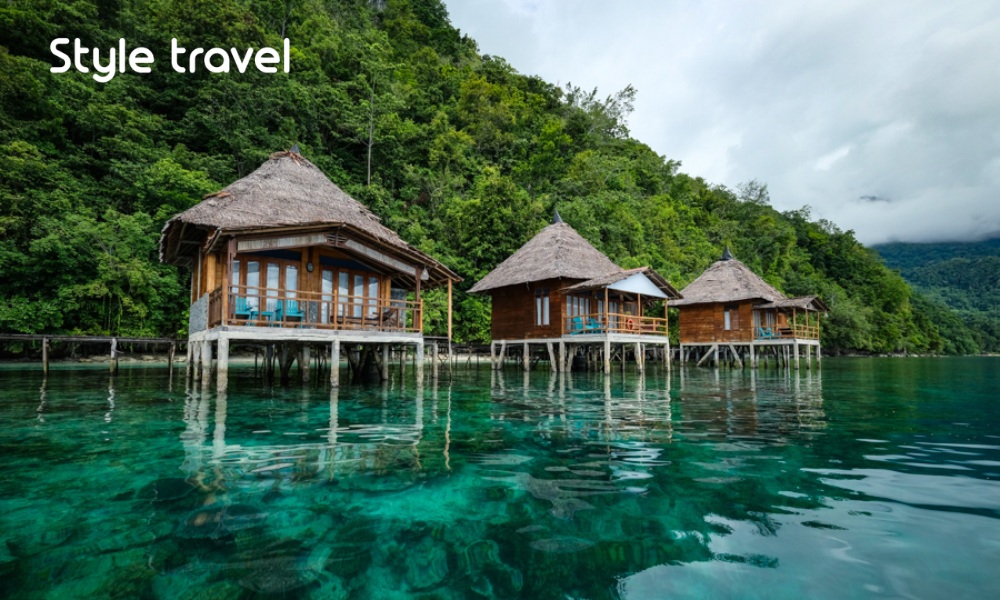
Seram is the big island north of Ambon, and most visitors come for one place. Ora Beach sits below green limestone cliffs near Saleman village, with wooden bungalows on stilts over water so clear you can watch fish from your porch. If you are comparing Indonesia beaches, Ora is the one for people who want no crowds at all.
Getting there takes most of a day. A ferry crosses from Tulehu on Ambon to Amahai on Seram in about two hours, then it is a drive across the island and a short boat ride to Ora. Inland, Manusela National Park covers mountains and rainforest where birdwatchers look for parrots and other birds found only on Seram.
Banda Neira still smells of nutmeg
Fort Belgica and the old Dutch town
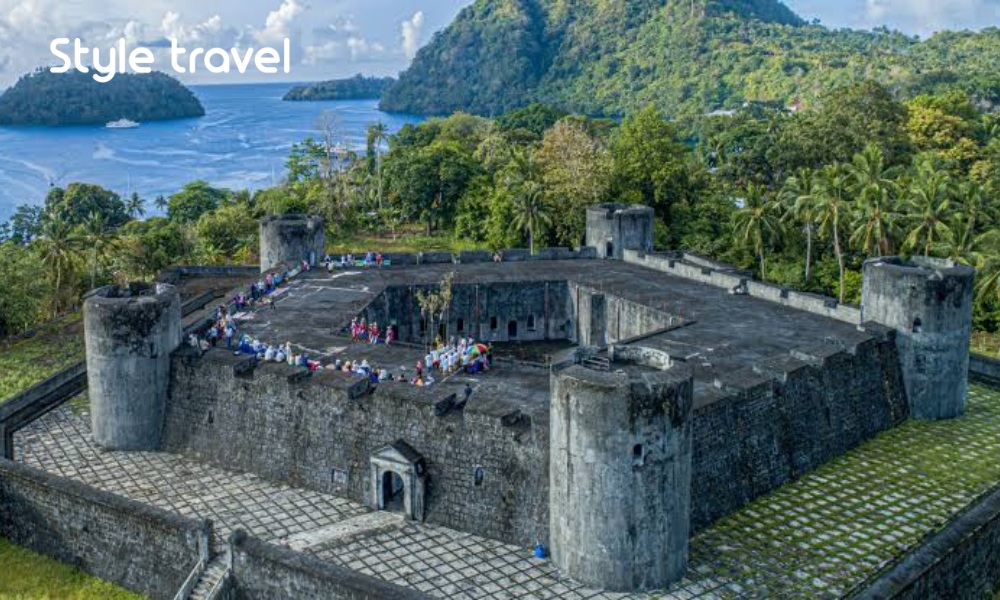
Banda Neira is the main island of the Banda group and the only one with a real town. Its streets are lined with low colonial houses from the days of the Dutch East India Company, some now small guesthouses. On the hill above town stands Fort Belgica, a five-sided stone fort with views over the harbor to Gunung Api. Two of Indonesia’s independence leaders, Mohammad Hatta and Sutan Sjahrir, were exiled here by the Dutch in the 1930s, and the house where Hatta lived is open to visitors.
Nutmeg groves on Banda Besar
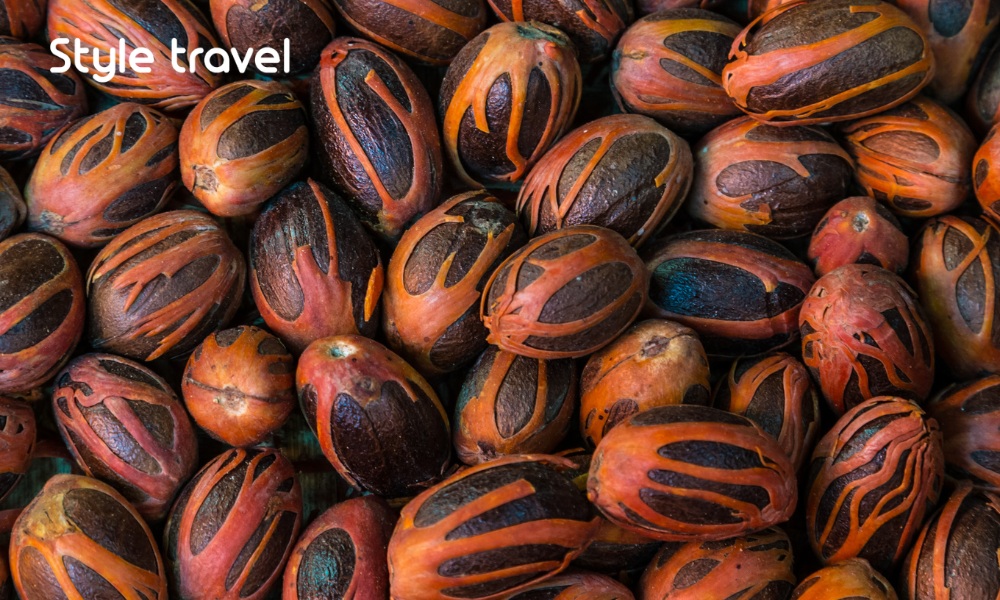
A short boat ride across the harbor, the larger island of Banda Besar is still covered in nutmeg groves. The trees grow in the shade of tall kenari (canarium) trees, so a walk through the plantations feels like a walk through forest. Farmers split the yellow fruit to show the dark seed wrapped in bright red mace, and you will see both drying on mats outside village houses.
Gunung Api and the lava flow reef
Gunung Api, the volcano facing town, erupted in 1988 and sent lava into the sea. Within a few years, coral had grown back over the cooled lava, and the reef there is now one of the best snorkeling spots in Banda. Fit walkers climb the volcano early in the morning, before the heat, for a view over the whole island group. If you like to snorkel and want a reef with few other boats on it, Banda is one of the best places to visit in Indonesia.
Ternate and Tidore, two clove sultanates face to face
Ternate
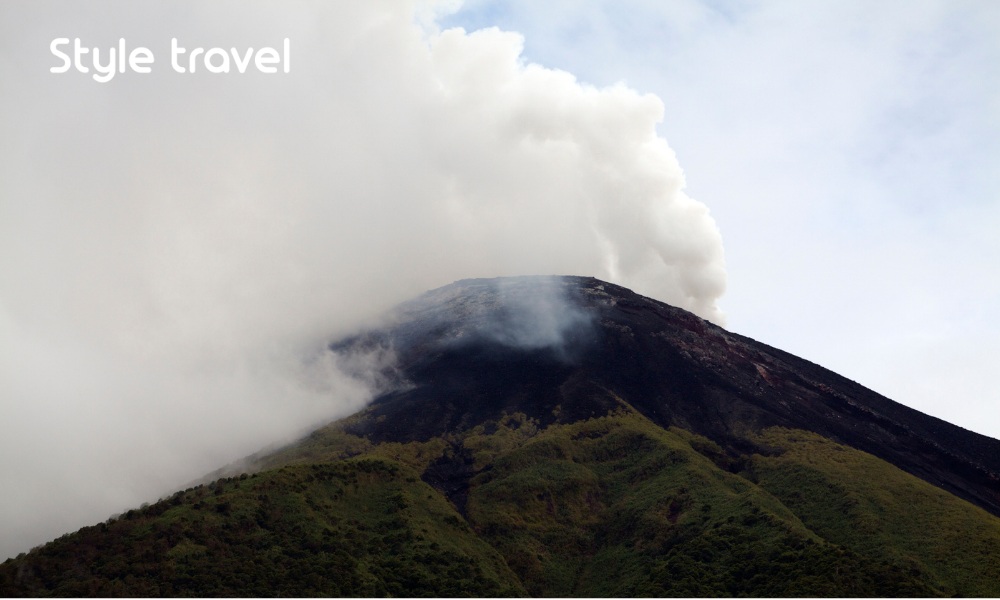
Ternate is a round island that is mostly volcano. Mount Gamalama rises in the middle and the town wraps around its lower slopes. For centuries Ternate’s sultans grew rich on cloves, and the sultan’s palace (Kedaton) still stands near the harbor. The Portuguese built Fort Tolukko on the coast in the early 1500s, and its small stone walls look out over the strait. Lake Tolire, a deep crater lake at the foot of the volcano, is a short drive away. For a swim, locals head to Sulamadaha Beach and the cove at Jikomalamo, both on the north coast.
Tidore
Tidore is about 15 minutes away by speedboat from Bastiong harbor in Ternate. It was Ternate’s rival for clove trade, and it feels slower and quieter today, with colorful houses along the coast road and its own sultan’s palace. Clove trees still grow on the hillsides above the villages.
From Ternate, boats also run across to Halmahera. The big island has very few hotels, and the people who make the trip are mostly divers or travelers looking for reefs and fishing villages off the usual routes.
Morotai, war relics and the Dodola sandbar
Morotai, off the northern tip of Halmahera, was an Allied base in 1944, and General MacArthur used it for the push toward the Philippines. Wartime relics are still scattered around the island, and some aircraft wrecks lie underwater, which brings divers here.
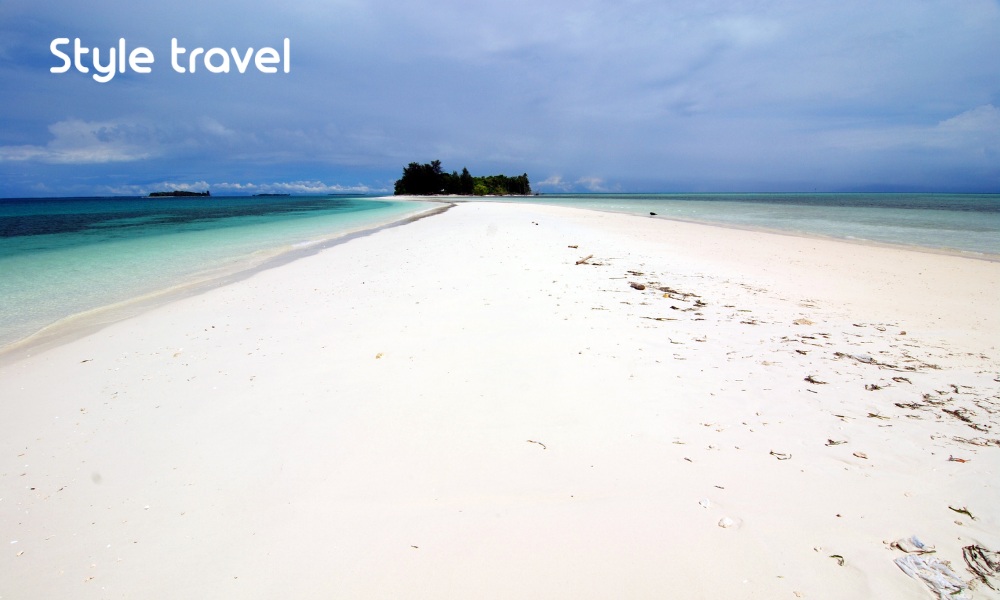
A 20 to 30 minute boat ride from the main town of Daruba brings you to Dodola Island. It is really two islands, Dodola Besar and Dodola Kecil, and at low tide a strip of white sand appears between them so you can walk from one to the other. Check tide times with your boatman before you go.
The Kei Islands have the softest sand in Maluku
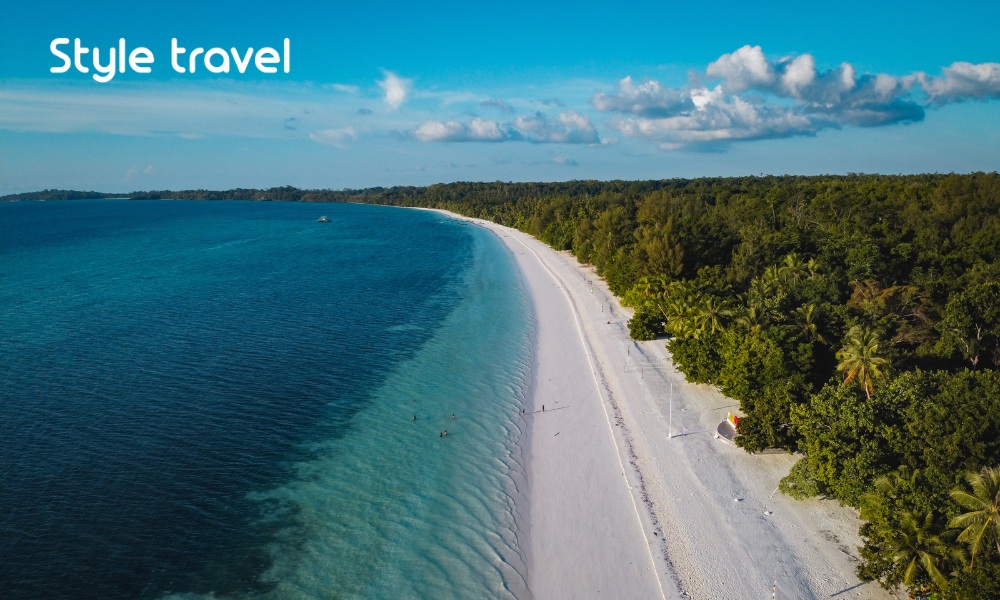
The Kei Islands lie far to the southeast, about 1 hour 15 minutes by plane from Ambon to Langgur. They are worth the extra flight for Ngurbloat Beach, also called Pasir Panjang, a long curve of white sand so fine it feels like flour. Ngur Sarnadan is a smaller beach nearby with the same pale sand. At Ohoidertawun, the tide goes out a long way and leaves wide sand flats, and the limestone cliffs at one end have old rock paintings.
Boats get cancelled, so build in spare days
Travel in the Indonesia Maluku islands runs on small planes and slow boats, and both depend on the weather.
- Banda has a small airstrip, but flights are few and often cancelled. Most travelers take a Pelni ship or ferry from Ambon, which takes about 6 to 8 hours. Schedules change often, so confirm them a few days before.
- Ternate has direct flights from Jakarta, Makassar and Manado, so North Maluku can be its own trip without going through Ambon.
- The best time for Ambon and Banda is about October to April. From June to August, rain and rough seas are more likely, and boats are cancelled more often. North Maluku has a different rainy season, so check each island.
- Allow 6 to 7 days for Ambon and Banda, including one or two spare days. Adding Ternate and Tidore or the Kei Islands takes the trip to 10 days or more.
- On a private trip with Style Travel’s Indonesia tours, someone local handles the tickets and changes the plan if a boat does not sail.
Plan a Maluku trip with Style Travel
Maluku fits well after Sulawesi or as a long trip on its own. We can build a route around Banda’s nutmeg islands, the volcano sultanates of Ternate and Tidore, or a beach week in Kei, with flights, boats and local guides arranged and spare days built in.
Tell us how many days you have and what you want to see, and a local expert at Style Travel will send you a day by day plan within 24 hours.


The 15 best Indonesian desserts to try at markets and carts

The Maluku islands, home of nutmeg and cloves

Toraja, reefs and tarsiers on Sulawesi

Two weeks in Indonesia with Bali, the Gilis and Yogyakarta

10 days in Indonesia with Bali and Yogyakarta

Bali and the small islands around it

Volcanoes, Temples and Old Kingdoms on Java Island

16 Best things to do in Indonesia in 2026

13 Best Places to visit in Indonesia