
Similan Islands Thailand Travel Guide with Practical Tips for 2026
Similan Islands Thailand trips are only possible for about seven months a year, and every visit is a day trip from Khao Lak or Phuket. Mu Ko Similan National Park opens roughly from mid-October to mid-May, and entry costs 500 baht for a foreign adult. In this guide, Style Travel explains how to get there, which islands to see, what the snorkelling and diving are like, and whether the long boat ride is worth it.
Similan Islands at a glance
| Fact | Details |
|---|---|
| Location | Andaman Sea, Phang Nga Province, southern Thailand |
| Distance from the mainland | About 70 km offshore |
| Islands | Nine numbered islands, plus Ko Bon and Ko Tachai further north |
| Open season | Roughly mid-October to mid-May, confirmed by the park each year |
| Park entrance fee | 500 baht per foreign adult, 250 baht per child aged 3 to 14 |
| Daily visitor limit | 3,850 people |
| Overnight stays on the islands | Not permitted since 2018 |
| Speedboat time from Khao Lak | Around 1 hour 15 minutes to 1 hour 30 minutes |
Where are the Similan Islands in Thailand?
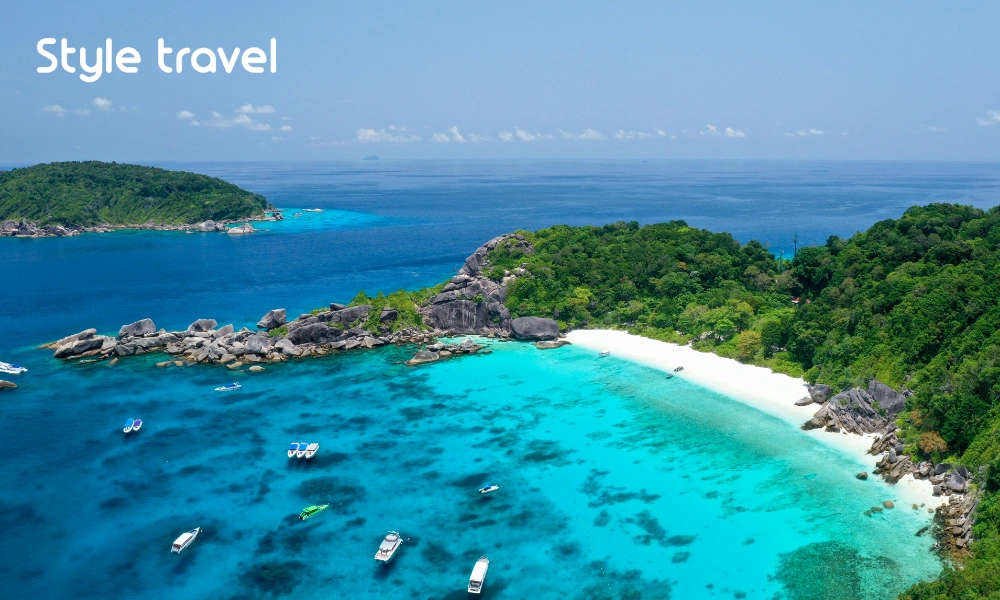
The Similan Islands lie in the Andaman Sea off the coast of Phang Nga Province, roughly 70 km west of the mainland and north of Phuket. The closest departure point is Thap Lamu Pier, just south of the beach resort area of Khao Lak, which is where almost every speedboat to the islands leaves from.
The name comes from the Yawi language, in which “similan” means nine, a reference to the nine original islands. The archipelago became Mu Ko Similan National Park in 1982 and was later extended to include Ko Bon and Ko Tachai to the north. Today the park covers about 140 square kilometres of granite islands, white sand coves and coral reefs. None of the islands has a permanent population, and the only buildings are park facilities.
When to Visit the Similan Islands Thailand?
Timing matters more here than almost anywhere else in the country, because the Similan Islands close completely for five months every year.
Mid-October and November mark the start of the season. The sea is still settling after the monsoon, so occasional cancellations are possible, but there are fewer boats around. This window suits flexible travellers who can move their trip by a day or two if conditions turn rough.
December and January bring calm water and good visibility, along with peak holiday crowds. Families and first-time visitors who book early will find this a comfortable time to go, as long as they accept busier beaches.
February to April usually offers the calmest seas and the most reliable diving conditions of the year. This is the favourite period for snorkellers and divers, especially those hoping to see manta rays.
Early to mid-May is the tail end of the season. The weather becomes less predictable before the park closes, so this period is best left to last-minute travellers who are willing to accept some risk of cancellation.
For most people, December to April offers the best balance of calm water and clear visibility. If you are building a longer trip around the Andaman coast, our guide to the best time of year to visit Thailand explains how the two coasts follow different weather patterns.
How to Get to the Similan Islands?
There is no public ferry to the Similan Islands. Every visitor arrives with a licensed tour operator, either on a speedboat day trip or on a dive liveaboard. Your choice of starting point makes a bigger difference to your day than the choice of company.
Similan Islands Day Trip from Khao Lak
Khao Lak is the most practical base. Operators collect you from your hotel and drive you to Thap Lamu Pier, where the speedboat crossing takes around 1 hour 15 minutes to 1 hour 30 minutes. Because you are close to the pier, you spend less time in a minibus and more time on the islands. If the Similans are a priority, staying one or two nights in Khao Lak is the simplest way to make the trip more comfortable.
Similan Islands Day Trip from Phuket
Many travellers visit from Phuket, which is convenient if that is where you are staying, but it makes for a much longer day. Hotel pickups usually start around 5:00 am, and most tours transfer you north by road to the Khao Lak piers, adding roughly an hour at each end of the day compared with starting in Khao Lak. Expect a total trip time of 10 to 12 hours. If you are still planning your dates and wondering when is the best time to travel to Phuket Thailand, it helps to line up your Phuket stay with the Similan season from mid-October to mid-May.
Liveaboard Cruises for Divers
Certified divers can join a liveaboard, a dive boat that spends several nights at anchor in park waters. Trips typically run from three to five nights and combine the Similans with Ko Bon, Ko Tachai and Richelieu Rock further north. This is the only legal way to spend the night in the park, and it reaches dive sites that day boats cannot.
| Option | Travel time each way | Time at the islands | Best for |
|---|---|---|---|
| Day trip from Khao Lak | About 1 to 1.5 hours by speedboat plus a short transfer | Most of the day | Anyone who can stay near Khao Lak |
| Day trip from Phuket | About 2.5 to 3 hours including road transfer | Shorter | Travellers based in Phuket |
| Liveaboard | Overnight cruising | Several days | Certified divers |
What a typical day trip looks like
Most speedboat tours follow a similar pattern. After an early pickup and a light breakfast at the pier, the boat heads out to the islands, usually landing at Ko Similan (Island 8) and Ko Miang (Island 4), with snorkelling stops at nearby reefs such as those around Ko Ba Ngu (Island 9). Lunch is generally served on Ko Miang. Boats tend to leave the islands around 3:00 pm and reach the pier between about 4:30 and 5:30 pm.
Best Islands to Visit in the Similan Islands
Day trips focus on a small number of islands. Some beaches are off limits all year because sea turtles nest there, so you will not be able to choose freely where to land.
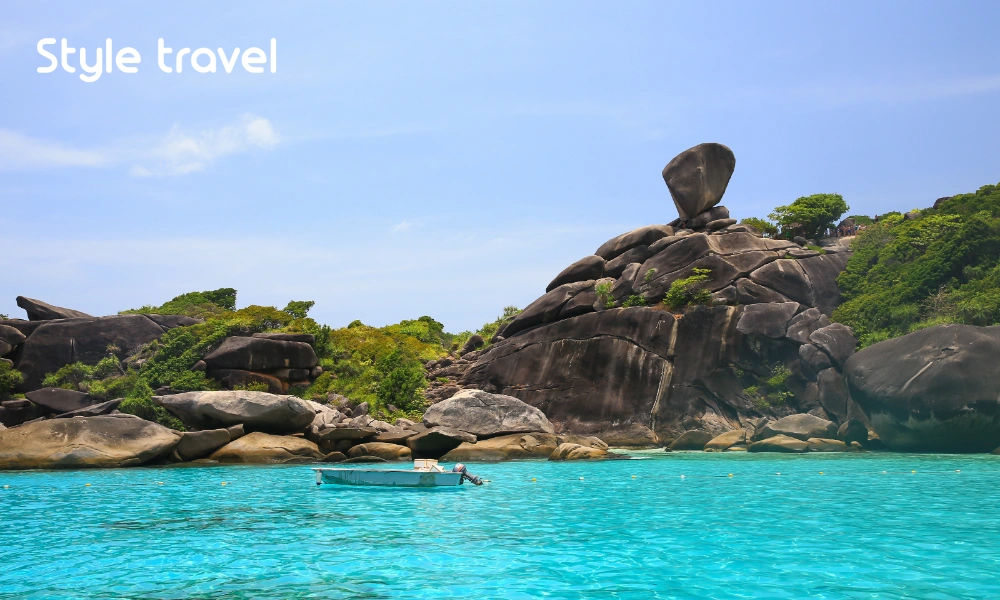
Ko Similan Island (Island 8), Home of Sail Rock and Donald Duck Bay
Ko Similan Island is the largest island in the group and the one you have almost certainly seen in photographs. Boats land at Donald Duck Bay, a curving beach of fine white sand named after a rock formation that resembles the cartoon character’s head. From the beach, a short but steep trail leads up to the Sail Rock viewpoint, a huge granite boulder with sweeping views over the bay.
The climb is the highlight for many visitors, but take it seriously. The final section involves scrambling over smooth rock with little to hold on to, and it can be slippery. Wear shoes with good grip, avoid the climb in wet conditions and skip the very top if you are unsteady on your feet.
Ko Miang (Island 4), the Lunch Stop and Park Base
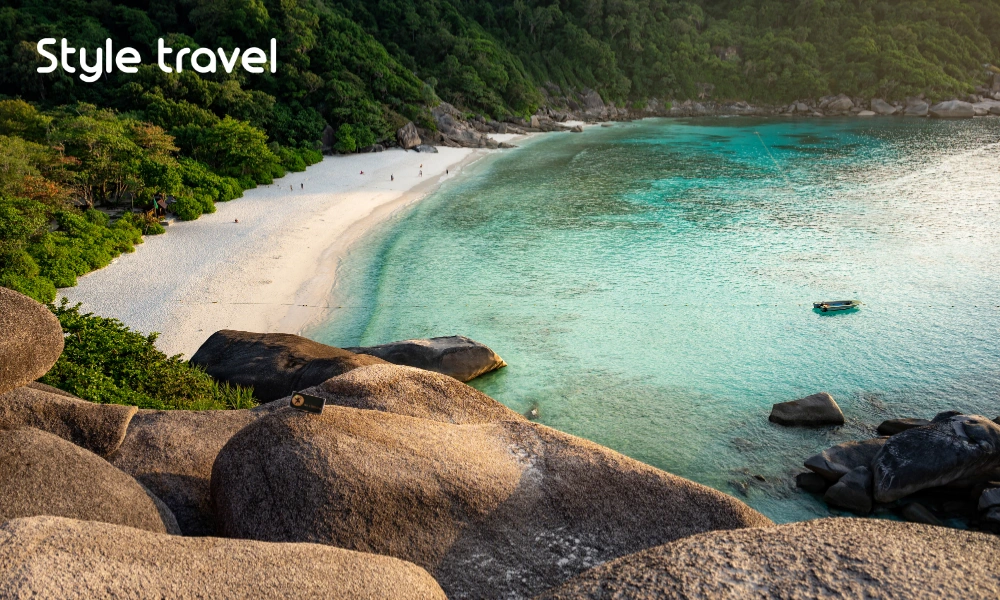
Ko Miang is home to the park’s island facilities and is where most tour groups stop for lunch. It has two pretty beaches linked by a short forest walk, and the shade is welcome after the open boulders of Ko Similan. Keep an eye out for monitor lizards around the picnic area and fruit bats in the trees. Insects can be a nuisance here, so bring repellent.
Ko Ba Ngu, Ko Bon and Ko Tachai
Ko Ba Ngu (Island 9), at the northern end of the main chain, is a common snorkelling stop thanks to its clear water and reef fish. Ko Bon lies further north and is mainly a dive destination, famous for manta rays along its western ridge.
Ko Tachai is the exception. The island has been closed to landings since 2016 to allow badly damaged reefs and beaches to recover, and it remained closed at the time of writing. Divers on liveaboards can still visit some of the dive sites around it, but be wary of any day tour that promises time on Ko Tachai’s beach.
Snorkelling and Diving in the Similan Islands
The water is the real reason to make the journey. Visibility is often excellent in the high season, and the granite boulders that define the islands above the waterline continue underwater, creating arches, swim-throughs and sheltered coral gardens.
Snorkelling in the Similan Islands
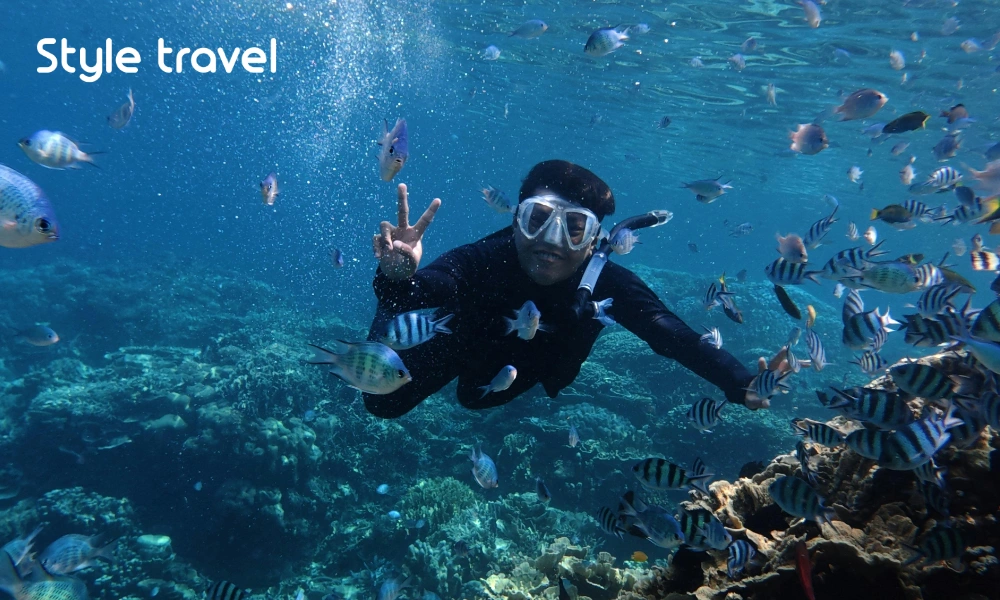
Every day trip includes two or three snorkelling stops, and you do not need any experience to take part. Operators supply masks, snorkels and life jackets. Depending on the site and conditions, you can see parrotfish, clownfish, butterflyfish and, with some luck, green or hawksbill turtles. Park rangers have marked snorkelling zones with buoys at popular spots, which keeps swimmers away from boat traffic.
What you see depends heavily on the weather and on how crowded the site is. On calm mornings the reefs can be superb. On busy afternoons with many boats in one bay, the experience is far less peaceful. If snorkelling is your main goal, ask your operator how they plan the order of stops.
Similan Islands Diving and the Best Dive Sites
The Similan Islands are widely regarded as one of the strongest dive regions in the country. Well-known sites include:
- Elephant Head Rock, a maze of giant boulders, arches and swim-throughs, better suited to experienced divers because of currents.
- Koh Bon Ridge, one of the most reliable places in Thailand to look for manta rays, most often from around January to April.
- Koh Tachai Pinnacle, an underwater peak with strong currents and large schools of fish.
- Richelieu Rock, a horseshoe-shaped pinnacle near the Surin Islands, reached on longer liveaboards and known for occasional whale shark sightings.
Beginners can try introductory dives at sheltered eastern sites from Khao Lak, but the famous boulder dives on the western side are best done with an Advanced Open Water certificate. If you are comparing destinations, our overview of the best diving in Thailand sets the Similans alongside other leading dive areas.
Similan Islands Thailand Travel Tips and Costs
Similan Islands Entrance Fees and E-Tickets
The national park fee is 500 baht for foreign adults and 250 baht for children aged 3 to 14. Since October 2025, the Similans and five other marine national parks have used an electronic ticket system, and tour operators must register passenger details that match the park’s records. In practice, almost all tours now include the fee in the price, but it is worth confirming this when you book.
Tour prices vary with the type of boat, group size and starting point. Shared speedboat day trips listed on major booking sites in October 2026 mostly started from around US$95 to US$180 per adult, with trips from Phuket at the higher end. Smaller-group or premium boats cost more but usually mean a calmer, less crowded day.
Can You Stay Overnight on the Similan Islands
No. Overnight stays were banned from the start of the 2018 season to reduce pressure on the islands’ limited fresh water and fragile ecosystem. The old bungalows and campsite on Ko Miang no longer accept tourists, and tents are not allowed. Your options are to stay in Khao Lak and take a day trip, or to sleep on board a liveaboard dive boat.
Is a Similan Islands Trip Worth It? Honest Pros and Cons
Traveller reviews are strongly divided, and both sides have a point.
What people love
- Some of the clearest water and whitest sand in Thailand
- The view from Sail Rock, which really does live up to the photographs
- Snorkelling with turtles and colourful reef fish
- The sense of visiting a protected park rather than a developed resort island
What people find disappointing
- A long day, especially from Phuket, with relatively little time on each island
- Crowded beaches at peak times, when many boats arrive at the same bay
- A bumpy, noisy speedboat ride that can cause seasickness
- Basic toilet facilities that struggle with visitor numbers
How to get more from the day
- Base yourself in Khao Lak rather than Phuket.
- Travel on a weekday and avoid Thai and Chinese public holidays.
- Choose a smaller-group or premium tour if your budget allows.
- Take seasickness medication before boarding, not once you feel unwell.
- Keep your expectations realistic: the Similans are beautiful, but they are not empty.
If you want untouched scenery with no one around, the Similans in high season may disappoint you. If you can accept a busy, structured day in exchange for exceptional water and scenery, most visitors feel it is worthwhile.
What to Pack for Ko Similan Island
- Reef-safe, mineral-based sunscreen (sunscreens containing oxybenzone or octinoxate are banned in Thai marine parks)
- Shoes with good grip for the Sail Rock climb
- Insect repellent
- Seasickness tablets
- A dry bag for your phone and camera
- A hat, sunglasses and a long-sleeved rash guard
- A small amount of Thai baht in cash
- A reusable water bottle
Park rules are strictly enforced. Do not touch or stand on coral, feed fish, or take shells, sand or coral from the islands. Removing natural material from a national park can lead to heavy fines and even prosecution.
Similan Islands Thailand FAQs
Are the Similan Islands open now?
The Similan Islands usually open in mid-October and close in mid-May. Thailand’s Department of National Parks confirms the exact dates each year, so check with your tour operator before you book. Trips can still be cancelled at short notice if the sea is too rough, especially at the start and end of the season.
How far are the Similan Islands from Phuket?
The islands sit north of Phuket, about 70 km off the mainland coast. Most Phuket tours drive you to the piers near Khao Lak first, so the journey takes around 2.5 to 3 hours each way including the road transfer and speedboat.
How long does it take to get to Ko Similan Island?
From Thap Lamu Pier near Khao Lak, the speedboat takes around 1 hour 15 minutes to 1 hour 30 minutes. Add the transfer time from your hotel.
Do I need to book a tour to visit the Similan Islands?
Yes. There is no public ferry, and access is managed through licensed operators and the park’s e-ticket system. Booking a tour that includes transfers, park fees, lunch and snorkelling equipment is the standard way to visit.
Are the Similan Islands suitable for children and non-swimmers?
Mostly, yes. Life jackets are provided for snorkelling, and the beaches have shallow areas. However, the speedboat ride can be rough and the day is long, so it suits children who handle boats well. Parents of very young children may prefer to wait until the calmer months of February to April.
Similan Islands or Phi Phi Islands, which is better?
They suit different trips. The Similans offer clearer water and more protected scenery but no accommodation. The Phi Phi Islands are easier to reach, have hotels and nightlife, and are open all year, though they can feel more developed.
Plan Your Similan Islands Thailand Trip with Style Travel
The Similan Islands reward travellers who plan around their limits. Go between mid-October and mid-May, ideally from December to April, base yourself in Khao Lak if you can, and choose a tour that matches how much time you want in the water. Treat the islands as a protected park rather than a resort, and you are likely to come away with one of the highlights of a southern Thailand trip.
If you are still deciding where the Similans fit, our guides to the best islands in Thailand and the wider places to visit in Thailand can help you shape a route along the Andaman coast. When you are ready, contact Style Travel for a tailor-made Thailand itinerary that includes a Similan Islands day trip, and leave a comment below if you have a question we have not answered.


Doi Suthep temple Thailand and the way to its golden chedi

White Temple Thailand and the Surreal Art of Wat Rong Khun

Lantern Festival Thailand Guide to Yi Peng and Loy Krathong

Songkran Festival Thailand Guide to Thailand Water Festival

Discover Koh Samet Island in Thailand for a Beach Getaway

Similan Islands Thailand Travel Guide with Practical Tips for 2026

Discover Khao Phing Kan Island in Thailand

Is Phi Phi Island Thailand worth visiting ?

Thailand Phangan Island Guide You Cannot Miss in 2026