

Best time to visit Thailand
The best time to visit Thailand is generally November to February for a trip combining Bangkok, northern cities and the Andaman coast. However, the Gulf islands follow a different rainfall pattern, and your activities matter as much as the month. This guide from Style Travel helps you choose dates for sightseeing, beaches, festivals and better value.
How the seasons affect the best time to visit Thailand?
Southeast Asia’s Thailand has a tropical climate that varies from season to season. Three different and distinctive seasons are created by the country’s two monsoon winds, which determine its weather, which is known for its year-round warmth.
Cool season
November to February generally offers a comfortable starting point for exploring Bangkok, Ayutthaya, Chiang Mai and Chiang Rai. Rain usually decreases across much of the mainland, while northern mornings and evenings can feel noticeably cooler. The Andaman coast also moves towards its more favorable beach season, making this a practical period for combining cultural visits with time by the sea. Conditions remain regional, however: late-year rain can still affect the southern Gulf coast.
The main consideration is demand, particularly around Christmas, New Year and major holidays. Compare accommodation early if you want a particular location or room type. For a closer look at conditions towards the end of this period, our guide to Thailand weather in February explains the differences between city sightseeing, northern stays and coastal holidays.
Hot season
Heat builds across much of the mainland from around late February, with March to May commonly bringing demanding conditions for long outdoor days. April is particularly associated with intense heat, although thunderstorms can occur before the established rainy season. A holiday is still possible, but the pace should suit the conditions: visit exposed temple grounds early, take a substantial midday break and leave afternoons flexible. For coastal stays, prioritize shade, convenient beach access and accommodation where you would enjoy resting between outings.
Wet season
Across much of northern, central and eastern Thailand, rain becomes more frequent from around May to October. The countryside grows greener, but wet weather can also affect roads, trails and outdoor excursions. Rain may arrive as a heavy shower or continue through a longer unsettled spell; it should not be described as something that always clears quickly.
A city stay with food experiences, museums and comfortable accommodation gives you more options than a tightly scheduled island-hopping route. October deserves particular attention because the seasons change at different speeds across the country. Our guide to Thailand weather in October helps you compare destinations during this transition.

Choosing the best time to visit Thailand by region
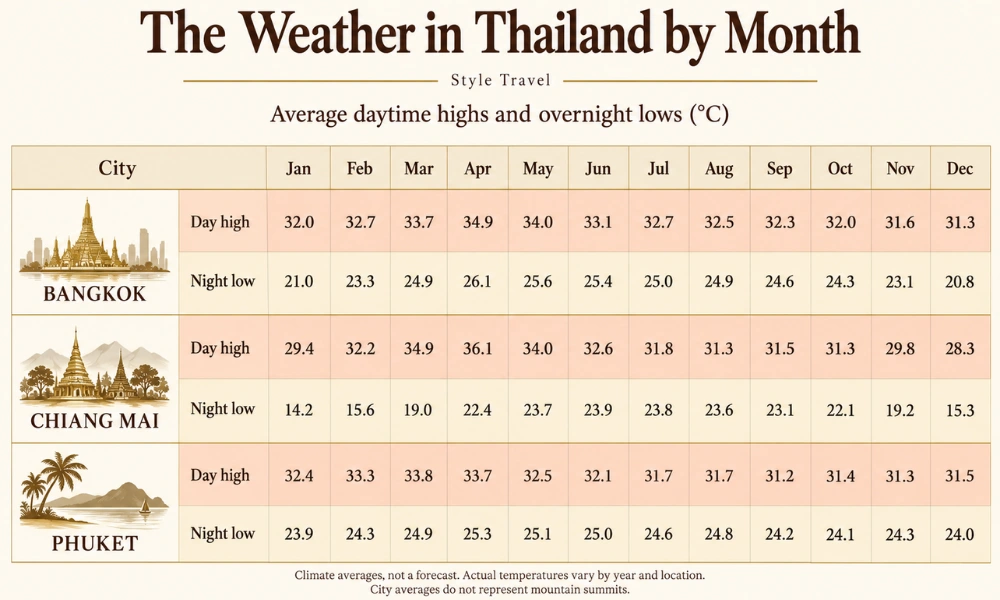
The best travel dates depend on your route. Compare places to visit in Thailand by region, using the rounded temperature averages below as a planning guide.
Chiang Mai and Chiang Rai (Northern Thailand)
November to January is a good time for northern sightseeing. Chiang Mai’s average daytime highs are 29–31°C (84–88°F), with overnight lows of 16–20°C (61–68°F). Chiang Rai is cooler at night, averaging around 12°C (54°F) in January, while higher mountain areas can fall below 10°C (50°F).
Bangkok and Ayutthaya (Central Thailand)
November to February generally offers the most comfortable conditions for exploring Bangkok and Ayutthaya. Bangkok’s average daytime highs are approximately 32–34°C (90–93°F), with overnight lows around 23–25°C (73–77°F).
Phuket, Krabi and Koh Samui (Southern Thailand)
November to April generally suits Phuket, Krabi and Phi Phi. Using Phuket as a reference, average daytime highs during this period are around 32–34°C (90–93°F), with overnight lows of 25–26°C (77–79°F). See our Phuket best time to travel guide for a closer comparison.
Koh Samui, Koh Phangan and Koh Tao are worth considering for a mid-year beach holiday, while October to December is generally wetter. Koh Samui remains warm even in January, averaging approximately 29°C (84°F) by day and 24°C (75°F) overnight.
For Koh Chang and Koh Kood, favor November to April for generally drier beach conditions.
When is the best time to visit Thailand for your interests?
If your dates are flexible, choose the experience you would most regret missing, then build the route around it. A holiday centered on an evening festival needs a confirmed event date; a trip built around swimming needs suitable coastal conditions. This approach is more useful than choosing a supposedly perfect month for the whole country.
Festivals and cultural celebrations
April suits travelers interested in Songkran, while Yi Peng and Loy Krathong usually fall around November. Other celebrations take place throughout the year, including craft festivals, candle processions and regional religious events. Check the program for your travel year because lunar dates, local schedules and ticketed events do not all follow the same calendar.
Our guide to Thailand festivals can help you choose a celebration that matches your interests. Confirm the location and admission arrangements before booking transport, and allow time to arrive before the main event. Staying in a festival destination does not automatically include access to every organized activity.
Beaches, swimming and island hopping
For an Andaman beach holiday, December to March is a strong starting point when swimming and boat trips are priorities. November and April can also work, with more attention to seasonal transitions and heat. For a holiday during the middle of the year, consider the southern Gulf islands rather than assuming Phuket’s wetter season applies equally to Koh Samui.
Budget and quieter travel
For many destinations, wetter months and dates outside major holiday periods can offer lower accommodation rates or fewer visitors. However, May to October is not one uniform low season across Thailand: Gulf island demand, school holidays and local events can change the picture. Compare the full cost of your actual dates instead of assuming a national discount.
A lower room rate is most useful when the available activities still suit your holiday. When comparing Thailand travel packages, check the route, included excursions and arrangements for weather-related changes. A comfortable city or resort stay with flexible outings may provide better value than an inexpensive itinerary dependent on daily boat trips.
Essential packing tips for your Thailand trip
When planning your trip to Thailand, it’s necessary to pack the suitable clothing based on the time of year to ensure comfort and suitability as you explore the Land of Smiles.
- Hot Season: Opt for lightweight, breathable fabrics such as cotton or linen to keep cool in the sweltering heat. Light-colored clothing is recommended to reflect sunlight and minimize heat absorption while you’re out and about.
- Cool Season: Bring light sweaters or thin jackets to stay cozy during cooler evenings, especially in northern regions where temperatures can drop.
- Wet Season: Pack waterproof jackets and quick-dry clothing to stay comfortable during sudden rain showers. A compact umbrella is also a good addition to your packing list for unexpected downpours.

In addition to seasonal clothing, consider these essentials based on your itinerary in Thailand:
- Modest Attire: Wear long pants or skirts when visiting temples to show respect for local customs.
- Swimwear: Don’t forget your swimsuit for beach excursions or poolside relaxation.
- Comfortable Footwear: Choose supportive sandals or shoes, especially if you plan on doing a lot of walking.
- Travel Scarf: A versatile scarf can provide sun protection during the day and warmth in the evenings.
By thoughtfully packing for the season and your planned activities, you’ll be well-equipped to fully enjoy the vibrant culture and stunning landscapes of Thailand!
Choose the best time to visit Thailand for your route
November to February is a practical starting point for a first visit combining cities, the north and the Andaman coast. For other dates, adapt the destination and pace: consider the Gulf islands for a mid-year beach stay, leave room for wet-weather changes and check air quality before northern outdoor trips. Share your preferred dates, destinations and priorities with Style Travel to plan a journey that suits both the season and the experiences you want.
FAQs about the best time to visit Thailand
Is there a month with good weather everywhere in Thailand?
No month guarantees ideal conditions across the whole country. January and February often provide a useful balance for popular routes, but southern rainfall, northern air quality and individual weather systems can still affect plans. Choose your main destinations first, then compare their seasonal conditions.
Is it worth visiting Thailand during the rainy season?
Yes, if your itinerary remains enjoyable under mixed conditions. Cities, food experiences and a comfortable hotel base provide more flexibility than a short trip built entirely around swimming or boat excursions. Check local forecasts, transport updates and outdoor access; rain can be brief, but prolonged wet spells are also possible.
How can you avoid the busiest travel periods?
Consider weekdays and dates outside major public holidays, school breaks and festivals. Traveling just outside a destination’s peak period may offer a useful balance, but seasonal transitions can bring less settled weather. At popular attractions, arriving early can help, although it will not guarantee an empty site.
When should you book a beach holiday?
Once you have chosen the coast and confirmed your dates, compare accommodation and transport early if you want a particular property or are traveling over a major holiday. Check cancellation terms and the timetable for any island connection. Book sea excursions with enough flexibility to respond to conditions closer to departure.


Doi Suthep temple Thailand and the way to its golden chedi

White Temple Thailand and the Surreal Art of Wat Rong Khun

Lantern Festival Thailand Guide to Yi Peng and Loy Krathong

Songkran Festival Thailand Guide to Thailand Water Festival

Discover Koh Samet Island in Thailand for a Beach Getaway

Similan Islands Thailand Travel Guide with Practical Tips for 2026

Discover Khao Phing Kan Island in Thailand

Is Phi Phi Island Thailand worth visiting ?

Thailand Phangan Island Guide You Cannot Miss in 2026