

Doi Suthep temple Thailand and the way to its golden chedi
Doi Suthep temple in Thailand combines a golden chedi, living Buddhist traditions and views over Chiang Mai. Reaching it involves a mountain journey and a choice between stairs and a funicular. This guide from Style Travel explains how to get there, what deserves your attention and how to prepare for a comfortable, respectful visit.
Getting to Wat Phra That Doi Suthep from Chiang Mai
Doi Suthep is the mountain; Wat Phra That Doi Suthep is the temple. It stands above Chiang Mai, reached by a winding road through forest. A published travel reference gives around 40 minutes by car from the city centre, but your actual journey depends on the starting point, traffic and stops.
A red songthaew is one way to travel up, while a private car or guided tour offers more control over departure times and stops. Before agreeing to a fare, establish whether it is shared or private, one-way or return, and whether waiting time is included. For the return journey, agree on a meeting place rather than assuming a driver will remain nearby.
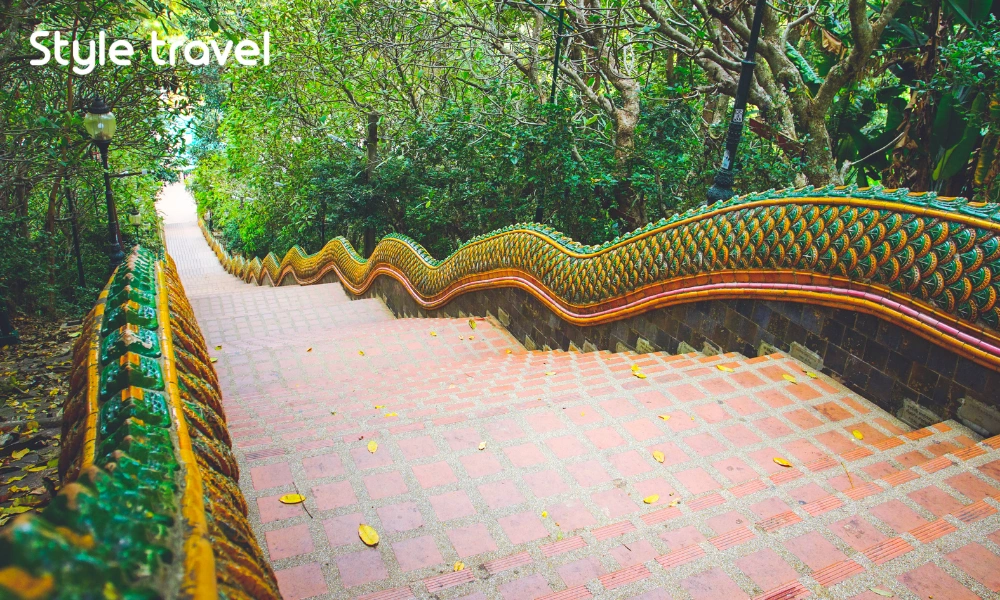
At the temple approach, choose between the 306-step naga staircase and the funicular. The staircase lets you appreciate the serpent-shaped balustrades, but take it slowly in hot or wet conditions. The funicular reduces the climb, although queues and remaining steps may still affect access. Confirm the route in advance if you use a wheelchair or find stairs difficult.
If you prefer walking, distinguish the forest route to Wat Pha Lat from the onward ascent to Doi Suthep. Reaching the lower temple does not mean you are close to the upper temple entrance. Check current trail conditions and allow sufficient daylight. For a less demanding outing, combine a road journey with selected stops from our guide to things to do in Chiang Mai.
The story behind Wat Phra That Doi Suthep
Wat Phra That Doi Suthep has deep connections with the former Lanna kingdom and remains an important place of pilgrimage. Its religious significance centres on a sacred relic traditionally associated with the Buddha, enshrined within the golden chedi.
According to the white elephant legend, a relic was placed on an elephant that travelled up the mountain and stopped at the site where the temple would be established. Accounts vary in their details, so understand this as a religious founding story rather than a fully documented sequence of events.
That background helps explain why the courtyard is more than an architectural attraction. People come to pray, make offerings and pay their respects. Watch without obstructing worshippers, and ask before photographing individuals. If you are exploring Buddhist heritage beyond Chiang Mai, our guide to temples in Thailand introduces contrasting royal sanctuaries, modern designs and historic ruins.
What to see at Wat Phra That Doi Suthep
The golden chedi is the visual and spiritual focus of the temple. Take time to notice its shape, the surrounding ceremonial umbrellas and the relationship between the shrine and the courtyard. You do not need to join a ritual to appreciate the setting; simply leave space for those who are worshipping.
Elsewhere in the complex, look for:
- Buddha images and shrine halls: Notice variations in posture, materials and decorative detail.
- Bells and smaller shrines: Follow local signs and guidance before touching anything or taking part.
- The naga staircase: Its long serpent balustrades make the approach part of the architectural experience.
- The city-facing terrace: On a clear day, the view helps place Chiang Mai within its surrounding valley.
Do not plan the visit entirely around a guaranteed panorama. Cloud, rain or haze can obscure the city even when the temple itself is accessible. The chedi, craftsmanship and religious atmosphere still give the visit a focus when visibility is limited. Visitor accounts reflect this difference between clear and cloudy days.
For a varied holiday, balance cultural stops with markets, food and other things to do in Thailand.

Planning your visit to Wat Phra That Doi Suthep
An early visit can help you avoid some of the larger groups and the strongest daytime heat, although quiet conditions are never guaranteed. Choose your timing around the weather, your transport and whether you want to watch the city in daylight. For an evening visit, confirm the return arrangements and funicular hours before travelling up.
As a planning reference, published visitor information lists:
- Temple hours: 05:00–21:00.
- Admission: THB 30, with funicular charges to be checked separately.
- Funicular operation: Approximately 06:00–18:00, which is shorter than the listed temple opening period.
Confirm the current charges, ticket inclusions and operating times before your visit, especially if you need the funicular. Carry small notes so that paying at the entrance is straightforward.
Allow roughly one to two hours at the temple as a starting point, then add road travel, waiting and any stops. This is a suggested allowance, not a fixed duration. A visit centred on photography or religious interest may take longer, while adding Wat Pha Lat changes the overall outing.
Wear clothing that covers your shoulders and knees, and remove shoes where indicated before entering sacred areas. Keep voices low, follow photography signs and avoid pointing your feet towards Buddha images. Bring drinking water, sun protection and footwear with grip; a light layer can be useful in cooler mountain weather. The winding approach is also worth considering if you are prone to travel sickness.
If your trip coincides with Yi Peng or Loy Krathong, our lantern festival Thailand guide helps you plan the celebrations alongside your temple visit. Check dates and locations before arranging transport or other activities.
Wat Phra That Doi Suthep brings together sacred tradition, distinctive architecture and a mountain setting within reach of Chiang Mai. Choose suitable transport, leave time to explore and approach the temple as an active place of worship. Contact Style Travel with your travel dates and interests for help including Doi Suthep in your Chiang Mai itinerary.


Doi Suthep temple Thailand and the way to its golden chedi

White Temple Thailand and the Surreal Art of Wat Rong Khun

Lantern Festival Thailand Guide to Yi Peng and Loy Krathong

Songkran Festival Thailand Guide to Thailand Water Festival

Discover Koh Samet Island in Thailand for a Beach Getaway

Similan Islands Thailand Travel Guide with Practical Tips for 2026

Discover Khao Phing Kan Island in Thailand

Is Phi Phi Island Thailand worth visiting ?

Thailand Phangan Island Guide You Cannot Miss in 2026