
White Temple Thailand and the Surreal Art of Wat Rong Khun
Searching for White Temple Thailand usually means planning a visit to Wat Rong Khun in Chiang Rai. Its white architecture, mirrored details and unexpected artwork deserve more than a quick photograph. This guide from Style Travel explains what to look for, how to understand its symbolism and what to know before visiting.
What makes the Chiang Rai White Temple different?
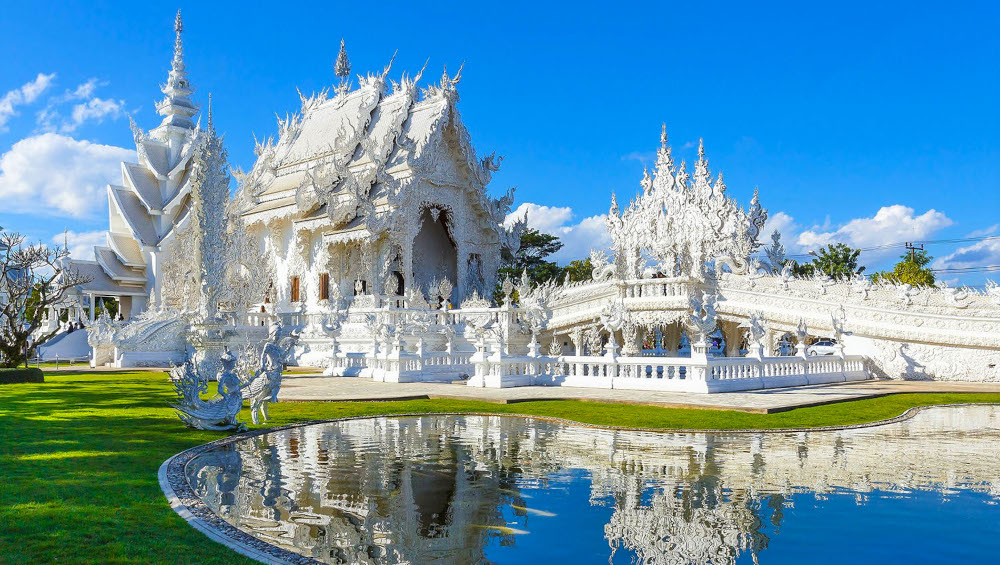
The Chiang Rai White Temple is a contemporary Buddhist art complex created by Thai artist Chalermchai Kositpipat. The present project began welcoming visitors in 1997, making it quite different from the centuries-old temples you may encounter elsewhere in Thailand. Traditional architectural forms remain recognisable, but the artist fills them with elaborate sculptures, reflective surfaces and imagery drawn from the modern world.
If you are comparing Thailand temples, come here for the relationship between architecture and contemporary artistic expression, rather than expecting an ancient monument or a quiet retreat.

What to look for at the Thailand White Temple
The Thailand White Temple rewards a visit that moves from the overall composition to individual details. Begin with the relationship between the white hall, bridge and water, then observe how the sculptures change as you approach.
The white exterior and mirrored details of the Chiang Rai White Temple
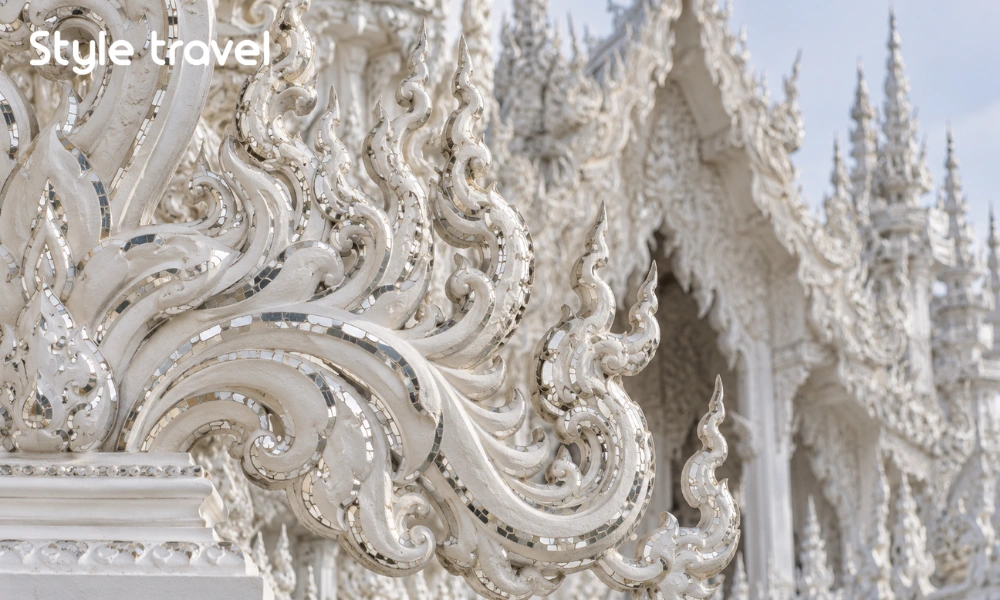
The white finish is the first thing most visitors notice. Rather than relying on colour, the exterior uses layered rooflines, curling ornaments and small mirrored fragments to create depth and brightness. Sunlight catches the glass at different angles, while the surrounding water gives the building another dimension through its reflections. The white colour is associated with Buddhist purity, providing a contrast to the more troubling imagery along the approach.
Take a wide view before moving closer to examine the craftsmanship. The outline of a roof ornament may look simple from across the pond, yet contain several smaller shapes when viewed nearby. For photographs, try including the water and the full roofline, then choose a few details rather than taking every image from the same position. Keep to permitted areas and avoid touching the decorative surfaces.
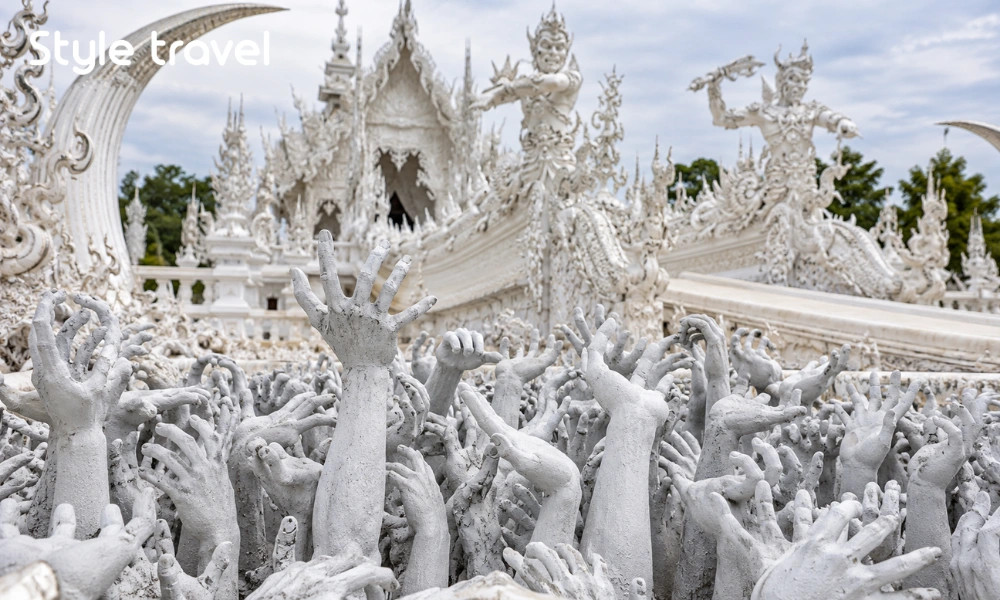
The bridge and reaching hands at the Chiang Rai White Temple
The approach to the main hall takes visitors past a mass of reaching hands and across a bridge commonly associated with the cycle of rebirth. The hands are generally interpreted as expressions of craving and attachment, while crossing towards the hall represents movement beyond these worldly desires. Their unsettling appearance creates a deliberate contrast with the luminous building ahead. This is a useful starting point for understanding the composition, rather than treating each figure as a separate attraction.
The murals and unexpected imagery inside the Thailand White Temple
Inside the main hall, the artwork shifts towards colourful murals containing contemporary imagery alongside religious themes. Familiar figures from popular culture and references to modern events can seem surprising in a Buddhist setting. Their presence invites reflection on distraction, conflict and the pressures of worldly life, although individual scenes should not be assigned a definitive meaning without a clear explanation from the artist or an on-site interpretation.
Give yourself time to look beyond the first recognisable character. Notice how the imagery is arranged and how its mood differs from the exterior. Photography is not permitted inside the main hall, so put your camera away and follow the posted instructions. The wider grounds contain additional sculptures and buildings, including an ornate golden toilet building.
How to visit the Chiang Rai White Temple
Wat Rong Khun is outside central Chiang Rai, so plan transport in both directions. A local stay gives you more flexibility over arrival time and the rest of your day. A tour from Chiang Mai involves a much longer road journey: check how much time is allocated to the temple rather than choosing the itinerary with the longest list of stops. For a wider local route, our guide to things to do in Chiang Rai can help you decide whether to add the Blue Temple or Baan Dam Museum. These are separate attractions, so include their travel and visiting time.
As of 2026, standard admission for foreign visitors is THB 200, following a change introduced on 1 January 2026; the published announcement includes access to the Cave of Art. Confirm the applicable ticket, concessions and current opening hours before travelling. An early arrival within opening hours gives you more time to explore, but does not guarantee an empty site. As a planning suggestion, allow around one to two hours, with longer if you prefer examining the artwork slowly. When comparing the best places to visit in Thailand, Wat Rong Khun is particularly worthwhile if you enjoy architecture, contemporary art and religious symbolism.
A few preparations will make the visit easier:
- Dress for a religious site. Cover your shoulders and knees, and remove shoes wherever requested.
- Check photography signs. Restrictions can differ between the grounds, buildings and exhibition spaces.
- Plan for the exposed grounds. Bring water and sun protection, with rain protection when appropriate.
- Ask about accessibility. Confirm steps, walking surfaces and the route through the complex if anyone has limited mobility.
- Keep the itinerary realistic. Leave time for the artwork instead of treating the temple as a brief photo stop between distant destinations.
If Wat Rong Khun is one highlight of a longer holiday, balance it with a different experience rather than scheduling several similar visits in succession. Exploring the top things to do in Thailand can help you combine temple architecture with food, countryside or time by the coast.
A visit to the White Temple in Thailand becomes far more meaningful when you take the time to explore the intricate details hidden beneath its pristine white exterior. With its bridges, sculptures, and murals, Wat Rong Khun offers an ideal setting – not just for photography, but also for quiet observation and reflection. Reach out to Style Travel and share your preferred dates and personal interests; we will help you incorporate a visit to this iconic Chiang Rai landmark into your Northern Thailand itinerary, ensuring a relaxed and unhurried pace.


Doi Suthep temple Thailand and the way to its golden chedi

White Temple Thailand and the Surreal Art of Wat Rong Khun

Lantern Festival Thailand Guide to Yi Peng and Loy Krathong

Songkran Festival Thailand Guide to Thailand Water Festival

Discover Koh Samet Island in Thailand for a Beach Getaway

Similan Islands Thailand Travel Guide with Practical Tips for 2026

Discover Khao Phing Kan Island in Thailand

Is Phi Phi Island Thailand worth visiting ?

Thailand Phangan Island Guide You Cannot Miss in 2026