

Thailand and Bali itinerary for 2 weeks
Planning a Thailand and Bali itinerary 2 weeks long usually starts with one worry. Is that enough time for two countries, or will you spend half the trip in airports? It works if you keep the route simple. This plan from Style Travel gives you six nights in Thailand (Chiang Mai, Chiang Rai and Bangkok) and seven nights in Bali, with only three flights. It is based on the private Best of Thailand & Bali tour we run, so the timings, hotels and prices below come from a real trip, not a wish list.

How a 2 week Thailand and Bali itinerary is split
Two weeks in Thailand and Bali works best as a simple north to south line. You fly into Chiang Mai, move down to Bangkok, then fly across to Bali and finish on the beach. Nobody wants to unpack in a new hotel every second night, so the plan uses four bases in total.
| Days | Base | Nights | Focus |
|---|---|---|---|
| 1 to 3 | Chiang Mai | 3 | Mountains, elephants, hill villages, Chiang Rai day trip |
| 4 to 6 | Bangkok | 3 | Grand Palace, temples, river, markets |
| 7 to 9 | Kuta, Bali | 3 | West Bali temples, rice terraces, Tanah Lot |
| 10 to 11 | Ubud, Bali | 2 | Central and east Bali |
| 12 to 14 | Kuta, Bali | 2 | Beach time and departure |
Why start in the north? Chiang Mai and Chiang Rai are the most active part of the trip, with long drives and early starts. Doing them while you are fresh, and ending with a slow week in Bali, feels much better than the other way round. If your flight from the US lands in Bangkok, you simply connect to Chiang Mai on the same day. The domestic flight takes a little over an hour.
Days 1 to 3: Northern Thailand
The first part of this Thailand and Bali itinerary 2 weeks plan is the cooler, greener north. Chiang Mai is your base for three nights, and one long day takes you up to Chiang Rai and the Golden Triangle. The entrance fees below are what you pay if you travel on your own, as checked in November 2026. Our tour price already includes them.
Day 1: Arrive in Chiang Mai and a Khantoke dinner
A driver meets you at Chiang Mai airport and takes you to your hotel. Rest in the afternoon, because jet lag from the US hits hard on day one. In the evening you sit down to a Khantoke dinner, a northern Thai meal served on low round trays, with traditional music and dance. It is an easy first night that needs no planning, and you sleep in Chiang Mai.

Day 2: An elephant sanctuary, a Lisu village and a bamboo raft
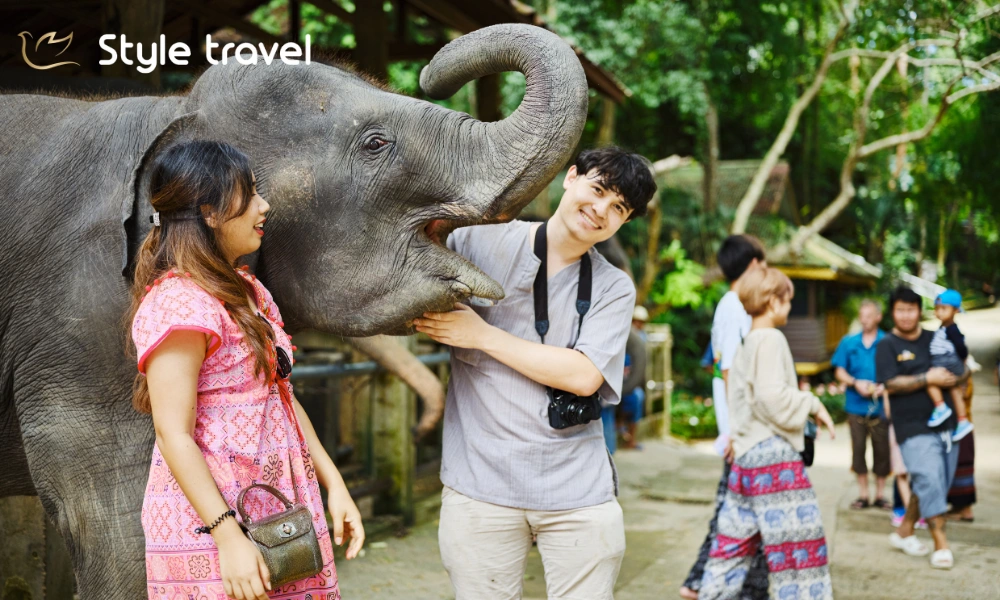
Elephant sanctuary in Mae Taeng
Mae Taeng is about an hour north of Chiang Mai. The sanctuary on this route does not offer riding. You prepare food, feed the elephants, join them at the river for bathing and spend most of the time watching how they behave. Before booking any elephant visit in Thailand, ask about rides, shows and painting. A good sanctuary says no to all three. Booked on your own, a half day visit usually costs about 1,500 to 2,500 baht per person.
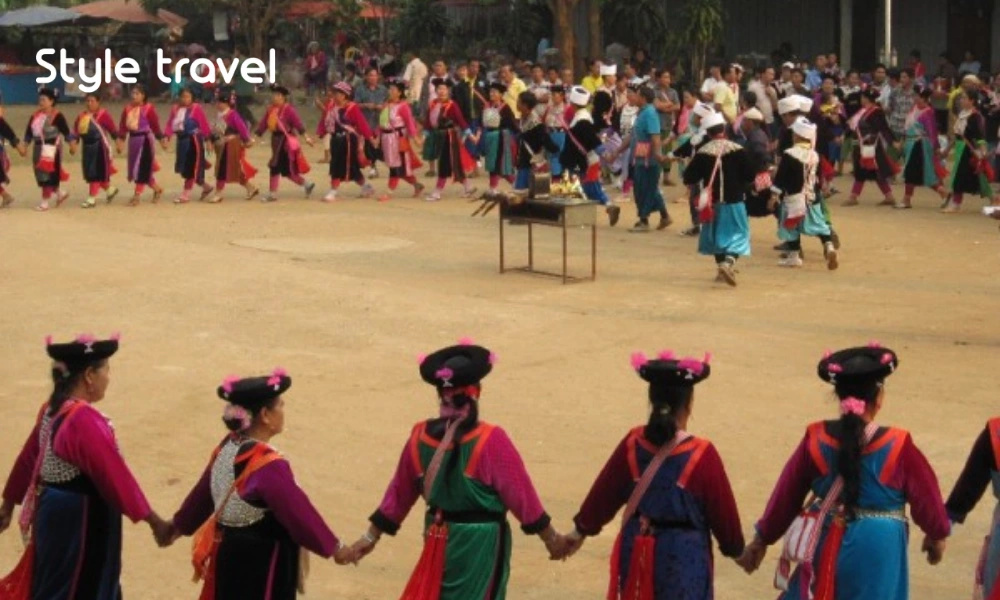
Lisu hill village
After lunch you visit a village of the Lisu, one of the hill tribes of northern Thailand. Families here farm the slopes and are known for bright, hand sewn clothing. Ask your guide before taking photos of people, and buy crafts directly from the makers if you want to support them.
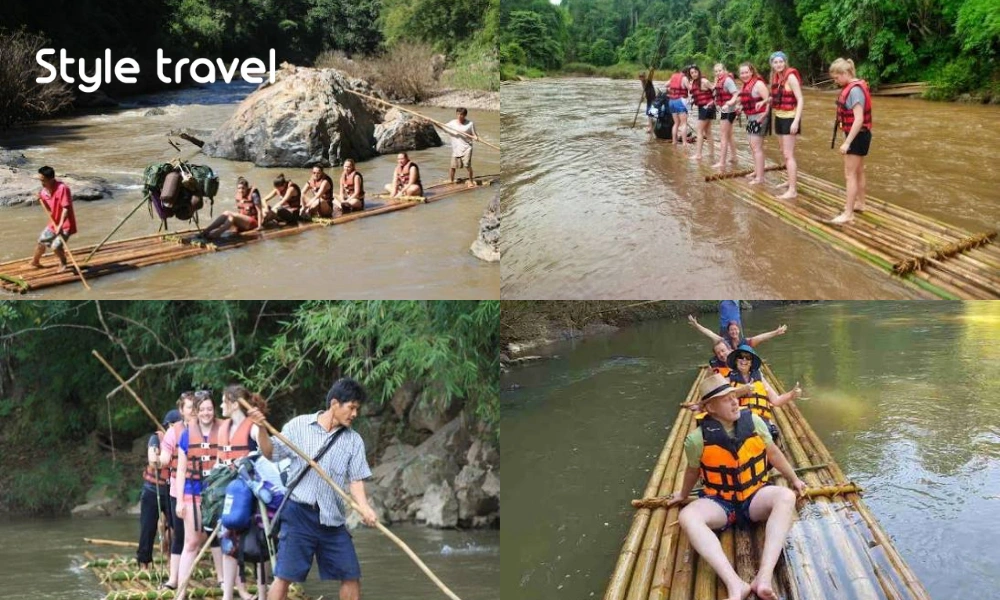
Bamboo rafting on the Mae Taeng River
Next you float down a quiet stretch of the river on a bamboo raft, steered by a local boatman with a long pole. Wear clothes that can get wet and keep your phone in a dry bag. A raft costs about 300 to 500 baht and holds up to four people.
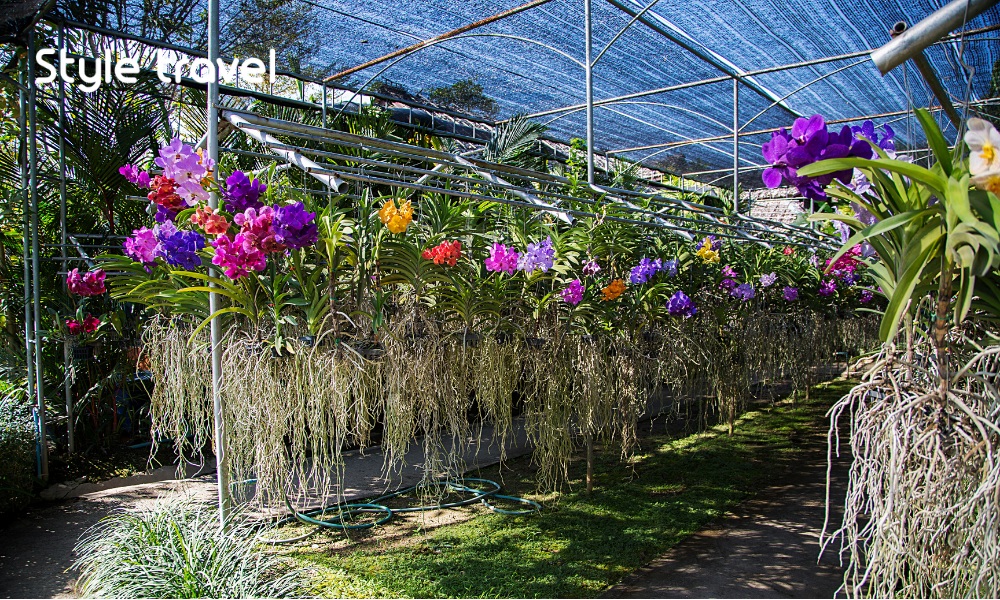
Orchid and butterfly farm
On the drive back there is a short stop at an orchid and butterfly farm. Some farms are free and others charge up to about 100 baht. It is a relaxed half hour among hanging orchids before you return to Chiang Mai for the night.
Day 3: Chiang Rai, the White Temple and the Golden Triangle
This is the longest day of the trip. Chiang Rai is about three hours from Chiang Mai by road, so you leave early.
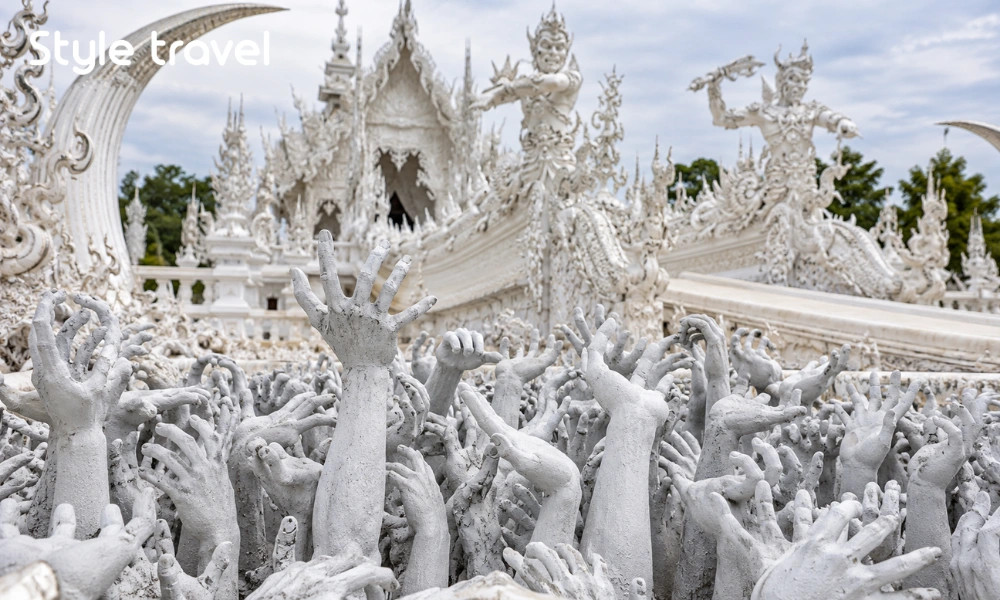
Wat Rong Khun, the White Temple
The first stop is Wat Rong Khun, better known as the White Temple Thailand. It is a modern temple covered in white plaster and mirror glass, designed by the artist Chalermchai Kositpipat. Go early if you can, as tour buses arrive by mid morning. Foreigners pay 200 baht, and the temple is open from 8 am to 5 pm.
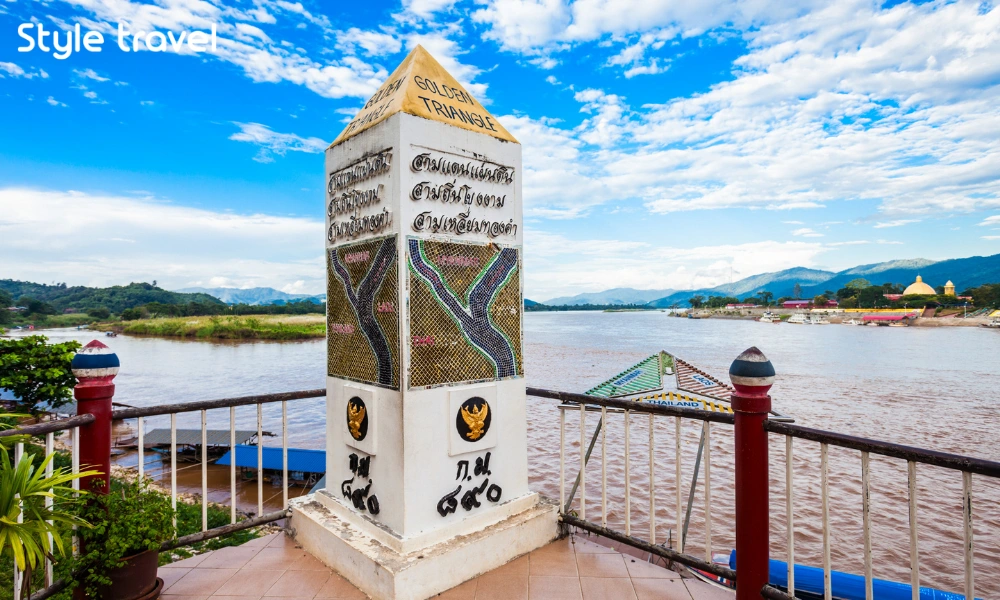
The Golden Triangle
About an hour north, Thailand, Laos and Myanmar meet where the Ruak River joins the Mekong. A short boat ride gives you the view of all three borders. A private boat costs about 700 to 1,000 baht. The Hall of Opium museum nearby charges 200 baht and opens from 8:30 am to 4 pm, closed on Mondays.
Mae Sai border market
The last stop is Mae Sai, the northernmost town in Thailand, with a busy market right at the Myanmar border crossing. Then it is a long drive back to your hotel in Chiang Mai, so bring snacks and something to read.
Days 4 to 6: Bangkok
Bangkok is the busy middle of your two weeks in Thailand and Bali. Three nights give you one full day for the old city and one day for the markets outside town.
Day 4: Fly from Chiang Mai to Bangkok
The morning is free. Walk around the old city moat, have a last bowl of khao soi or do some shopping before your transfer to the airport. The flight to Bangkok takes a little over an hour, and a driver takes you to your hotel. Keep the evening light, because tomorrow starts early.
Day 5: The Grand Palace, Wat Arun, Wat Pho and Chinatown
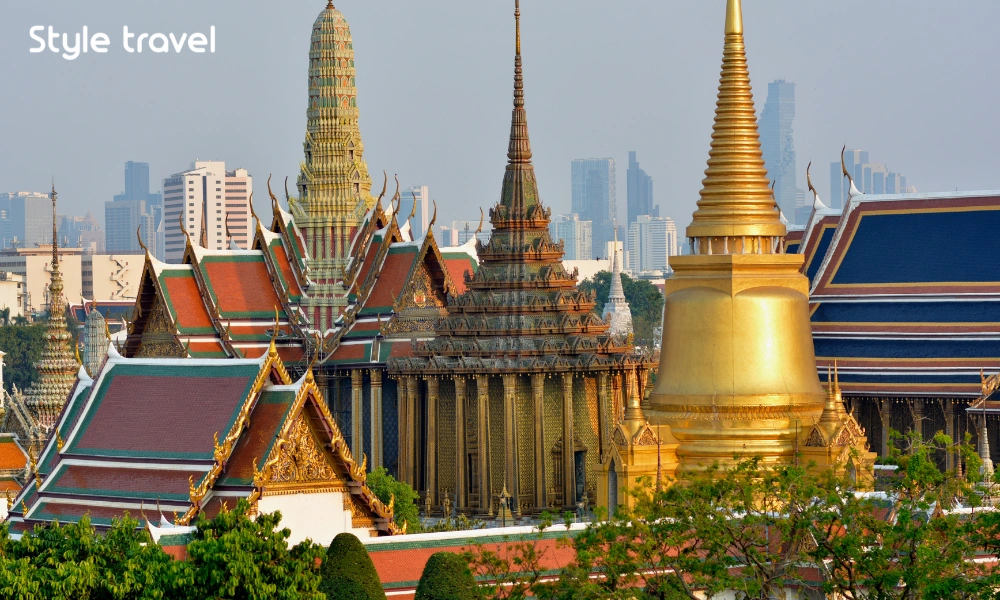
The Grand Palace and Wat Phra Kaew
Start at the Grand Palace, the former royal residence on the riverbank. Inside the same walls is Wat Phra Kaew, the Temple of the Emerald Buddha, the most sacred temple in Thailand. Cover your shoulders and knees, or you will be sent to rent clothes at the gate. Tickets cost 500 baht and are sold from 8:30 am to 3:30 pm, so go in the morning.
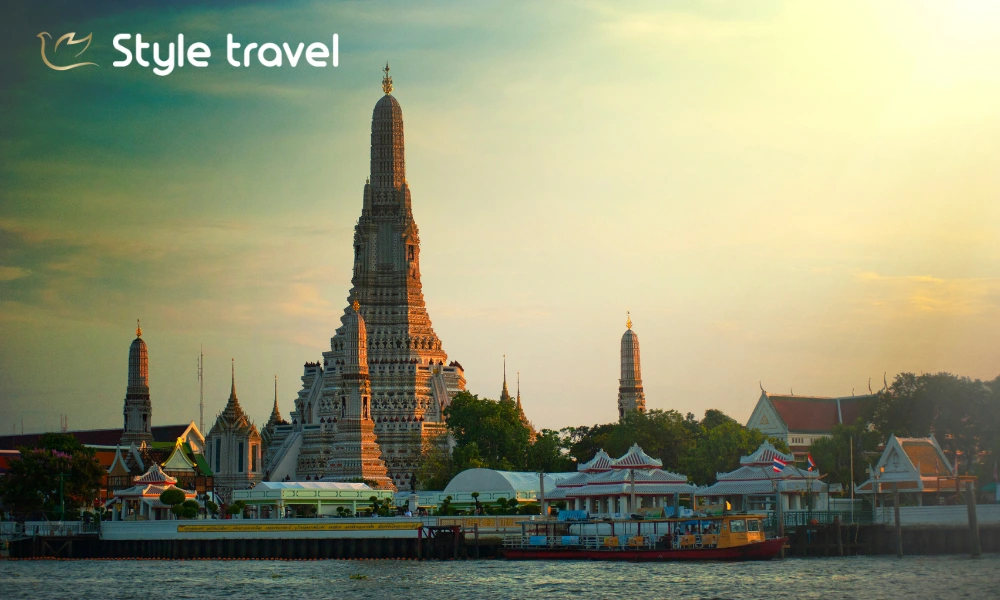
Wat Arun
After lunch you take a local ferry across the Chao Phraya River to Wat Arun, the Temple of Dawn. Its tall central tower is covered in pieces of colored porcelain. The steps are steep, so take them slowly. Entry is 200 baht, and the temple is open from 8 am to 6 pm.
Wat Pho and the Reclining Buddha
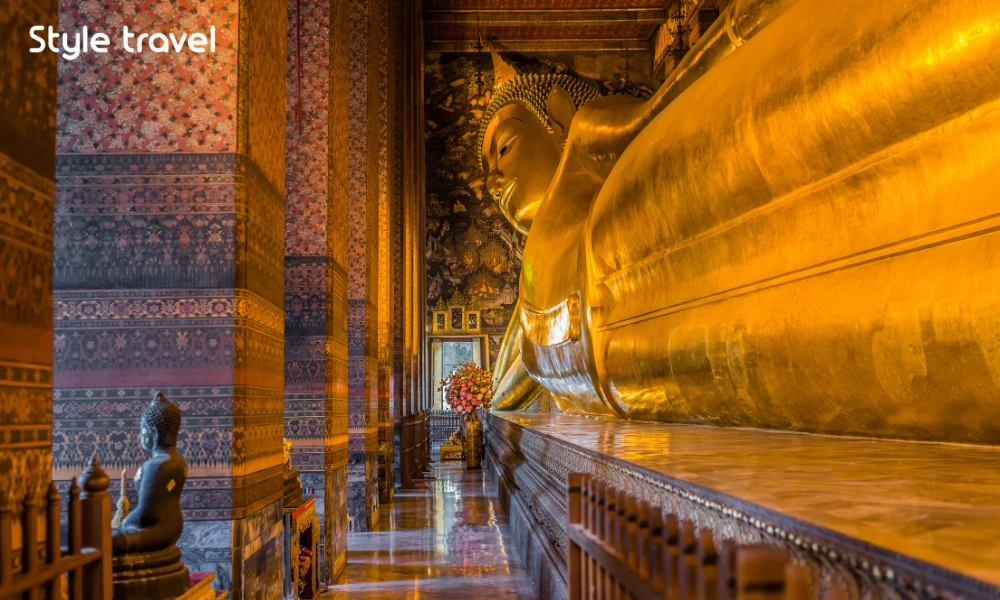
Cross back to Wat Pho to see the Reclining Buddha, 46 meters long and covered in gold leaf. Wat Pho is also the home of traditional Thai massage, and you can book a short session at the temple school if your legs need it. Entry is 300 baht, and Wat Pho stays open until 7:30 pm.
Chinatown and the Golden Buddha
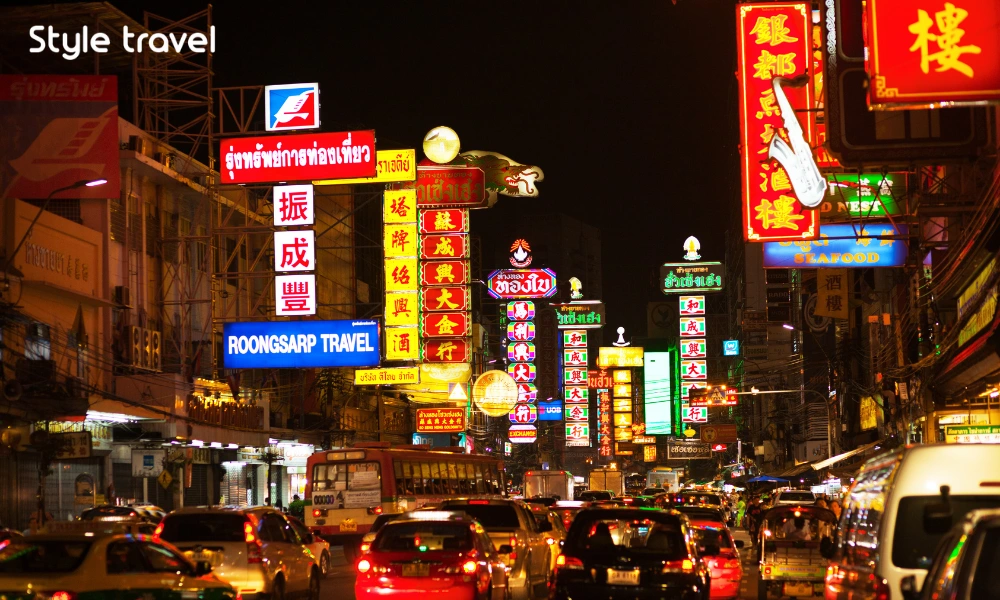
The day ends in Chinatown. You visit the Golden Buddha at Wat Traimit, which costs 40 baht and closes at 5 pm, then walk the market streets around Yaowarat Road. Chinatown is at its best after dark, so stay for street food before heading back to your Bangkok hotel.
Day 6: Damnoen Saduak floating market and the Maeklong railway market
Damnoen Saduak floating market
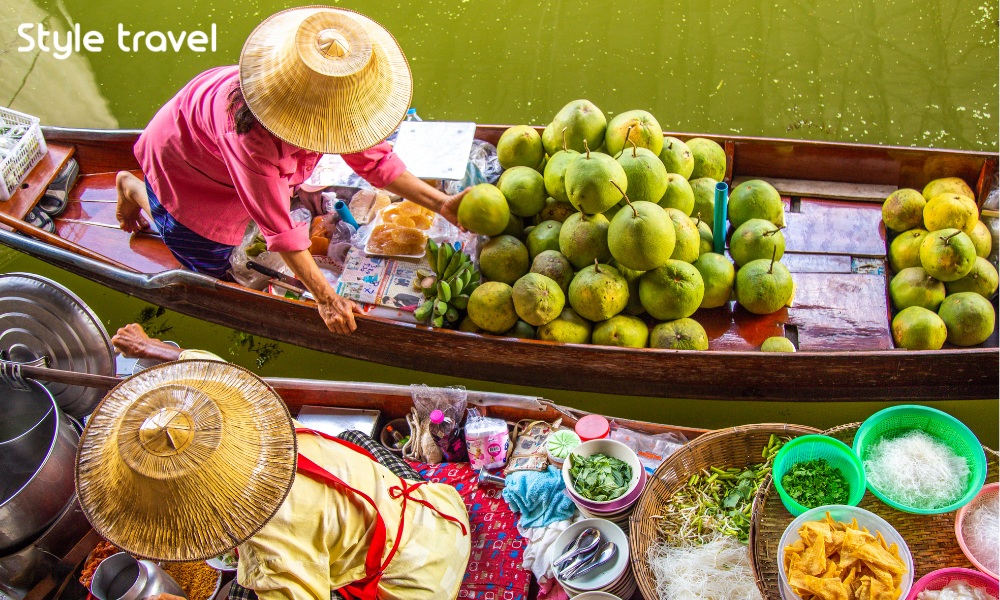
Leave Bangkok early and drive southwest for about one and a half hours. At Damnoen Saduak you board a longtail boat and weave through narrow canals to the Bangkok floating market that most people picture, with vendors selling fruit and noodles from small boats. Arrive before 9 am, when it is less crowded. A longtail boat costs about 500 to 800 baht per boat, so agree on the price before you get in.
Maeklong Railway Market
After lunch you stop at the Maeklong Railway Market. Stalls sit right on the train tracks, and when a train comes through, vendors pull back their awnings and baskets, then set everything up again a minute later. The market is free, and trains usually pull in around 8:30 am, 11:10 am, 2:30 pm and 5:40 pm, so ask your guide to time your visit. Then you drive back to Bangkok for your last night in Thailand.
Days 7 to 14: Bali
The second half of the trip is all Bali. Instead of staying in Kuta the whole time, this plan puts two nights in Ubud in the middle. That cuts the longest drives and lets you wake up among the rice fields at least once.
Day 7: Fly from Bangkok to Bali
Bangkok to Bali is a nonstop flight of about 4 hours 15 minutes to 4 hours 30 minutes, and Bali is one hour ahead of Thailand. There is no ferry or overland option worth considering. Our guide on how to get from Thailand to Bali covers the airlines and airport details. A driver meets you at Denpasar airport for the short ride to your hotel in Kuta. If you land in daylight, walk down to Kuta beach for the sunset.
Day 8: Taman Ayun, Jatiluwih rice terraces and Ulun Danu Bratan
Taman Ayun temple
Taman Ayun, about 40 minutes from Kuta, is the old royal temple of the Mengwi kingdom. Its tiered meru shrines stand inside a wide moat and a neat lawn. You walk around the outer courtyard, as the inner one is for worship only. Tickets cost about IDR 30,000 to 50,000, and it is open from 8 am to 6 pm.

Jatiluwih rice terraces
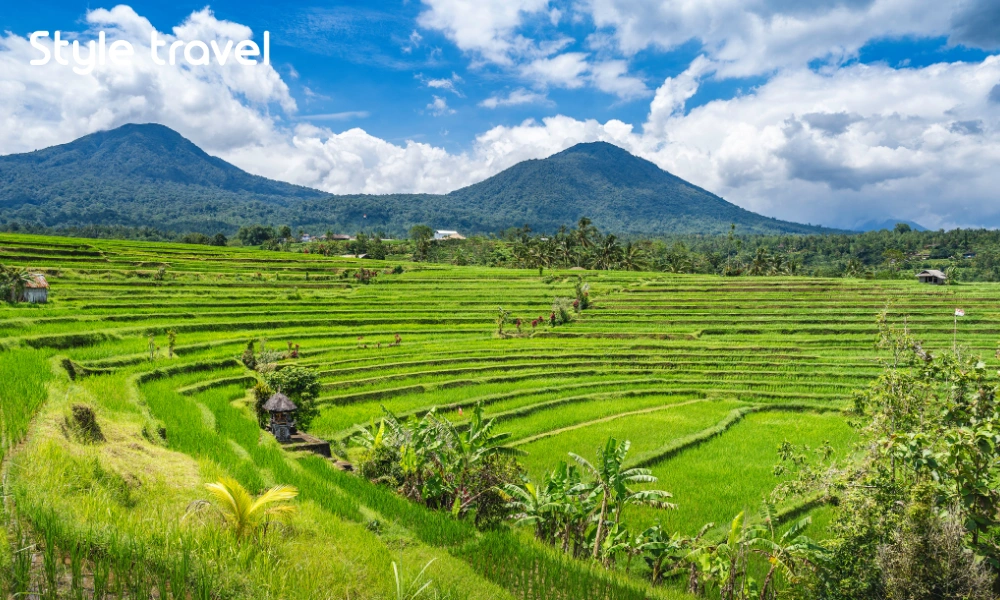
From there you head up to Jatiluwih, where the rice terraces are part of the Cultural Landscape of Bali Province on the UNESCO World Heritage List. The site honors the subak, the shared irrigation system farmers have used for centuries. Walk one of the short marked trails between the fields. Foreigners pay IDR 75,000 to enter.
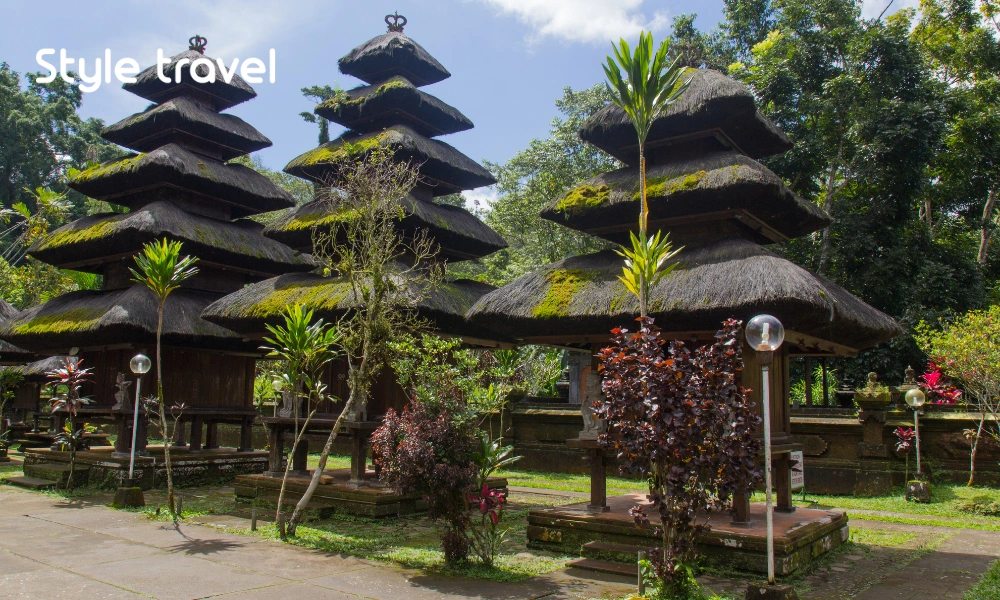
Pura Luhur Batukaru
Next is Pura Luhur Batukaru, a forest temple on the slopes of Mount Batukaru that sees far fewer visitors. Moss covered shrines and tall trees make it feel very different from the coastal temples. Entry is a donation of about IDR 20,000 to 40,000, which includes the sarong you need to wear.
Ulun Danu Bratan
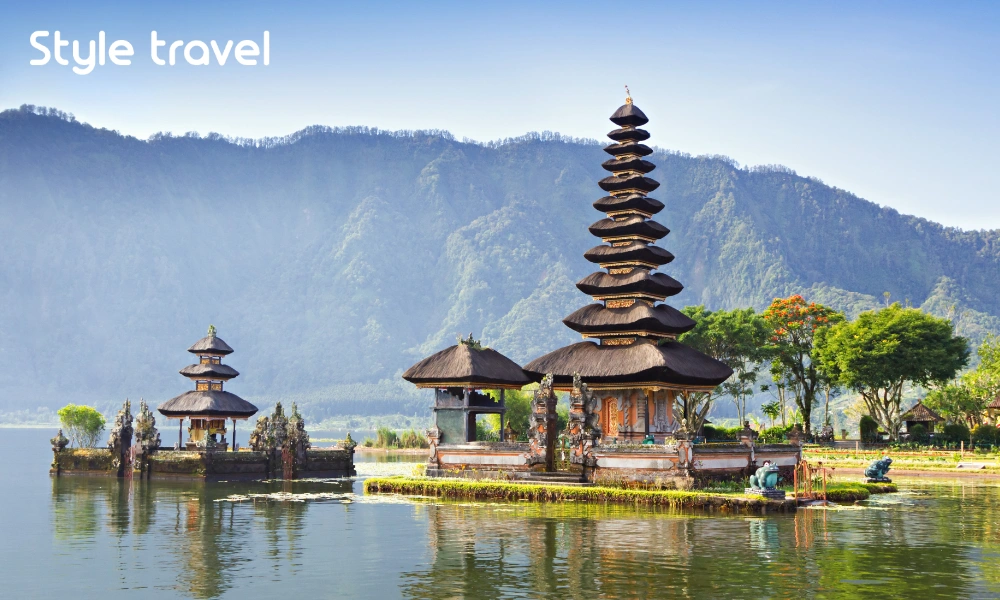
The day ends at Ulun Danu Bratan, the temple that seems to float on Lake Bratan in the highlands. It is cooler up here, so a light jacket helps. Tickets cost IDR 100,000, and the temple is open from 7 am to 6 pm. The drive back to Kuta takes around two hours.
Day 9: Tunjuk village and Tanah Lot at sunset
Tunjuk village
This is a slower day. In the morning you visit Tunjuk, a farming village in Tabanan, to see how families live, cook and work in the rice fields. It is a nice change after a week of big sights.
Tanah Lot
In the late afternoon you go to Tanah Lot, the sea temple built on a rock just off the coast. Visitors cannot enter the temple itself, but the cliffs around it give you the view. Entry is IDR 75,000, and the site is open from 7 am to 7 pm. Get there well before sunset to find a spot, then head back to Kuta for the night.

Day 10: Move to Ubud via Tegallalang, Tirta Empul, Penglipuran and Tukad Cepung
Pack your bags, as you change hotels today.
Tegallalang rice terraces
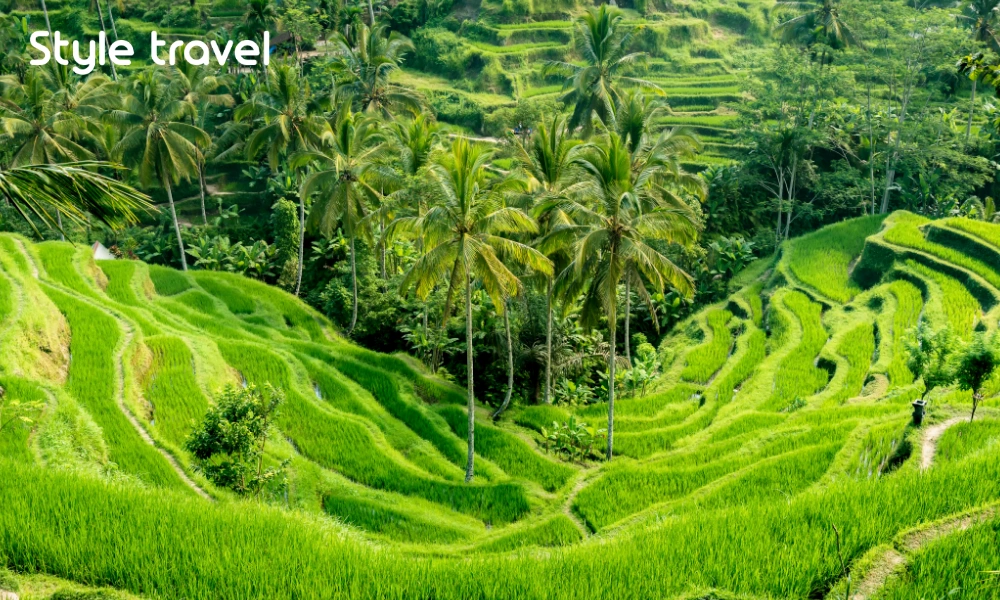
Tegallalang is about 20 minutes north of Ubud. The terraces drop down a steep valley lined with palm trees. Come early before the swings and cafes get busy. Entry is about IDR 25,000, plus small donations at a few points along the paths.
Tirta Empul water temple
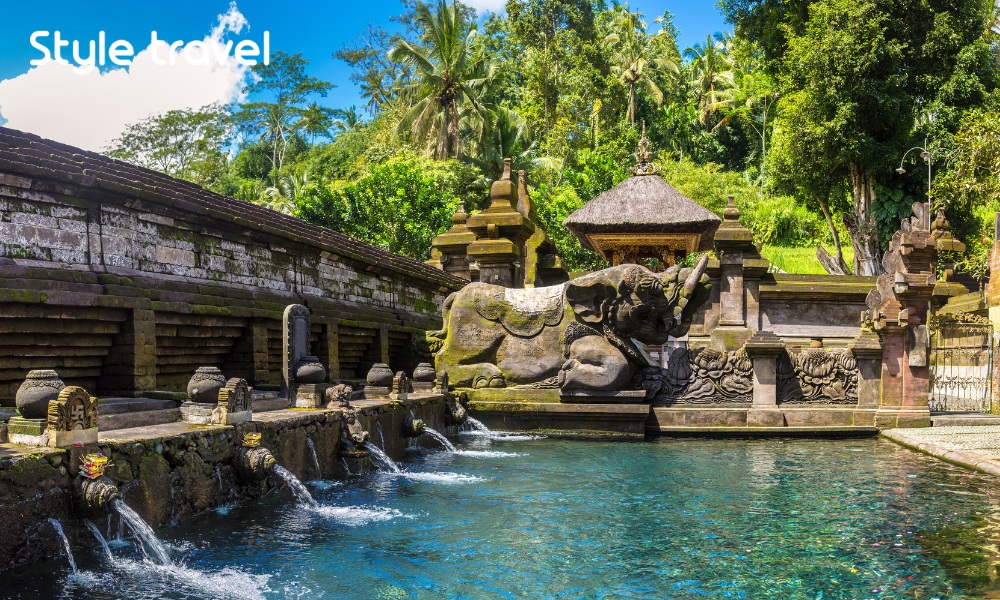
Tirta Empul is a water temple where Balinese Hindus bathe under carved spouts to purify themselves. You can join in with a sarong and a guide, or just watch from the edge of the pools. Tickets cost IDR 75,000, and the temple is open from 8 am to 6 pm.
Penglipuran village
In the afternoon you visit Penglipuran in Bangli, a traditional village known for its neat stone lanes, matching family gates and the bamboo forest the community protects. Walk to the top of the main street for the best view. Entry is about IDR 50,000 to 70,000, and the village is open from 8 am to 6:30 pm.
Tukad Cepung waterfall
The last stop is Tukad Cepung, a waterfall that falls into a narrow canyon where light comes through the rock. The path is slippery, so wear shoes with grip. Entry is about IDR 15,000 to 30,000 in cash, and it is open from 7 am to 6 pm. You then check in to your hotel in Ubud.
Day 11: East Bali with Kusamba, Goa Lawah, Tenganan and Tirta Gangga
Ubud is much closer to the east coast than Kuta, which is the main reason for these two nights.
Kusamba fishing village
You start at Kusamba, about 45 minutes from Ubud, where colorful outrigger boats line a black sand beach. Families here still make sea salt by hand, and you can watch the process on the beach.
Goa Lawah temple
A few minutes down the coast is Goa Lawah, a temple built around a cave full of bats. It is one of the six most important temples in Bali. Entry is about IDR 15,000 to 30,000, and a sarong and sash are required.
Tenganan village
After lunch you visit Tenganan, one of the old Bali Aga villages, where some families still weave double ikat cloth by hand. A small piece takes months to make, so expect high prices for the real thing. Entry to the village is by donation.
Tirta Gangga water palace
The last stop is Tirta Gangga, a former royal water palace with pools, fountains and stepping stones. Entry is IDR 90,000, and the palace is open from 7 am to 6 pm. Bring small change to buy fish food for the koi. Then you drive back to Ubud for dinner.

Day 12: A slow Ubud morning and back to the coast
This is the day we added to turn the 13 day tour into a full two weeks. If you want more ideas for this town, our 7 day Bali itinerary has more Ubud stops.
Sacred Monkey Forest Sanctuary
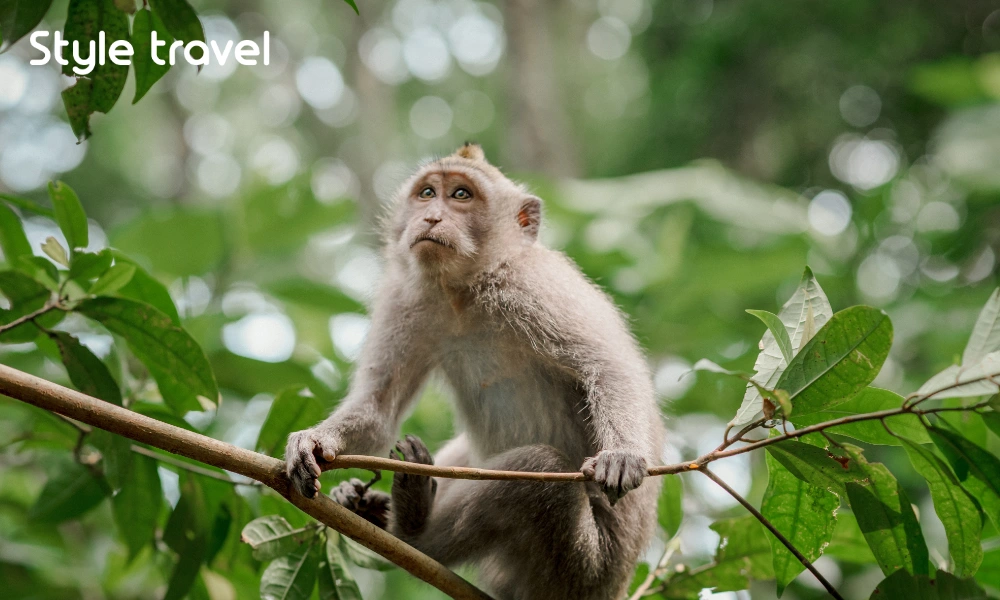
Start with a walk through the Sacred Monkey Forest Sanctuary, a patch of jungle with old temples and hundreds of long tailed macaques. Keep food and loose items in your bag, and do not touch the monkeys. Tickets cost IDR 130,000, and the last entry is at 5 pm.
Ubud Palace and Ubud Art Market
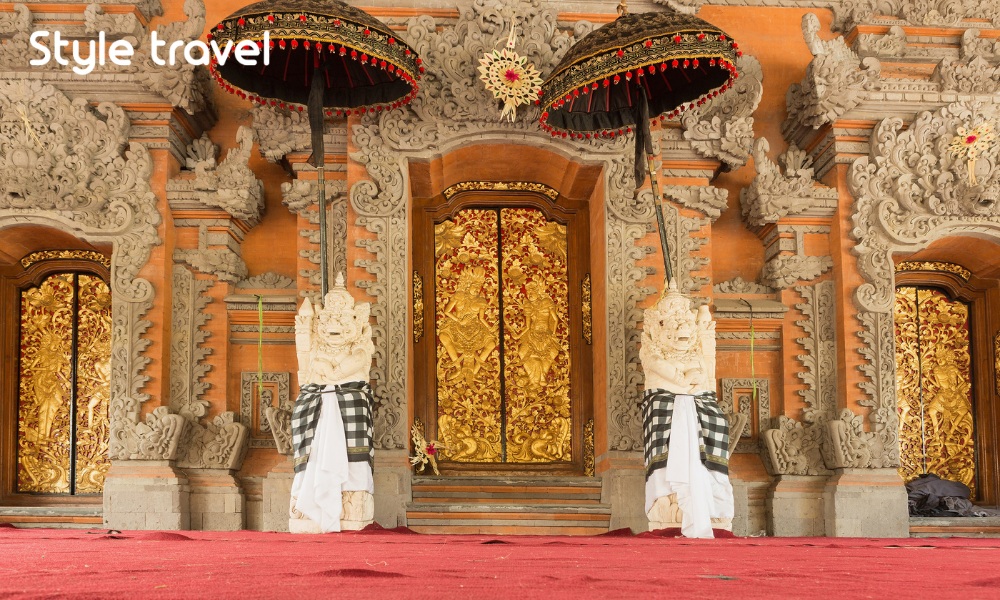
Ubud Palace is a short walk away, with carved gates and courtyards you can enter for free. The art market sits across the road. After lunch you drive back down to Kuta, which takes about an hour, more in afternoon traffic.
Day 13: A free beach day
No driver, no schedule. Swim, book a massage or sit by the pool at your Kuta hotel. After 12 busy days, most people need this one.
Day 14: Departure from Bali
Enjoy breakfast and the beach until your transfer. The airport is close to Kuta, but traffic in south Bali is slow, so leave plenty of time for check in.
How much a 2 week Thailand and Bali trip costs
These are the listed prices for our 13 day Best of Thailand & Bali tour, per person in US dollars, as shown on the tour page on November 3, 2026. The price depends on group size and hotel class.
| Travelers | Superior | Deluxe | Luxury |
|---|---|---|---|
| 2 | 1,925 | 2,178 | 2,855 |
| 4 | 1,475 | 1,739 | 2,433 |
| 6 | 1,322 | 1,592 | 2,254 |
| 8 | 1,242 | 1,493 | 2,133 |
A couple traveling in the Superior class would pay US$1,925 each. A solo traveler pays the single room supplement on top (US$377 in Superior). Superior hotels on this tour include Amora Chiang Mai, Silom Serene in Bangkok and Grand Livio in Kuta.
The price includes hotels, the Chiang Mai to Bangkok flight, an English speaking guide, a private air conditioned car, the meals marked in the itinerary, entrance fees, boat trips and taxes. It does not include your flights from the US, the Bangkok to Bali flight, visas, travel insurance, tips or peak season surcharges.
The two Ubud nights, the elephant sanctuary visit and the extra day in this 14 day version are quoted on request, because they change the hotel plan. You can see the full list of inclusions on the Best of Thailand and Bali tour page.
Best time to visit Thailand and Bali on one trip
The two places have opposite seasons, so no month is perfect for both. Northern Thailand and Bangkok are driest and most comfortable from November to February. Bali’s dry season runs from April to October.
November is a good compromise for this route. Thailand is starting its cool season, and Bali’s rains are usually still light at the start of the wet season. Late March and April are the other option, but they are the hottest months in Thailand, and the north often has smoky air from crop burning around that time. For month by month detail, read about the best time to visit Thailand and the best time to visit Bali.
FAQs about two weeks in Thailand and Bali
Is 2 weeks enough for Thailand and Bali?
Yes, if you limit yourself to three or four bases. Two weeks covers northern Thailand, Bangkok and the main sights of Bali. It does not leave time for the Thai islands as well. If beaches in Thailand matter more to you than the north, swap Chiang Mai for Phuket or Krabi instead of adding them on top. If you would rather spend all 14 days in Indonesia, our Bali two week itinerary covers Bali, Lombok and the Gili Islands.
Do US citizens need a visa for Thailand and Bali?
For Thailand, US passport holders can enter visa free for tourism and stay up to 30 days. This rule started on September 15, 2026, replacing the old 60 day exemption, according to the Tourism Authority of Thailand. You also fill in the free Thailand Digital Arrival Card online at tdac.immigration.go.th within three days before you land.
For Bali, you need a visa on arrival (IDR 500,000), which you can buy online as an e-VOA at evisa.imigrasi.go.id or at the airport. You also submit the free All Indonesia arrival form within three days before arrival and pay the Bali tourist levy of IDR 150,000 per person. Rules change, so check these sites again a few weeks before you fly.
Should I visit Thailand or Bali first?
Thailand first works better for most travelers. The busy cities and long drives come while you have energy, and Bali’s slower pace is a better way to end. It also helps that most flights from the US arrive in Bangkok, and the short hop north to Chiang Mai is easy to add on the same day. If you are still deciding how the two places compare, our guide to Bali and Thailand looks at the differences.
This Thailand and Bali itinerary 2 weeks plan gives you the temples and hill villages of the north, a full day in old Bangkok, the markets outside the city and a week in Bali that moves from rice terraces to the east coast and ends on the beach. It keeps you to four hotels and three flights, which is the real secret to doing two countries in 14 days.
If you would like this route adjusted to your dates, budget or pace, send your plans to Style Travel. Our team will reply within one working day with a private itinerary and a price. And if you have done Thailand and Bali in one trip, tell us in the comments what you would change.

Thailand and Bali itinerary for 2 weeks

Comparing Bali and Thailand: Which is better?