

2 week Bali itinerary
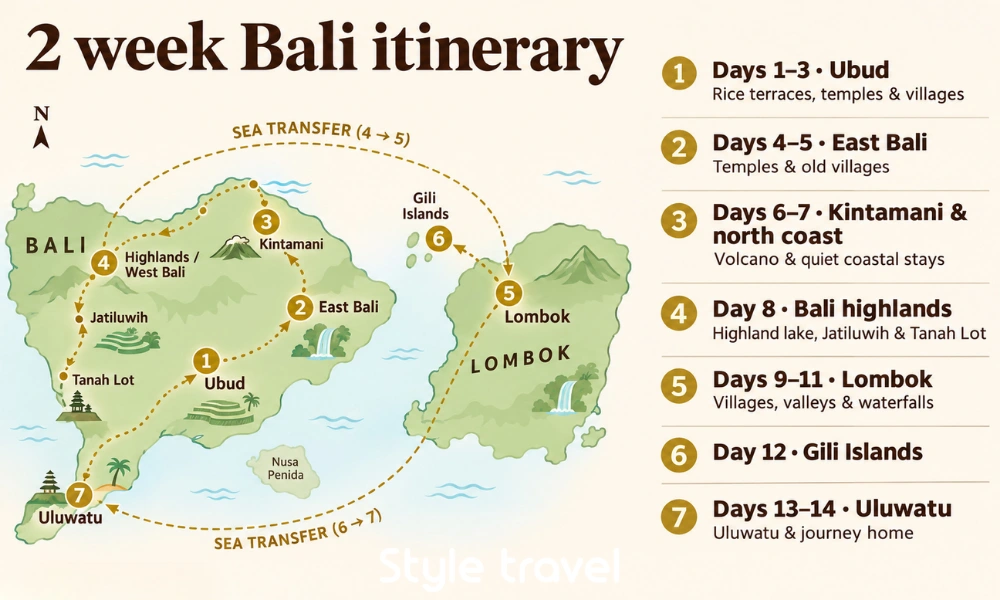
A 2 week Bali itinerary gives you something a short trip never does, which is time to slow down. A week in Bali usually means Ubud, a beach and a rush to the airport. Two weeks lets you wake up in the rice fields, follow the coast road east, sleep by a quiet black sand bay in the north, cross to Lombok for its waterfalls and weaving villages, swim with turtles in the Gili Islands and still finish with a sunset dance on the Uluwatu cliffs. This route comes from Style Travel’s own private Bali and Lombok tours, the same roads our guides drive every week, so you can picture each day before you go.
Day 1: Arriving in Ubud
The drive up from the airport is your first look at Bali. The traffic thins, the shops give way to stone carvers and rice fields, and small offerings of flowers and incense sit on every doorstep. By the time you reach Ubud, the town in the hills where most first trips begin, you can already smell the frangipani.
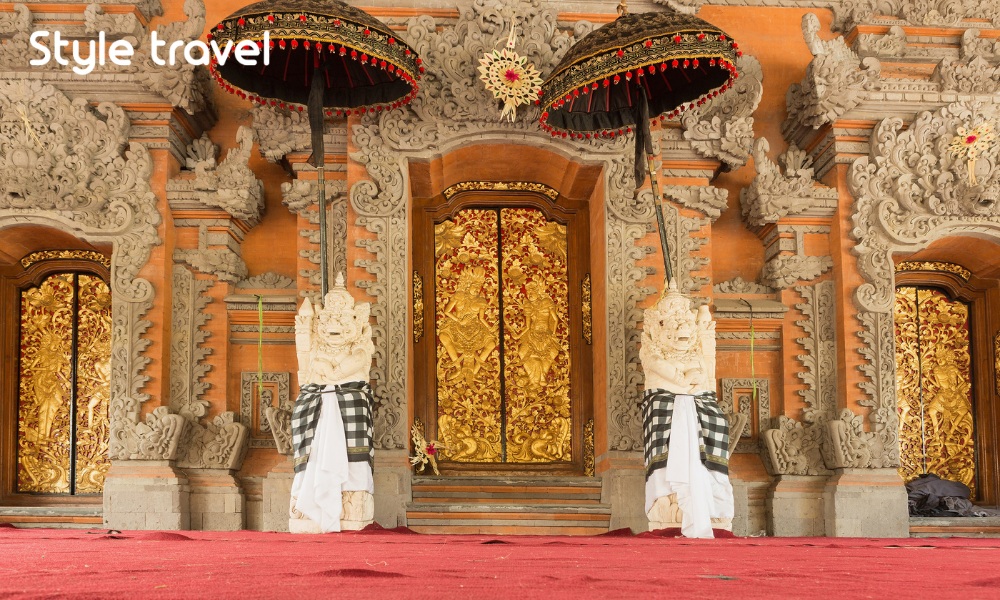
Ubud Palace
Your first stop is the old royal palace in the middle of town. Walk through the carved stone gates into courtyards guarded by statues of demons and gods, while the royal family still lives quietly behind the walls. Come back after dark if you have the energy. Most nights the palace courtyard becomes a stage for Legong or Barong dancers in gold costumes, moving to the clang of a gamelan orchestra. Tickets are sold on the street outside for about IDR 100,000 to 150,000.
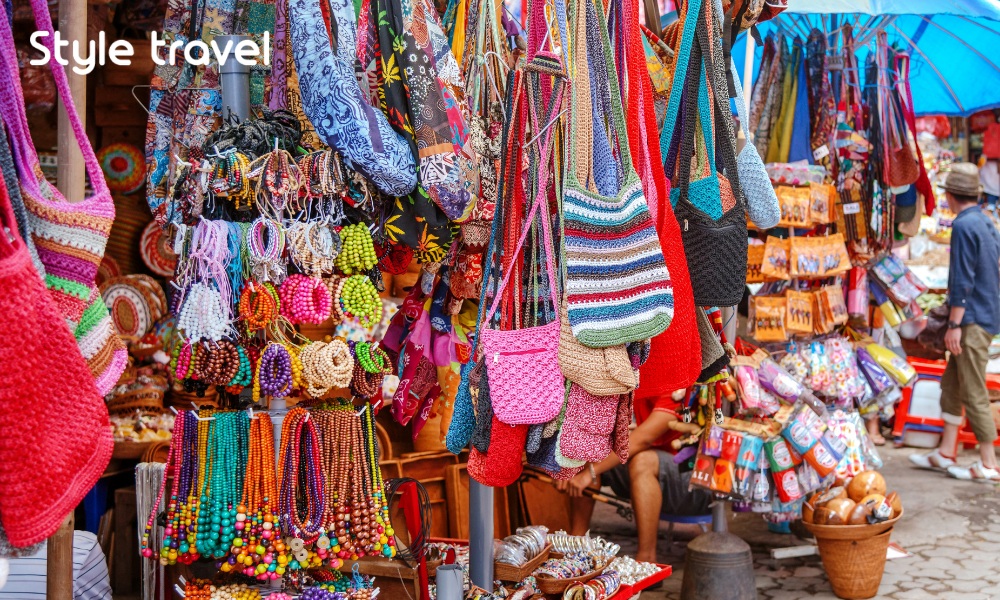
Ubud Art Market
Across the road, the art market is a maze of sarongs, rattan bags, carved masks and paintings. Sellers will call you over with a smile, and bargaining is part of the fun, so start low and keep it light. Pick up a sarong here, because you will wear one at every temple from tomorrow on. For lunch, follow the locals to a warung serving babi guling, the island’s famous roast pork with crackling skin, before it sells out.
Day 2: Ubud, rice terraces, a water temple and monkeys
Today is the Ubud you have seen in photos. Set your alarm early, because the morning light and the empty paths make all the difference.
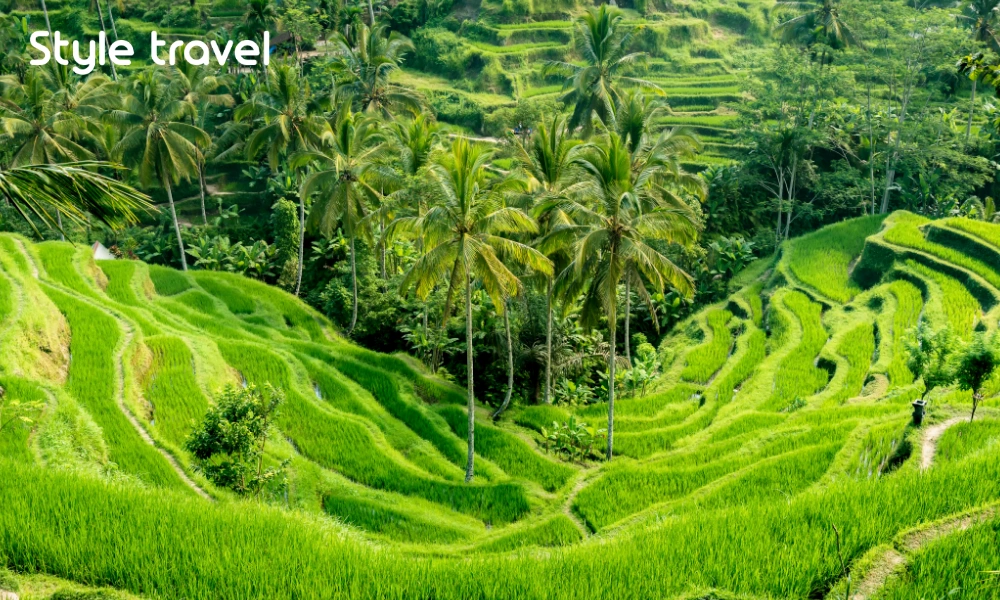
Tegallalang rice terraces
Standing at the top of Tegallalang, you look down on curved green steps falling into a valley of palm trees. Take the narrow paths down between the paddies and you may pass farmers already at work, knee deep in water. A few of them ask for a small coin to cross their part of the field, which is fair, since they keep the terraces alive. Once you climb back up, sit at a cafe on the ridge with a fresh coconut and watch the valley wake up.
Tirta Empul water temple
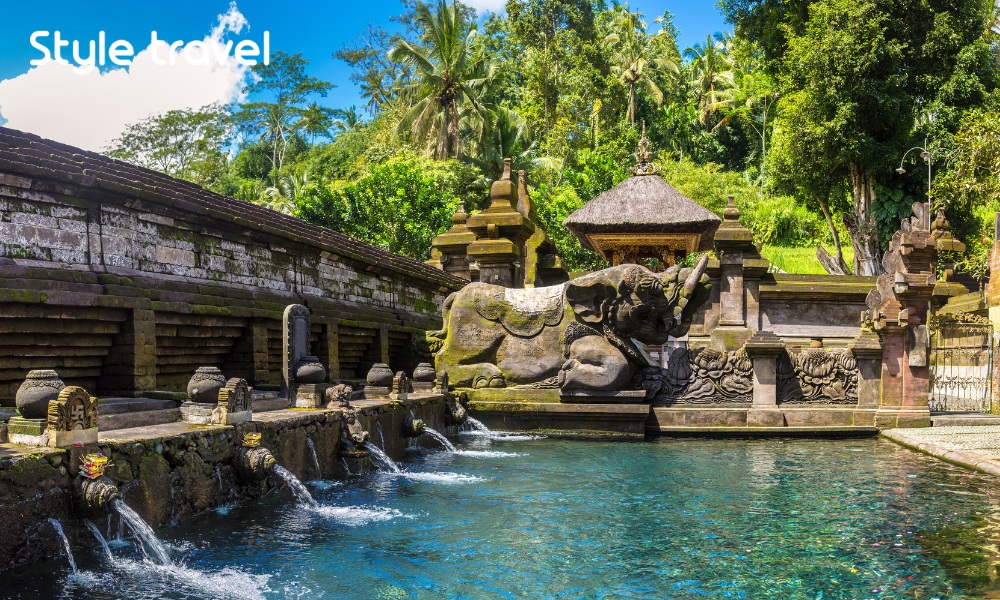
At Tirta Empul, Balinese families wade into long stone pools fed by a holy spring and bow their heads under each carved spout, one after another, to cleanse body and mind. You are welcome to join them. Rent the green sarong at the gate, let your guide show you which spouts to use, and step into water that is colder than you expect. Even if you only watch, it is one of the most moving sights on the island. Bring a change of clothes.
Sacred Monkey Forest Sanctuary
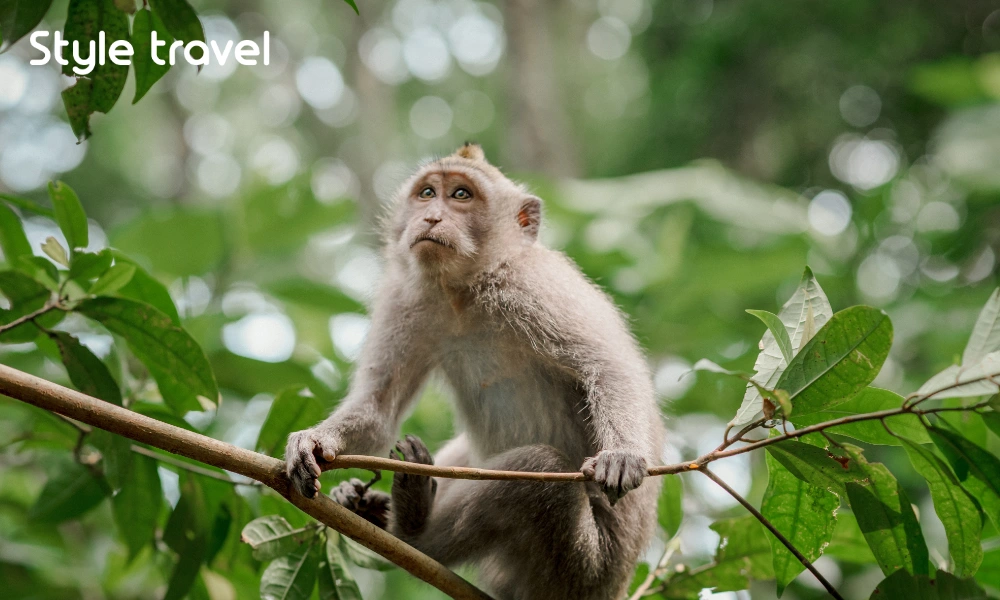
Back in town, step into the Monkey Forest, a patch of jungle where giant banyan roots wrap around moss covered temples. Hundreds of long tailed macaques live here. Babies cling to their mothers, older ones groom each other on the walls, and the bold ones check your pockets. Leave sunglasses, earrings and snacks in the car and you will enjoy the show much more.
Day 3: Cycling through village Bali and a royal temple
Shorter trips rarely have room for this day, and that is a shame, because it shows you how people in Bali actually live.
Cycling through Mambal village
You roll out on a bicycle in the cool of the morning, mostly downhill along quiet lanes outside Ubud. Children wave from doorways, ducks march across the paddies, and women carry offerings on their heads to the family temple. Your guide stops by the canals to explain the subak, the thousand year old system that shares water fairly between farms. The ride ends at a village home where lunch is waiting, rice, vegetables and spicy sambal cooked the way the family eats every day. If you book a ride on your own, expect about IDR 330,000 to 550,000 per person.
Taman Ayun temple
In the afternoon, visit Taman Ayun, the old royal temple of Mengwi. A wide moat circles the grounds, and inside, tall black thatched shrines rise in tiers like a row of pagodas. It is calm and green here, a nice contrast to the busier temples, and a good place to sit in the shade before heading back to Ubud for your last night. Planning another trip later? Our guide on where to stay in Bali helps you pick the right area.

Day 4: Exploring eastern Bali
East Bali feels like a different island. It is drier and quieter, and Mount Agung, the highest volcano in Bali, watches over everything. You spend two nights by the sea in Candidasa.
Besakih, the mother temple
Besakih climbs the slope of Mount Agung in terrace after terrace of shrines and split gates, more than 80 temples in all. Walking up with your local guide, you hear bells and chanting from ceremonies higher on the mountain, and on a clear morning the volcano fills the sky behind the top gate. Ignore anyone who offers to guide you before the official ticket office, since a guide is already part of the ticket.

Kusamba fishing village
Down on the coast, colorful outrigger boats called jukung rest on the black sand of Kusamba. Look along the beach and you may see families making sea salt by hand, pouring seawater over the sand, drying it in the sun and collecting the crystals in wooden troughs. It is slow, hard work that few people still do. A small bag of their salt makes a better souvenir than anything from the market.
Goa Lawah temple
A short drive along the coast, Goa Lawah is built right at the mouth of a cave packed with thousands of bats. You hear them before you see them. Families often arrive here in white clothes with tall offerings balanced on their heads, as this is one of the most important temples in Bali for ceremonies after a death.
Day 5: Lempuyang
If there is one morning on this trip to get up in the dark, it is this one.
Lempuyang temple
Lempuyang is home to the famous Gates of Heaven, a split gate that frames Mount Agung like a painting. Arrive at sunrise and the volcano glows pink behind it. Arrive late and the queue for the photo can take two hours or more. One small secret is that the mirror like reflection in all those photos comes from a piece of glass held under the phone, not from a pool. Entry is IDR 100,000, plus IDR 50,000 for the shuttle up from the car park.

Tirta Gangga water palace
Tirta Gangga, an old royal water garden, is pure fun after an early start. Hop across stepping stones set in the pools, with fat orange koi swimming around your feet and stone statues spouting water all around you. Buy a bag of fish food at the gate and the koi will crowd in close.
Tenganan village
Tenganan is one of the oldest villages in Bali, home to the Bali Aga people who kept their customs from before the Hindu kingdoms. Walk the stone lanes between walled family compounds and you will find women weaving geringsing, a double ikat cloth that can take months to finish, and men carving tiny pictures into books made from palm leaves. Entry is by donation. Real geringsing is precious and priced that way, so ask before you bargain.
Day 6: Across the mountains to north Bali
Few visitors ever see the north coast, and that is exactly why it belongs in a Bali two week itinerary. You cross the mountains today and sleep two nights in Lovina.
Kintamani and Mount Batur
The road climbs through clove and coffee gardens until the air turns cool and suddenly the whole caldera opens up below you. Lake Batur shines in the bottom of the old crater, and Mount Batur rises beside it with black lava flows still scarring its sides. Order a cup of Kintamani Arabica, grown right on these slopes, and take your time with the view. Try to arrive before noon, because clouds often roll in after lunch. If you would rather climb Mount Batur for sunrise, our 10 day Bali itinerary shows how to fit in the hike.

Pura Beji in Sangsit
On the way down to the coast, stop at Pura Beji, a temple for the goddess of rice. Its pink sandstone walls are carved so thickly with flowers, dragons and twisting vines that there is barely a smooth surface left. It is a good example of the playful north Bali style, and most days you will have it almost to yourself.
Day 7: Lovina, dolphins and a waterfall
A slow day by the sea, with time for a long lunch and an afternoon nap.
Dolphin watching at sunrise
Before sunrise you push off from the beach in a narrow wooden boat with bamboo outriggers. The sea is usually flat and silver at this hour, and then the fins appear, small pods of wild spinner dolphins arching through the water, sometimes leaping right out of it. Sightings are common but never promised. A seat on a shared boat costs about IDR 100,000 to 300,000, and it helps to ask your captain to keep a polite distance so the dolphins stay around.
Git Git waterfall
Later, head inland to Git Git, where a path winds through clove and coffee gardens to a tall white waterfall crashing into a rocky pool. The spray cools you down instantly after the walk. Buy your ticket at the official booth and ignore anyone on the road asking for more.
Day 8: Highlands to the west coast of Bali
A long and beautiful day across the middle of the island, ending in Sanur near tomorrow’s boat.
Ulun Danu Bratan
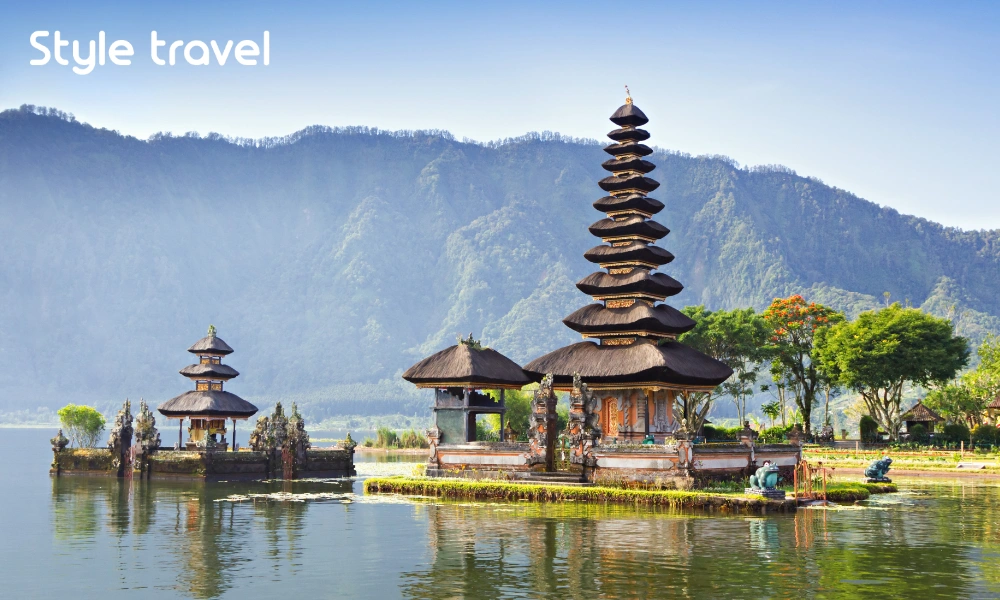
High in the mountains, the shrines of Ulun Danu Bratan seem to float on Lake Bratan, often with mist drifting across the water behind them. It is cool enough up here for a light jacket. Just up the road, the Candikuning market sells fresh strawberries, an odd and welcome treat in the tropics.
Jatiluwih rice terraces
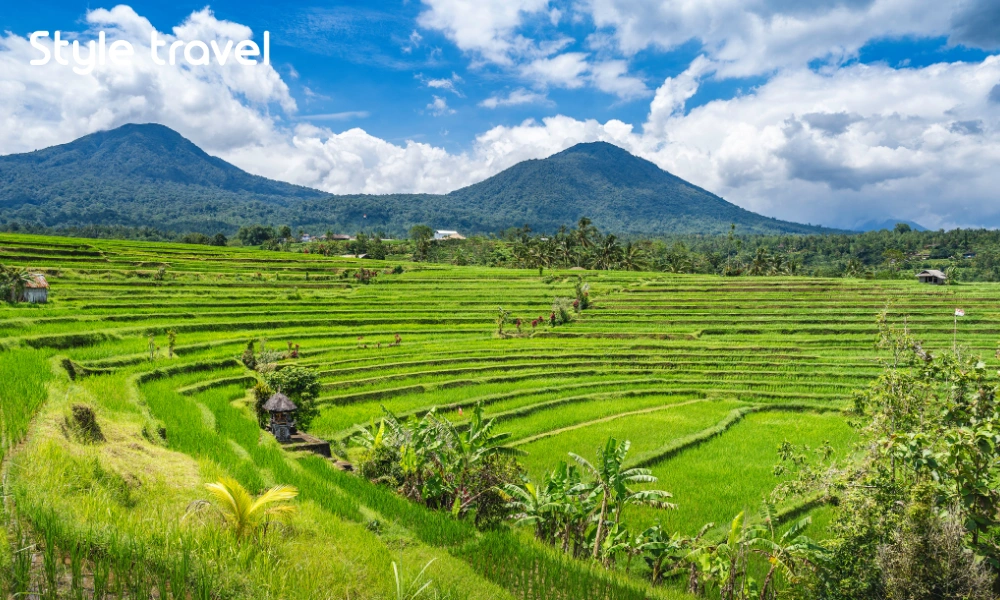
If Tegallalang is a postcard, Jatiluwih is the whole landscape. The terraces roll on for miles across the hills, and they are part of the Cultural Landscape of Bali Province on the UNESCO World Heritage List. There are far fewer people here, so walk a loop through the fields and listen to the water running through the channels. For lunch, try nasi goreng made with the local red rice at a restaurant overlooking the terraces.
Tanah Lot at sunset
End the day at Tanah Lot, a sea temple perched on a rock in the surf. As the sun drops, the sky turns orange behind it and waves crash against the base. At low tide you can walk across to the holy spring at the foot of the rock, where a priest presses rice to your forehead and sprinkles you with water for a small donation. Get there an hour before sunset to find your spot on the cliffs.

Day 9: Bali and Lombok, to Tete Batu
Today you cross to Lombok, Bali’s neighbor to the east, a quieter island with a giant volcano and a different culture. On a two week itinerary, Bali and Lombok fit together easily, because the crossing takes only a morning. For more ideas on the island, see our guide to things to do in Lombok.
The fast boat to Lombok
The morning fast boat skips across the strait in about two hours, with Bali shrinking behind you and the green hills of Lombok growing ahead. The water can get choppy, so take a motion sickness tablet beforehand if you need one. A one way ticket costs about IDR 450,000 to 650,000.
Tete Batu village
From the harbor you drive inland to Tete Batu, a farming village at the foot of Mount Rinjani. In the late afternoon, walk with a local guide along the paddy paths and through small gardens of coffee and cocoa, while farmers head home and the volcano turns gold. It is the kind of place where an evening on the veranda feels like enough.
Day 10: Waterfalls, weavers and the Sembalun valley
Lombok is mostly Muslim, so dress a little more modestly in the villages than you would on a Bali beach.
Jeruk Manis waterfall
Start the morning with a jungle walk to Jeruk Manis waterfall. Black monkeys sometimes peer down from the trees as you walk, and the trail ends at a tall ribbon of water in a green bowl of forest. The path gets muddy after rain, so wear shoes you do not mind getting dirty.
Pringgasela weaving village
In Pringgasela, Sasak women sit on the floor at wooden back strap looms, weaving cloth in patterns passed from mother to daughter. Watch the shuttle fly back and forth and you start to understand why one sarong takes weeks. Buying a scarf directly from the woman who made it is the best way to support the village.
Sembalun valley
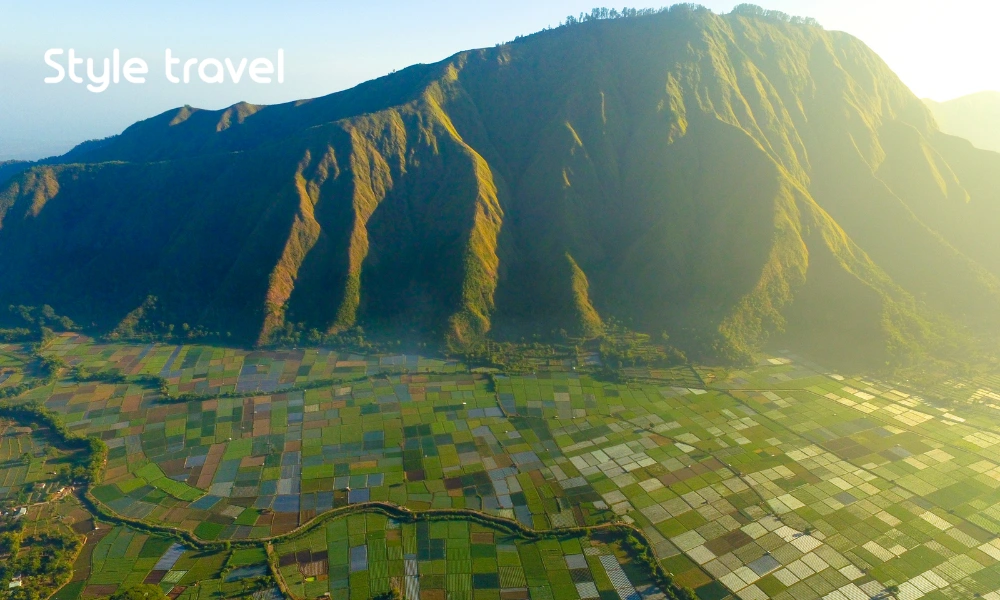
In the afternoon the road climbs to Sembalun, a high valley of vegetable farms with Mount Rinjani rising straight up behind it. The air is crisp, the fields are neat patchworks of green, and some farms let you pick your own strawberries. Nights here are cold, so keep a warm layer handy.
Day 11: Senaru
Sendang Gile and Tiu Kelep waterfalls
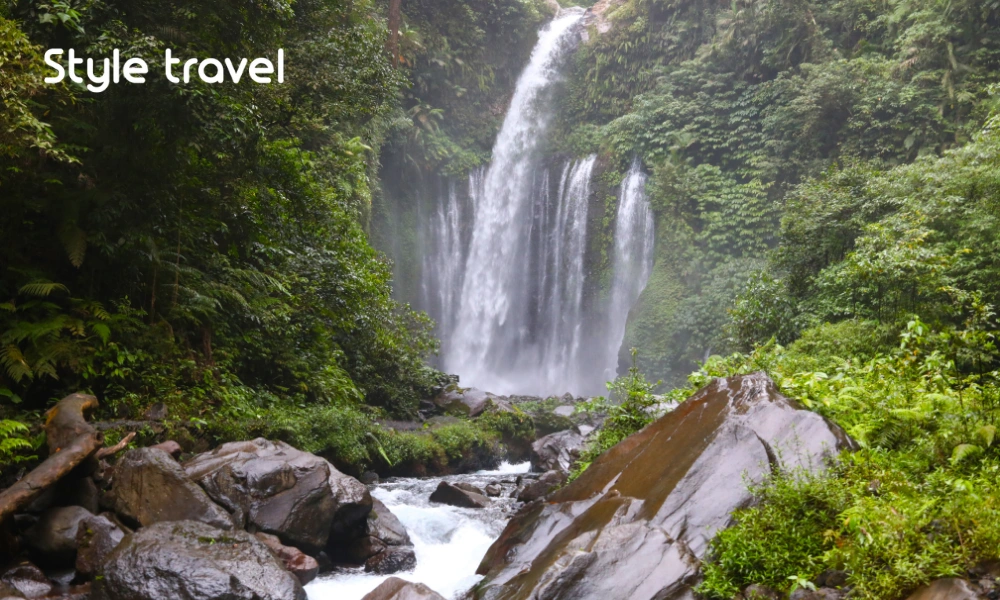
On the north side of Rinjani, a forest trail leads first to Sendang Gile, then on to Tiu Kelep, where curtains of water pour down a curved cliff into a wide pool. You wade across a river on the way, so wear sandals with grip, and bring swimwear because a dip at the bottom is the best part. A local guide is now required, at about IDR 250,000 per group.
Senaru traditional village
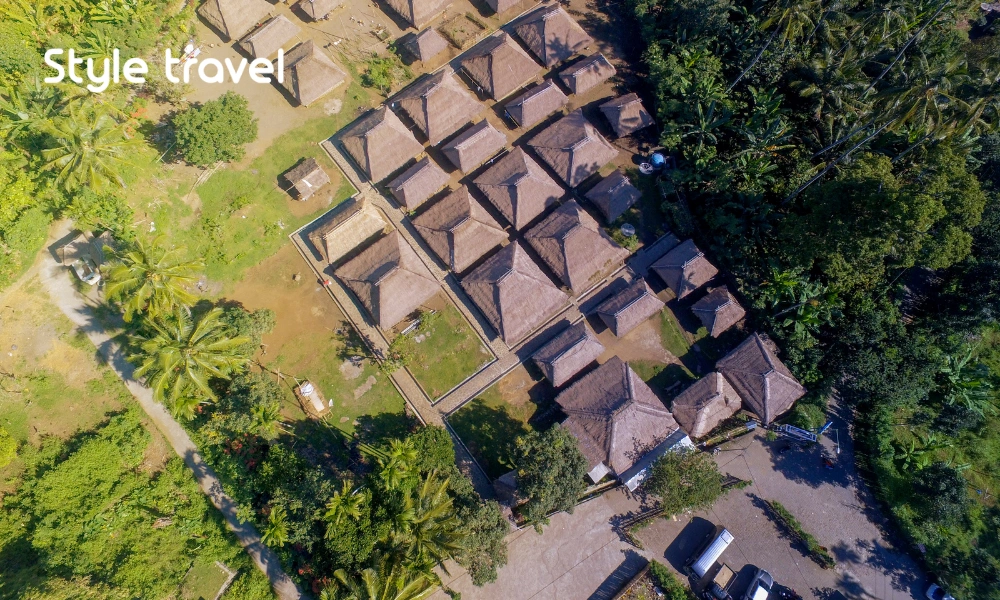
Next to the trailhead, Senaru village keeps the old Sasak way of building, with thatched houses raised on low platforms. A villager walks you around and explains how families share the work and the harvest. In the afternoon you continue to the harbor at Bangsal for a short boat ride to the Gili Islands.
Day 12: The Gili Islands
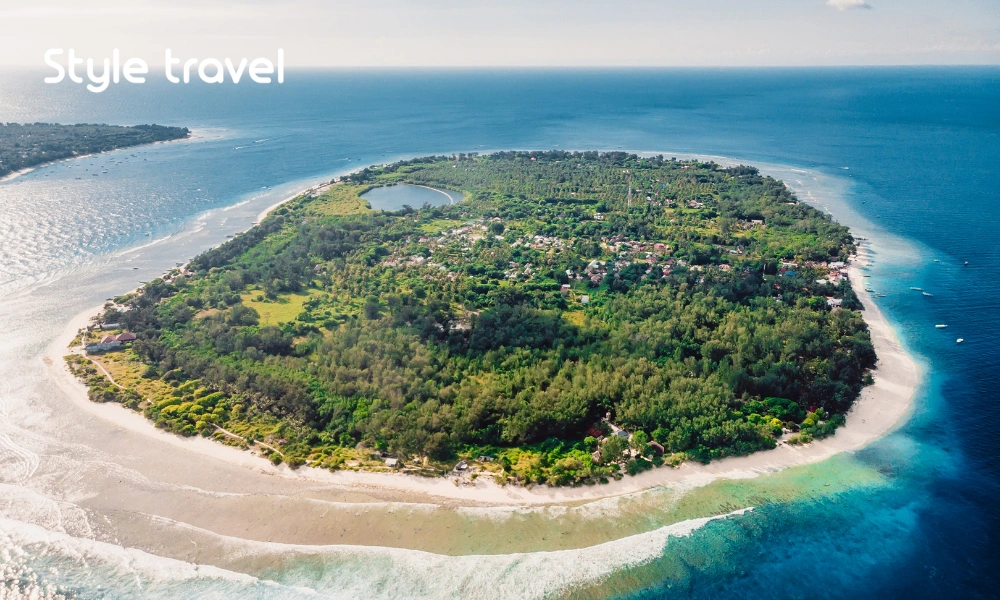
The three Gili Islands have no cars or motorbikes, just bicycles, horse carts and sand roads. After eleven busy days, this short Gili Islands vacation feels like someone pressed pause.
Snorkeling at Gili Meno and Gili Air
Slip off the boat and look down, and there is a good chance a green turtle is grazing on the reef below you. Swim slowly behind it, never touching, and it may carry on eating as if you were not there. Off Gili Meno, a ring of life size statues stands on the seabed in shallow water, slowly being covered in coral. A shared snorkel trip costs about IDR 150,000 to 225,000 with mask and fins. Spend the rest of the day on a bike or in a hammock, and bring enough cash, as island ATMs sometimes run dry.
Day 13: Bali, Uluwatu and the Kecak dance
A morning boat takes you back to Bali for one last big evening.
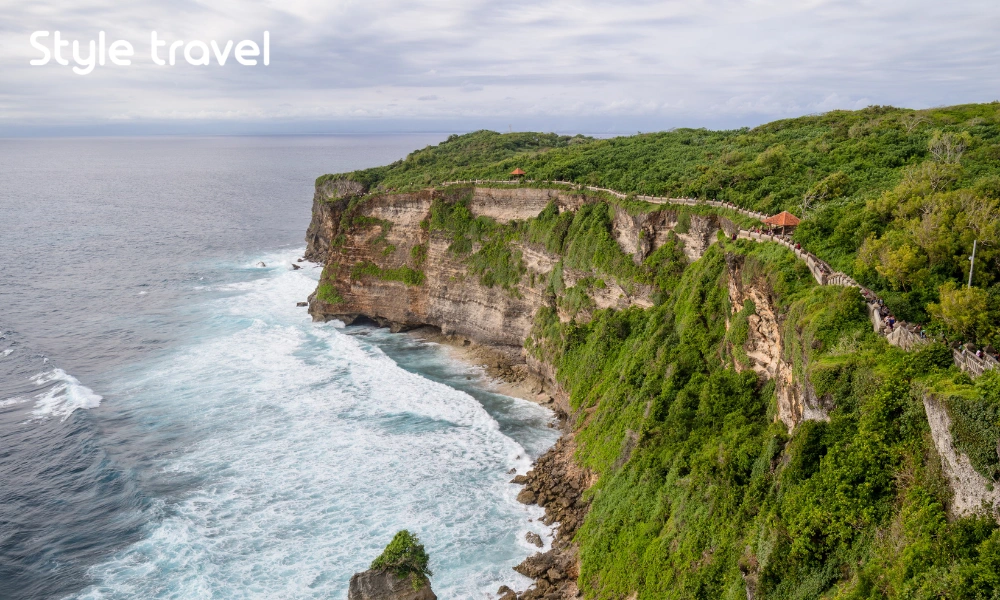
Uluwatu Temple
Uluwatu Temple stands on the edge of a cliff about 70 meters above the Indian Ocean, with surfers like specks in the waves far below. Walk the cliff path in the late afternoon for the best views. The monkeys here are famous thieves of glasses and phones, so keep both zipped away.
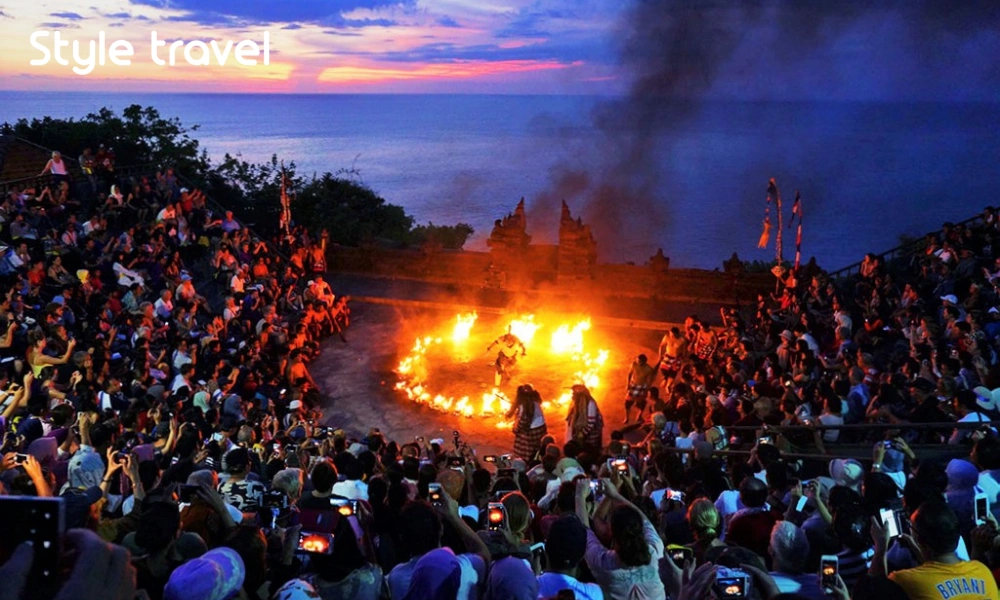
The Kecak fire dance
As the sun sinks into the sea, dozens of bare chested men sit in circles and start to chant “cak cak cak”, and their voices are the only music. Around them, dancers act out the Ramayana with monkeys, demons and a burning finale that leaves the stage glowing. Tickets are IDR 150,000, and in July and August it pays to buy them early. Sit in the upper rows for the sunset behind the dancers, then head to Jimbaran beach for grilled seafood with your toes in the sand.
Day 14: The end of your 14 days in Bali
The last morning of your 2 week Bali itinerary is for a slow breakfast and one last swim before the airport. The south is close to the terminal, but afternoon traffic can be heavy, so leave plenty of time. If your flight is late, our list of the best things to do in Bali has ideas for your final hours.
Tips before you start your Bali 2 week itinerary
- Carry a sarong and a scarf in your day bag. Every temple asks you to cover your shoulders and knees.
- Keep small notes of rupiah. Village temples, waterfalls and warungs rarely take cards.
- Start early. The famous sights in Bali are calm before 8 am and crowded by 10 am.
- Pack light. You change hotels several times, and boat porters prefer smaller bags.
- Bring reef safe sunscreen for the Gilis and a warm layer for Kintamani and Sembalun.
Best time for a two week Bali itinerary
The dry season from April to October is the best time for this route. The sea crossings are calmer and the mountain roads on Lombok are dry. July and August are the busiest months, so book Gili hotels well ahead. May, June and September give you the same sunshine with fewer people. From December to March, heavy afternoon rain can cancel boats and make the waterfall trails slippery.
This 2 week Bali itinerary gives you the rice terraces and temples everyone comes for, then takes you further, into the quiet east, the sleepy north, the villages of Lombok and the clear water of the Gilis, before ending with fire and chanting on the Uluwatu cliffs. If you would like this route shaped around your dates, budget or pace, send your plans to Style Travel and our team will reply within one working day with a private itinerary and a price. Have you already combined Bali and Lombok in one trip? Tell us in the comments what you loved most.


Bali and the small islands around it

Volcanoes, Temples and Old Kingdoms on Java Island

16 Best things to do in Indonesia in 2026

13 Best Places to visit in Indonesia

Pink Beach Komodo on Komodo Island

A Peaceful Escape on Gili Meno

Best things to do on Gili Trawangan Island

Slow Days on Gili Air Island

Gili Islands Guide to Gili Air, Meno and Trawangan