
When is the best time to visit Vietnam?
Picking the best time to visit Vietnam is less simple than choosing one season. The country stretches more than 1,600 km from the mountains on the Chinese border to the islands of the Gulf of Thailand, so when the north is cool and dry, the center may be wet and the south follows its own tropical rhythm. In this guide, Style Travel breaks the weather down by region and by month, so you can match your dates to the places you most want to see.
The Best Time to Visit Vietnam
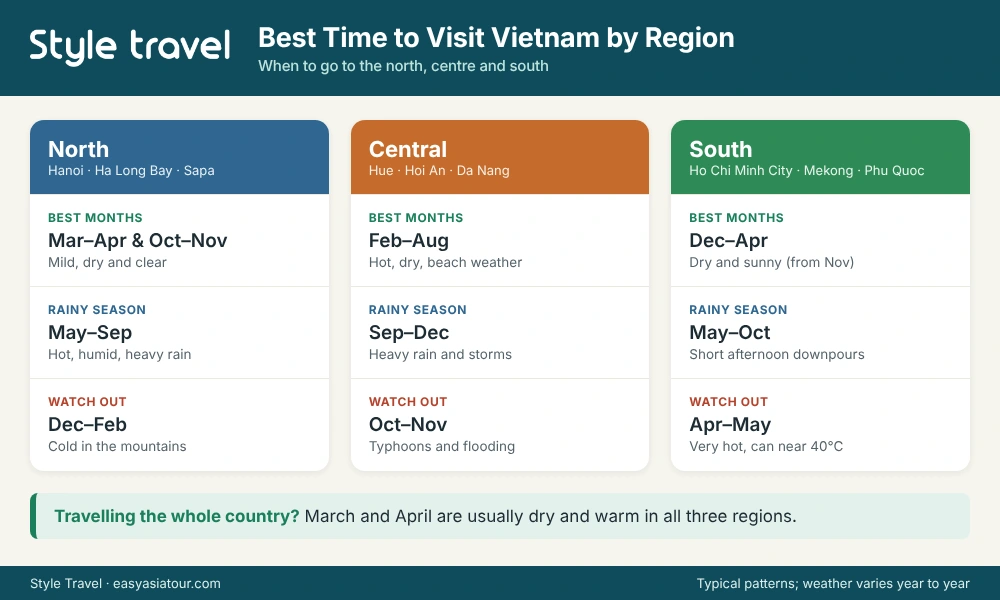
The best time to visit Vietnam is from November to April for the north and south, and from February to August for the central coast. If you want to travel the whole length of the country in one trip, March and April are the safest choice, because all three regions are usually dry and warm at the same time. October and November bring the heaviest rain and the highest typhoon risk to central Vietnam.
Vietnam has no single climate. The north has a cool winter and a hot, rainy summer. The center receives most of its rain late in the year, when the rest of the country is drying out. The south stays hot all year and simply switches between a dry and a wet season. The good news is that there is no month when the whole country is wet, so the Vietnam best time to visit really depends on your route.
| Region | Best months | Rainy season | Months to watch |
|---|---|---|---|
| North (Hanoi, Ha Long Bay, Sapa) | March to April, October to November | May to September | July and August for heavy rain; December to February is cold in the mountains |
| Central (Hue, Hoi An, Da Nang) | February to August | September to December | October and November for storms and flooding |
| South (Ho Chi Minh City, Mekong Delta, Phu Quoc) | December to April (dry from November) | May to October | April and May can feel very hot |
Best Time to Visit North Vietnam
Northern Vietnam has a cool, mostly dry winter from November to April and a hot, humid summer from May to October, when most of the year’s rain falls. Spring (March to April) and autumn (late September to November) are the most comfortable seasons for Hanoi, Ha Long Bay and the northern mountains.
Hanoi
In Hanoi, January nights can drop to around 13°C, and gray drizzle is common in late winter, so pack a light jacket. By July, daytime highs reach the mid-30s and monthly rainfall can pass 300 mm. Sightseeing in the city is still possible in summer, but the heat and humidity make long walking days tiring.
Ha Long Bay
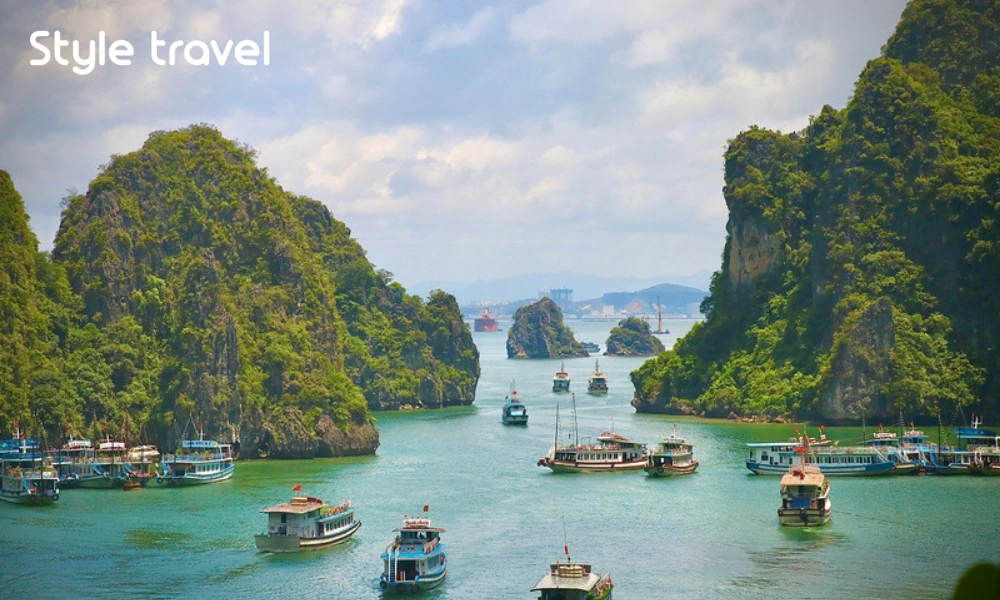
Ha Long Bay is at its clearest in March and November, when the sea is calm and the haze is lighter. Summer storms occasionally cancel or shorten overnight cruises, so leave a spare day in your plans if you travel between June and September.
Sapa and Ha Giang
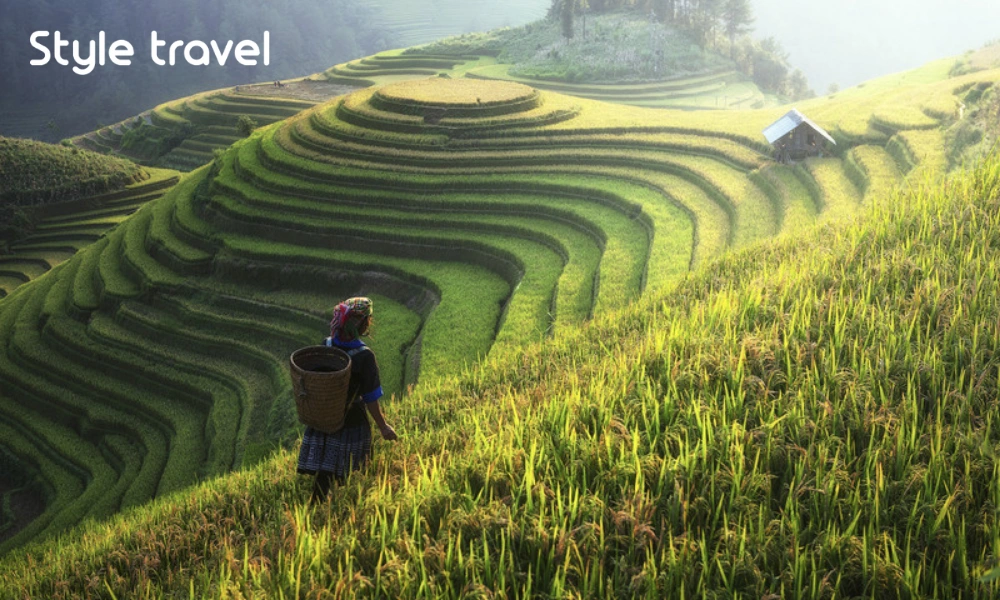
For trekking around Sapa and Ha Giang, aim for March to May or September to November. The rice terraces turn gold around September, just before the harvest. Winter in the mountains is cold, with nights near freezing and occasional snow on the highest peaks, while June to August brings slippery trails. You can compare more northern highlights in our guide to popular destinations in Vietnam.
Best Time to Visit Central Vietnam
Central Vietnam follows the opposite pattern to the rest of the country. Along most of the coast it is hot and dry from February to August, then wet from September to December, with October and November bringing the heaviest rain and the highest risk of typhoons. The timing shifts slightly from place to place, so it helps to look at each destination separately.
Hue
Hue is usually a little cooler and wetter than Hoi An, as it sits further north. February to April is the most comfortable time to explore the Imperial City and the royal tombs, before the summer heat arrives. June to August is hot, so plan sightseeing for the early morning. October and November are the wettest months, and heavy rain can cause local flooding.
Hoi An and Da Nang
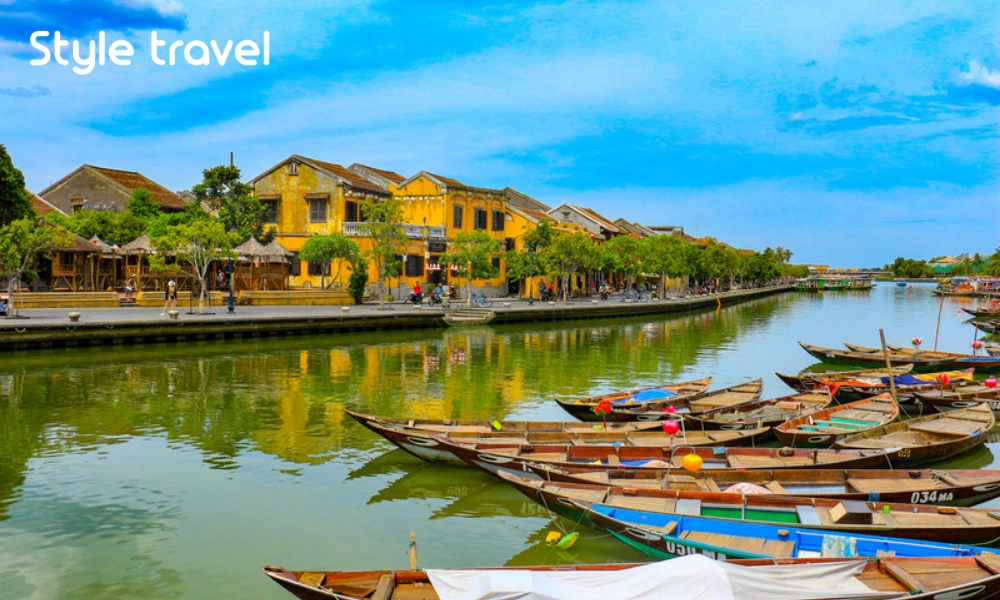
Hoi An and Da Nang are only about 30 km apart and share the same weather, so they are easy to combine. March to August is the most reliable window for beach time, with June to August the hottest stretch. The contrast between seasons is dramatic: Hoi An receives around 40 mm of rain in February but can see close to 480 mm in October, and the riverside streets of its Old Town sometimes flood during that period. If your dates fall in the wet season, keep a flexible day or two in case storms disrupt flights or roads over the Hai Van Pass.
Nha Trang
Further south along the coast, Nha Trang has a longer dry season that runs roughly from January to September, which makes it a good beach option when Hoi An is already wet. The rain arrives later and is concentrated in October and November, when almost half of the year’s rainfall can fall.
Dalat
Dalat sits in the Central Highlands at around 1,500 m, so it is cool all year and feels very different from the coast. It is driest from November to May, while June to October brings frequent afternoon rain. December and January nights can be cold, so pack warm layers if you travel then.
Best Time to Visit South Vietnam
Southern Vietnam is warm all year, usually between 25 and 35°C, so rainfall matters more than temperature. The dry season runs from November to April, and the wet season from May to October, when rain usually arrives as short, heavy afternoon downpours rather than all-day storms.
Ho Chi Minh City
December to February is the most pleasant period for Ho Chi Minh City, with sunny days and lower humidity. March to May is the hottest stretch, and some days feel close to 40°C, so build in breaks during the middle of the day. In the wet season, a sudden shower rarely stops sightseeing for long; carrying a light rain jacket is usually enough.
Mekong Delta
The Mekong Delta changes character through the year. The dry months are easiest for cycling and boat trips, while the wet season fills the rivers and turns the rice fields bright green. Low-lying areas can flood from late summer, so check conditions before booking a homestay.
Phu Quoc
Phu Quoc is at its best from November to April, when the sea on the west coast is calm and clear. Outside these months, expect more cloud, rougher water and afternoon showers, although prices are lower.

Vietnam Best Time to Visit Month by Month
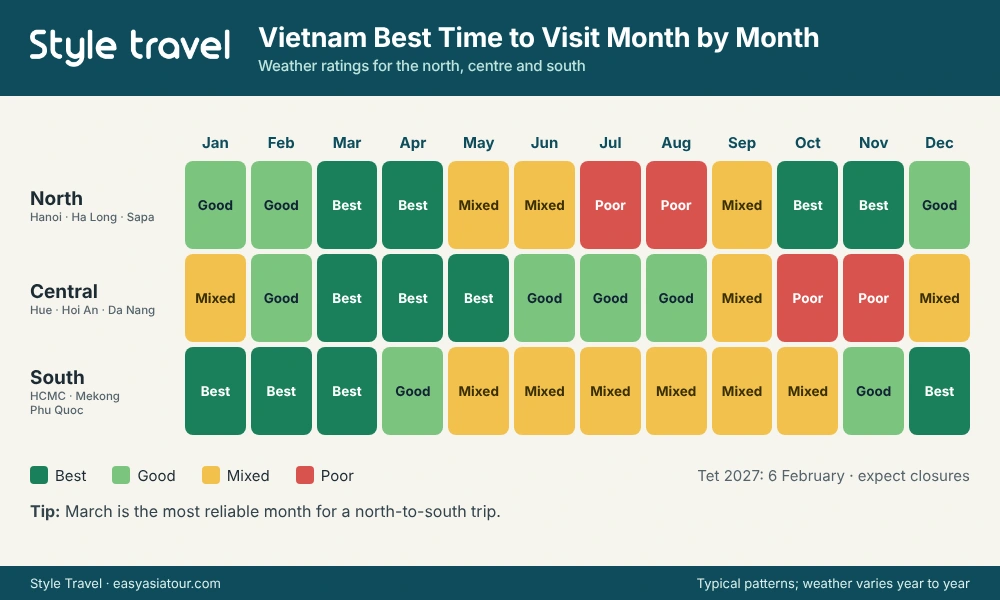
The table below rates each month for the three regions, so you can see at a glance where the weather is likely to be on your side.
| Month | North | Central | South | Good to know |
|---|---|---|---|---|
| January | Good, cool | Mixed | Best | Cold nights in Sapa and Ha Giang |
| February | Good | Good | Best | Tet falls on 6 February in 2027; expect closures and busy transport |
| March | Best | Best | Best | The most reliable month nationwide |
| April | Best | Best | Good, very hot | 30 April holiday brings domestic crowds |
| May | Mixed | Best | Mixed | Rains begin in the south |
| June | Mixed | Good, hot | Mixed | Central beaches at their sunniest |
| July | Poor | Good, hot | Mixed | Low season in the north and south |
| August | Poor | Good | Mixed | Not ideal for northern treks |
| September | Mixed | Mixed | Mixed | Golden rice terraces in the north; storms start in the center |
| October | Best | Poor | Mixed | Heaviest rain on the central coast |
| November | Best | Poor | Good | Ideal for Ha Long Bay and northern treks |
| December | Good, cool | Mixed | Best | Busy around Christmas and New Year |
Three months stand out. March is the most dependable month for a north-to-south trip. November is excellent for the north and south but falls in the central rainy season. February offers dry weather in most places, but plan around Tet, when many family-run shops close and trains and buses sell out. Our Vietnam travel tips cover practical points such as transport and what to pack for each season.
Best Time to Visit in Vietnam for Festivals
Timing your trip around a festival adds color, but it can also mean crowds and higher prices. These are the celebrations most visitors ask about:
- Tet Nguyen Dan (Lunar New Year): Vietnam’s biggest holiday falls on 6 February in 2027. Streets fill with peach blossom and kumquat trees in the weeks before, then many shops and restaurants close for several days while families gather at home. Transport is busiest just before and after the holiday.
- Hue Festival: Hue now runs its festival as a year-round program across four seasons, with the main arts week usually held in summer. Check the official schedule before you book, as dates for 2027 have not yet been announced.
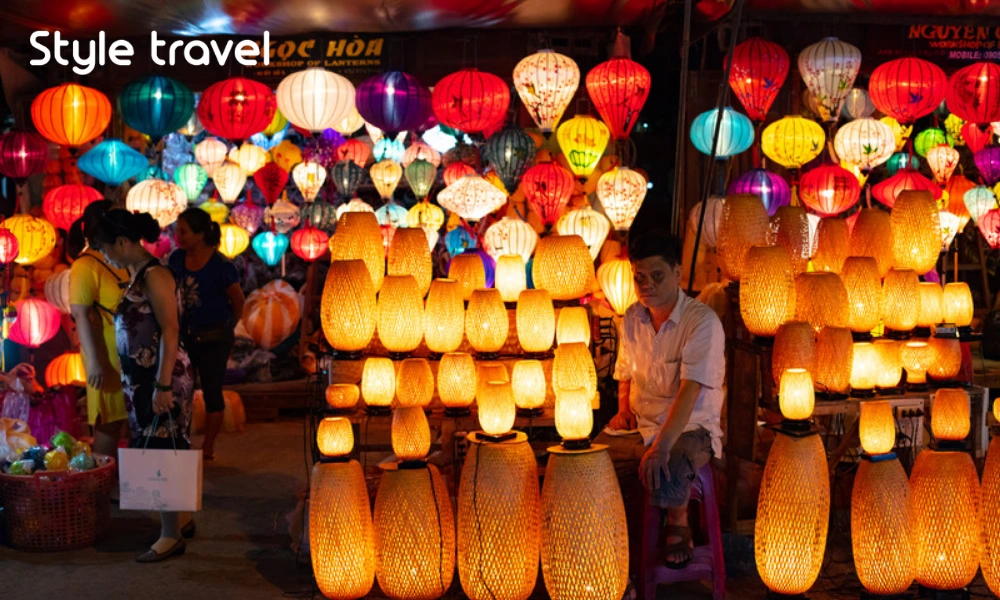
- Hoi An full moon nights: On the 14th day of each lunar month, the Old Town dims its electric lights, and lanterns and candles float along the Thu Bon River.
- Mid-Autumn Festival: Held on the 15th day of the eighth lunar month, usually in September or early October. Hanoi’s Hang Ma Street glows with lanterns, and mooncakes appear in every bakery.
National holidays on 30 April, 1 May and 2 September also bring large numbers of domestic travelers to the beaches, so book early if your dates overlap. For more ideas on how to fill your days, browse our list of things to do in Vietnam.
FAQs About the Best Time to Visit Vietnam
What Is the Best Month to Visit Vietnam?
March is the best single month for most travelers. The north is mild and dry, the central coast has entered its sunny season and the south is still in its dry season. April is a close second, although the south becomes very hot.
When Should You Not Go to Vietnam?
No month is bad for the whole country, but some places are best avoided at certain times. Skip the central coast in October and November, when storms and flooding are most likely, and avoid trekking in the northern mountains in July and August. If closed shops would spoil your trip, avoid the first days of Tet.
What Is the Cheapest Time to Visit Vietnam?
May to September is usually the cheapest period for the north and south, with lower hotel rates and fewer international visitors. Keep in mind that Vietnamese school holidays from June to August make central beach resorts busy with domestic travelers.
Plan Your Trip at the Best Time to Visit to Vietnam
The best time to visit Vietnam depends on where you are going. The north and south are at their best from November to April, the central coast shines from February to August, and March and April suit a trip through all three regions. Plan around the October to November storms in the center, and think about whether you want to experience Tet or avoid its closures.
If you would like help matching your dates to the right route, Style Travel can build an itinerary around the season you have in mind. Browse our Vietnam tours for ideas, contact our team for free advice, or leave a comment below to tell us when you are planning to travel.


When is the best time to visit Vietnam?

Vietnam travel tips

Popular destinations in Vietnam